
The People’s Pension on volatility and weak demand for long end gilts

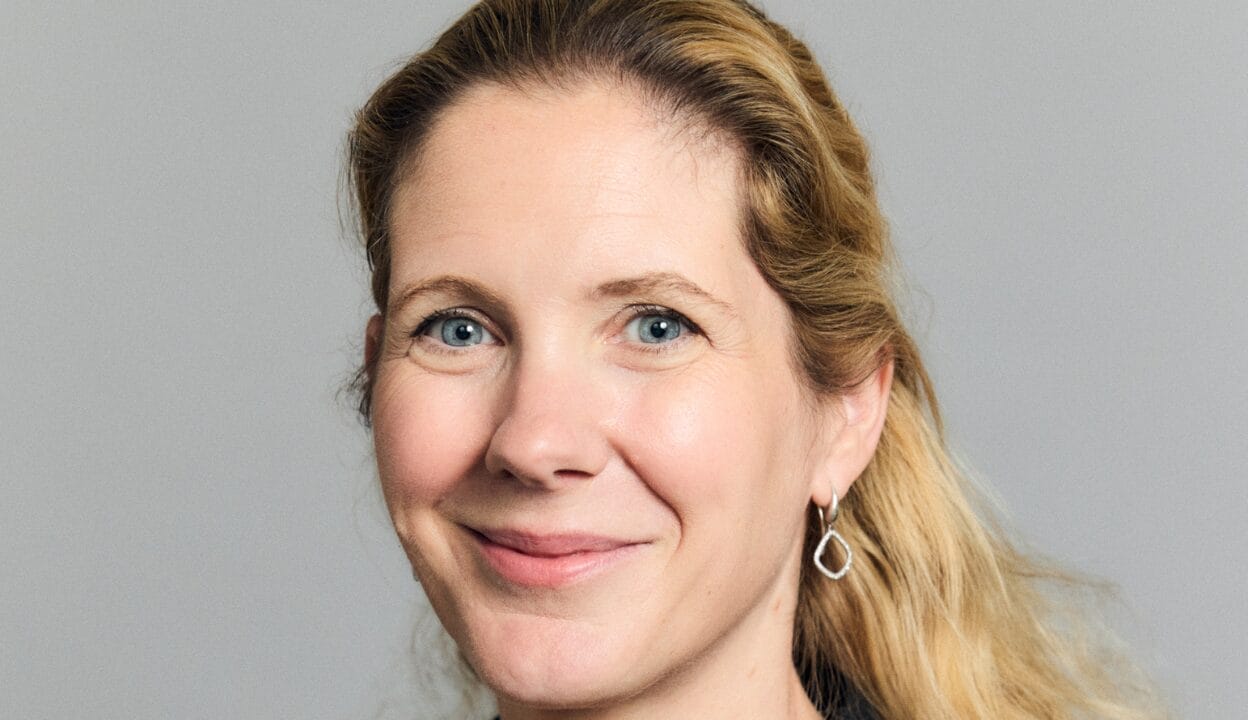
Charlotte Vincent

“Investors used to view their allocations to sovereign debt as rock solid, but growing risk now takes up a lot of our head space,” says Charlotte Vincent, co-head of fixed income at the United Kingdom’s £36 billion ($48 billion) master trust the People’s Pension, which has just under £2 billion ($2.6 billion) allocated to UK and US sovereign debt in its £9 billion ($12 billion) fixed income portfolio.

Three years after former UK premier Liz Truss’s budget catastrophically misjudged demand for her government’s debt, causing gilt yields to spike across maturities and forcing thousands of UK pension funds with LDI strategies to fire sell assets such as bonds and equities to meet collateral calls from banking counterparties, Vincent says the long shadow of the crisis remains.

The People’s Pension doesn’t have an LDI strategy but she is concerned about bond market volatility as the government continues to struggle to balance the books.

It’s still relatively straightforward for investors to forecast moves in the short end, referencing the part of the yield curve that plots interest rates over time and refers to bonds with maturities ranging from 1-3 years.

“The Federal Reserve and the Bank of England effectively control short-term market moves via their base rate policy,” she tells Top1000funds.com in an interview. 

However, policymakers have less control over the long end which is subject to ongoing negative pressure, amongst which rising budget deficits is a growing source of volatility as well as long-term fiscal pressure like demographics.

Sponsored Content

In another negative trend, UK pension fund demand for long-dated bonds which has defined the market for decades is also shifting with the gradual move from defined benefits to defined contribution pension systems, creating less demand for the long end.

“Governments need demand for longer dated debt but there are fewer natural buyers. This is creating bear steepening at the long end – it’s gone up considerably and we are closely monitoring it,” says Vincent.

That monitoring has included creating more optionality to allow the investor to adjust the allocation between short-dated and longer-dated US treasuries and gilts, even though it is a passive strategy.

We position ourselves within UK gilts and US treasuries to ensure we can move away from the long end if we think there are too many pressures, and then move back in. It is a constant discussion. We have given ourselves optionality so that even though it is a passive allocation tracking the index, we have set it out into maturity buckets.”

The Office of Budget Responsibility (OBR), a UK fiscal watchdog, projects that UK pension fund ownership of gilts will fall from 29.5 per cent of GDP in 2024-25 to 10.9 per cent in the early 2070s. The OBR estimates that private sector DB pension schemes, which are closed to either new entrants or further accruals, collectively own around £556 billion ($745 billion) of gilts, but as the members of these schemes retire or die in the coming years, these pension funds will liquidate their holdings.

And DC pension funds like the People’s Pension won’t be taking up the slack. Although the size of the country’s DC funds are projected to grow, they are unlikely to plough more into gilts and not enough to offset bond sales by DB funds.

For example, Vincent says the most likely fixed income allocation to grow at the People’s Pension is high yield and emerging market debt – currently at 5-10 per cent of the allocation – at the expense of sovereign debt.

“We are currently conservatively positioned in high-yield and emerging market debt, which are fully active parts of our portfolio. At present, we’re not seeing the right entry points, but these areas are under regular review and we could shift to a more risk-on position if the right opportunities arise,” she says.

“If we do make changes, we’d most likely go to trustees to increase high yield and emerging markets and reduce the sovereign allocation.”

The OBR has also warned that the UK government will need to pay a higher interest rate to draw more buyers like domestic DC funds and overseas investors into the UK gilt market if the DB pension sector’s holdings drop away.

Vincent acknowledges that reduced pension fund demand for long dated gilts could mean higher yields for investors, but she says the volatility is still an issue. “Everything has a price and as the long end moves, prices can become attractive. But right now the long end is in a state of  flux, and this is where it becomes an issue for investors.”

Invesco manages the entire fixed income portfolio, and the fund has no plans to add managers yet. Vincent says the sole manager risk isn’t an issue because the People’s Pension only accounts for a small percentage of Invesco’s total assets under management of $2 trillion. Still, the pension fund receives an estimated £4.2 billion ($5.6 billion) in annual contributions and as its AUM grows, new satellite fixed income managers could be added over time. 

“We could get to the point where we are too big for one manager, so we will keep an eye on it.”

Historical tights

The largest part of the fund’s fixed income allocation (65 per cent) is invested in investment-grade credit in a semi-active strategy that seeks “to avoid the losers” in a buy and maintain approach. Vincent explains that this allocation is currently conservatively positioned because strong technical indicators in corporate bonds continue to drive “massive demand,” putting pressure on spreads.

“We are seeing tights we haven’t seen since 1997 – they are in the top percentile across the board,” she says. “The trajectory of rates is heading down so investors are locking in returns now. The market is priced to perfection.”

Investment grade is split into European, US and UK corporate bonds with different maturity buckets, allowing the manager to shift between geographies and duration in a strategy that aims to strike a balance between being strategic and also enabling any opportunity to change those allocations.

Corporates want to talk about responsible investment

The portfolio is fully hedged and has a net zero overlay that includes a bespoke engagement solution with Invesco.

She concludes that responsible investment is now a key seam to strategy.

“Engagement in fixed income is growing, with managers working alongside corporate ESG teams to achieve the best outcomes. To ensure consistency of message, asset managers are increasingly bringing credit, equity, and responsible investment analysts to meetings with corporates,” she says. 

“As fixed income investors, we find corporates want to engage with us because we own their debt, and asset managers are able to clearly explain and express their investors’ priorities, helping to bring alignment. For example, we have an exclusion policy and net zero alignment across our investment-grade portfolio.”

Leave a Comment

The Austin advantage: Texas Teachers talks optimism, innovation and growth

The Austin advantage: Texas Teachers talks optimism, innovation and growth

Jase Auby, TRS's celebrated CIO, explains why TPA doesn't fit with its culture; why community push back on data centres could turn out to be an investor advantage, and argues the case for continuing to invest in fossil fuels. Top1000funds.com sat down with the CIO in his Austin office for an all-encompassing conversation.

Sort content by

Wellcome Trust: Hedge funds, property and low allocation to equity delivers

Allocations to property, some hedge funds and holding most of its assets in currencies other than sterling, helped Wellcome Trust withstand the impact of last year's simultaneous decline in prices in equities, government bonds and corporate credit on a scale not seen for many years.

After the horror of 2022, UTIMCO says asset classes set to do well

It’s possible that a traditional 60:40 passive portfolio could get close to a target return of 7-8 per cent this year in a trajectory not seen for the last 12 years, according to Rich Hall, CIO of $65 billion University of Texas endowment.

Active, in-house and sustainability: The driving factors at AP3

AP3’s ability to actively benefit from volatile markets is rooted in a reform process undertaken by CIO Pablo Bernengo, replacing decade-old, separate alpha and beta allocations with a traditional asset class structures but avoiding silos. Active risk and sustainability go hand in hand, he says, and is a 2023 focus.

Investment industry needs to rethink strategy: Future Fund CEO

Persistently challenging market conditions driven by stagflation, uncertainty and volatility, the response to climate change and populism increasingly shaping government decisions, mean 60:40 needs a re-think according to Raphael Arndt, chief executive of the A$240 billion Future Fund.

OECD flags enduring obstacles to illiquid investment

A recent OECD report argues that pension funds have a vital role to play in helping finance the COVID recovery in areas like infrastructure and SME investment. Yet it also warns of pension funds’ limitations when it comes to investing in illiquid assets, and the risks.

Portfolio managers 3.0: APG’s digital future

APG recently hired its first digital portfolio manager. “Samuel” comes complete with an employee identity number and underlines the firm's ambitions around data-driven money management. Amanda White spoke with APG's CIO Peter Branner about the road ahead.

Previous



