


Investors need to prioritise resilience, risk management, digitisation trends and talent to future proof their portfolios says OPTrust CIO James Davis.
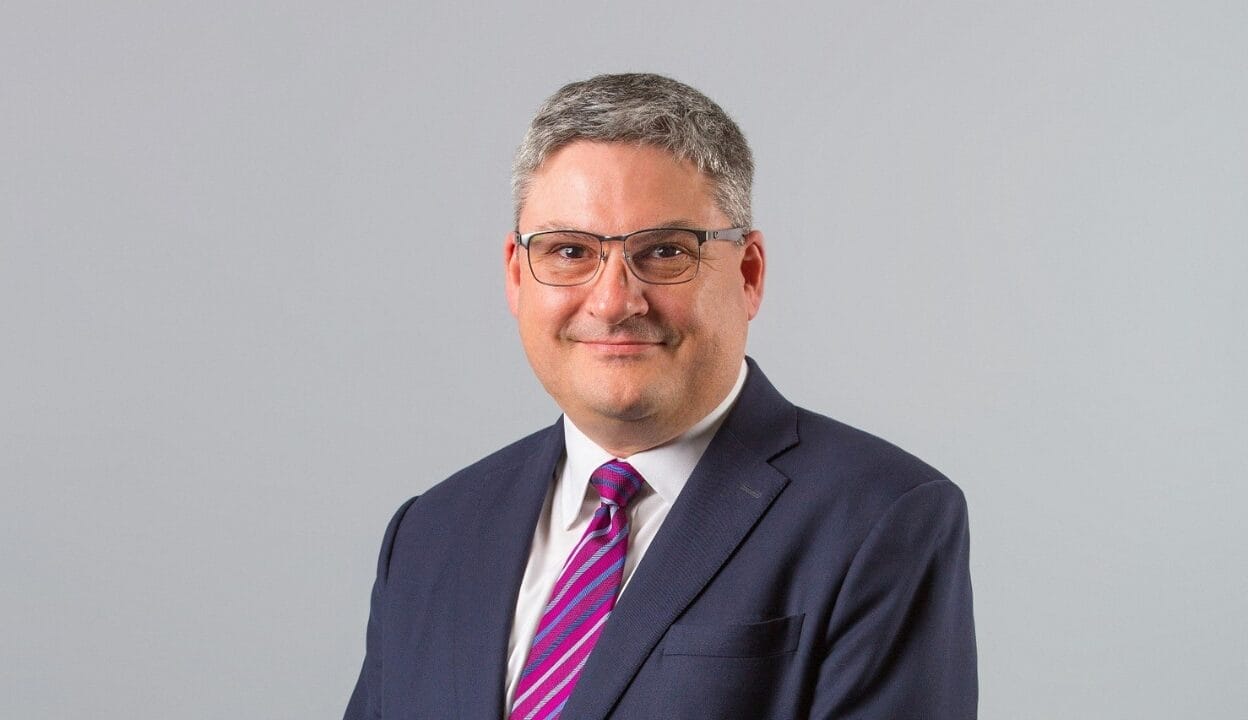
Resilience and risk management, exposure to digitisation and climate opportunities and a keen eye on talent management will be key components for investment success in portfolios of the future, said James Davis, chief investment officer of Canada’s C$23 billion OPTrust speaking in the opening session of FIS Digital.
In an era of uncertainty where investors need to prepare for “whatever the future throws” Davis told delegates (some 170 asset owners across 26 countries) that risk management is now as much a source of value creation as a control function.
Investment decisions at OPTrust are framed by beneficiaries’ need for certainty. The mature plan is fully funded and can’t take as much risk as younger pension funds, he said.
“Our members just want to know they can count on their pension.”
Still, this must be balanced against the fact three quarters of plan benefits are funded by investment returns from today’s uncertain world.
It leaves OPTrust having to earn the returns it needs (to keep the plan fully funded) incurring the lowest possible risk. Davis is focused on building a portfolio that is as resilient as possible, only allocating risk – “a scarce resource” – with purpose. The fund also hedges all unrewarded risk. It has a liability hedge portfolio that holds long maturity bonds, and the fund uses leverage to reduce its funded risk.
Returns
The return seeking portfolio is primarily focused on alternative assets comprising real estate, infrastructure and private equity.
Davis doesn’t see much value creation potential in public markets. Although the fund does have some actively managed portfolios, his preference is to allocate risk to public markets only to get the desired risk exposure for the overall portfolio and benefit from a dynamic public markets allocation that can “mitigate drawdowns in the wider return seeking portfolio.”
Beyond diversification
For true resilience, investors need to think beyond diversification and focus instead on resilience no matter what the economic environment.
“We can’t always count on diversification; correlations change,” he warned.
The macro environment is simply too unknown to make diversification a fail-safe. For example, it was impossible to predict COVID or the policy response. The Fed could make a policy mistake; inflation is increasing but deflation is as much of a possibility, and investors shouldn’t rule out stagflation either.
Resilience also comes via cost effective risk mitigation strategies like machine learning, providing insight to help reduce equity drawdowns.
“It allows us to dial up and dial down the equity allocation in the portfolio more effectively than we can do using our own predictions,” he said.
Digitisation and climate
Although Davis noted the challenges inherent in identifying digitisation winners and losers, the pension plan is drawing on external expertise to better understand crypto and blockchain innovations – an example of how OPTrust, which manages assets in-house where it has the expertise, also works with partners when needed.
Davis said that digital assets are poised to gain traction, changing “the way markets look at how we access investment opportunities” as the virtual economy evolves.
Blockchain and tokenisation are significant, and investors need to understand them to know which opportunities to tap and which parts of the economy to avoid because of approaching disruption.
Internally it is also using AI to improve investment outcomes.
A portfolio of the future needs a firm grip on the implications of climate change. A risk that has accelerated compared to “a decade ago” when Davis noted investors deemed the implications of climate change a “risk down the road”. He said climate change is happening quickly and markets are pricing it in.
Convinced of the opportunity ahead, OPTrust has set up a new team tasked with helping colleagues across the pension fund integrate climate into their decision-making processes, and seeking out investment opportunities in its own right.
“We have given them investment capital,” said Davis, saying the focus for opportunities lies at the intersection between innovation and sustainability. “We believe capital will flow to where solutions are being created to solve challenges: we want to identify where the opportunities are and we want to participate. It is not just about risk.”
OPTrust is currently shaping a new climate strategy it hopes to launch mid next year that will outline the fund’s view on fiduciary responsibility in the context of climate change.
Portfolios of the future also need to pay particular attention to talent and governance. Davis said investors need to think more about how to bring new people into their organisations.
“People are our greatest asset,” he said, detailing OPTrust’s rotational internship programme where young, cognitively diverse talent spend time across the plan.
“Young people bring fresh ideas and innovation.”
Another, central tenet to future proofing portfolios for the years ahead is governance.
“In a changing world, you need to bring your board along,” he concluded.
More so given today’s climate where risk management is not just about control but also about value creation.
“If you don’t know what harbour you are seeking, no lighthouse will guide you.”







Leave a Comment
You must be logged in to post a comment.
Login