
Navigating today’s global challenges to reimagine tomorrow’s markets

Published in partnership with MFS Investment Management.

Simultaneous global challenges such as inequality, environmental degradation, financial instability and fragile supply chains are challenging contemporary capitalism’s ability to cope. MFS Investment Management president Carol Geremia says it is time to consider a new approach to build resilience and ensure long-term sustainability in markets and societies.

The neoliberal economic and political systems that have underpinned economic growth for decades are today being challenged by a series of simultaneous global challenges such as inequality, environmental degradation, financial instability and fragile supply chains.

Whether traditional capitalism is equipped to address these human, social and economic polycrises, or if a new approach is required to build resilience and ensure long-term sustainability in markets and societies, is a fair question.

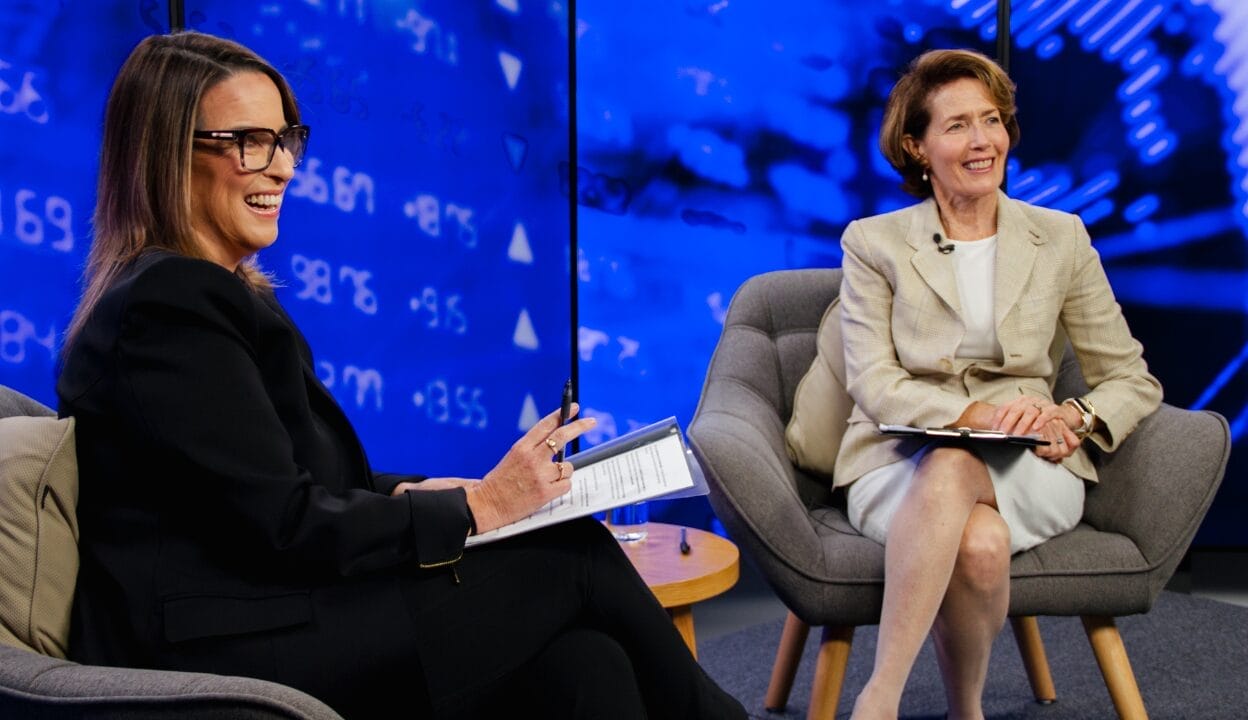
“A problem becomes a crisis when it challenges our ability to cope,” says MFS Investment Management president Carol Geremia, in conversation with Top1000funds.com editor Amanda White.

Many of the issues emerging today are challenging contemporary capitalism’s ability to cope, Geremia said.

Sponsored Content

“A lot of it has to do with how capital is allocated and how we actually think about investing in all different ways across the globe and economies,” she said.

“The big, big challenge for us today is to consider what was fit-for-purpose historically is probably going to be very different going forward, and I think we really need to come together and think about how is the best way to allocate capital responsibly that actually does not only generate returns, which is what we are mandated to do, but that it actually does consider all the aspects of the systemic risks.”

While capitalism has contributed to wealth creation and wealth accumulation over decades, it has also driven greater wealth inequality. The top 1 per cent of US households account for about 30 per cent of the nation’s total wealth, while the bottom 50 per cent of households hold about 3 per cent of the nation’s wealth. In the past four years, 750 billionaires in the US have seen their wealth increase by 77 per cent.

Geremia said the genesis of MFS exactly a century ago was an attempt to democratise investing “to ensure that the markets were broadened out and accessible to all types of investors, not just the people that had all the money”.

“That history has taught us a lot of lessons that can be applied today as we think about tackling all of these monumental issues,” she said.
Geremia said it’s “really paramount” that investors think about ensuring that the capital they commit not only helps people to retire and grow their wealth, but is committed for long enough so that companies can “do good things, to actually take a stakeholder view and broaden out how they think about generating their own returns”.

“And so again, the opportunity is huge to make sure that we sort of adjust to the growth of taking so much risk that we do today, and make sure that we protect the public markets, we protect the end-investors as we put money to work,” she said.

A case in point is ESG investing, which can be challenging for asset managers because risks such as climate change are complex, forward-looking and require views over multiple time horizons.

They are unlikely to be solved by traditional ways of viewing investment and portfolio theory, and Geremia says “you can’t do it under the measurement system we have today, which is to beat benchmarks over short periods of time, and it’s almost at highest return at any cost”.

“The system is telling us right now, no, that’s not good enough,” she says.

“We’ve got to not only generate the returns over long periods of time, as investors would expect, but we’ve got to extend our time horizons as we commit capital long enough for companies to really do great things and invest and innovate.”

The concept of shareholder primacy, established by Milton Friedman, and “if the corporations are committed to maximizing returns for shareholders, then everybody wins” is in fact “cracking in a lot of different ways”, Geremia said.

“The opportunity is enormous for us to, what I call, play a bigger game and really think about new allies that we haven’t necessarily used in the past to leverage the change in the transformation and policyholders, regulators, our competitors, our voices in industry, to really say what do we need to be fit for purpose going forward?” she said.

Stewards of other people’s money really need to step up and constantly evolve as leaders if they are going to effectively navigate the complexities of capitalism and the poly crisis in these interconnected challenges that investors are facing.

“The first thing I would say is we can’t do this alone, and we know it, and that’s why I’ve been incredibly inspired by leaders in the industry that are already taking this forward in so many different ways,” Geremia says.

“The first and foremost for us, and along with others in the industry, is the objectivity, and that’s why using academics and working with academics to actually really test our theories and test our thinking, and is it fit for purpose?”

“But…how are we going to measure success? If we really want to get at sustainability and the systemic risk that we know is growing massively in the system, and yet it’s so important for us to be held accountable and to measure performance and results, how do we bring these things together and change the way we’re showing up and the way we’re measuring success and value?

“I think we could get at defining that in very concrete ways.”

Leave a Comment

Finland’s Elo: Larger equity allocations promise new media scrutiny

Finland’s Elo: Larger equity allocations promise new media scrutiny

As Finland's pension funds prepare to increase their equity allocations to unprecedented levels compared to global peers, they must also navigate a new and unfamiliar risk. Elo's chief investment officer Jonna Ryhänen explains the fund's investment approach going forward and how it will manage stakeholder and media scrutiny as they react to swinging volatility and returns.

Sort content by

UPS: Risk assets and virtual happy hours

The $50 billion pension fund for employees of United Parcel Service, which has a preference for managed account relationships with its managers, is poised to increase its allocation to risk assets.

Alleviating global poverty: the role of the investor

Esther Duflo, the Abdul Latif Jameel Professor of Poverty Alleviation and Development Economics at MIT and current Nobel Prize winner in Economics discusses the impact of the coronavirus pandemic on developing countries, and the role that investors can play in alleviating poverty.

The importance of resilience

Already OPTrust’s portfolio can best be described as resilient. But CIO James Davis, who started his career in October 1987, expects global macro economic changes from this crisis that we have never seen before and he wants to position the portfolio for whatever is around the corner.

CalPERS: Leverage, liquidity, inflation

In this Fiduciary Investors series podcast Amanda White talks to Ben Meng, chief investment officer of CalPERS, the largest pension fund in the United States. Meng, who oversees an investment office of nearly 400 employees and manages investment portfolios of roughly $400 billion, talks about the fund’s plan to achieve its 7 per return target - including the use of leverage – the liquidity management of the fund and how it could deploy capital during the crisis, and the inflation.

What past market crashes teach us

Looking back at the portfolios of large institutional investors during and after the dot.com crash and the GFC, CEM Benchmarking, reveals commonality in the portfolios that thrived. For both events the top quartile returns were more than 2 per cent higher than the bottom quartile. Analysing the asset allocation and behaviour of investors showed two clear themes: top quartile performers had more defensive allocations pre-crash; and rebalancing is a tailwind for performance.

Harvard endowment goes net zero by 2050

The Harvard endowment is about half way through its transition to external investment management and will work with its service providers to implement the university’s new directive, to position the portfolio in line with net-zero greenhouse gas emissions by 2050.

Previous



