


The €15 billion ($16.1 billion) Ireland Strategic Investment Fund (ISIF) is finding compelling investment opportunities in the energy transition and is successfully drawing in additional investment to finance Ireland’s net zero commitments.
By targeting “climate positive” investments which support Ireland’s transition (outlined in the government’s Climate Action Plan) as a key investment theme, the fund is investing in both sustainable infrastructure and new technologies, and in business models to support the long-term transition. In 2021 ISIF committed €1 billion in climate projects over a five-year period of which it has already invested over €600 million.
The strategy runs in parallel with a divestment programme dating from 2018 when Ireland became one of the first countries in the world to sell out of fossil fuel companies. It currently has a list of some 200 companies in which it won’t invest as part of that strategy.
When ISIF was established at the end of 2014 from the remnants of the National Pensions Reserve Fund, the sovereign development fund was tasked with attracting €1 million in co-investments across the portfolio for every €1 million invested. Today, typically around €1.6 million in co-investment is ploughed into projects for every €1 million the fund puts in itself, so that since inception ISIF has committed €6.5 billion across 188 investments that have unlocked some €10.2 billion of co-investment commitments.
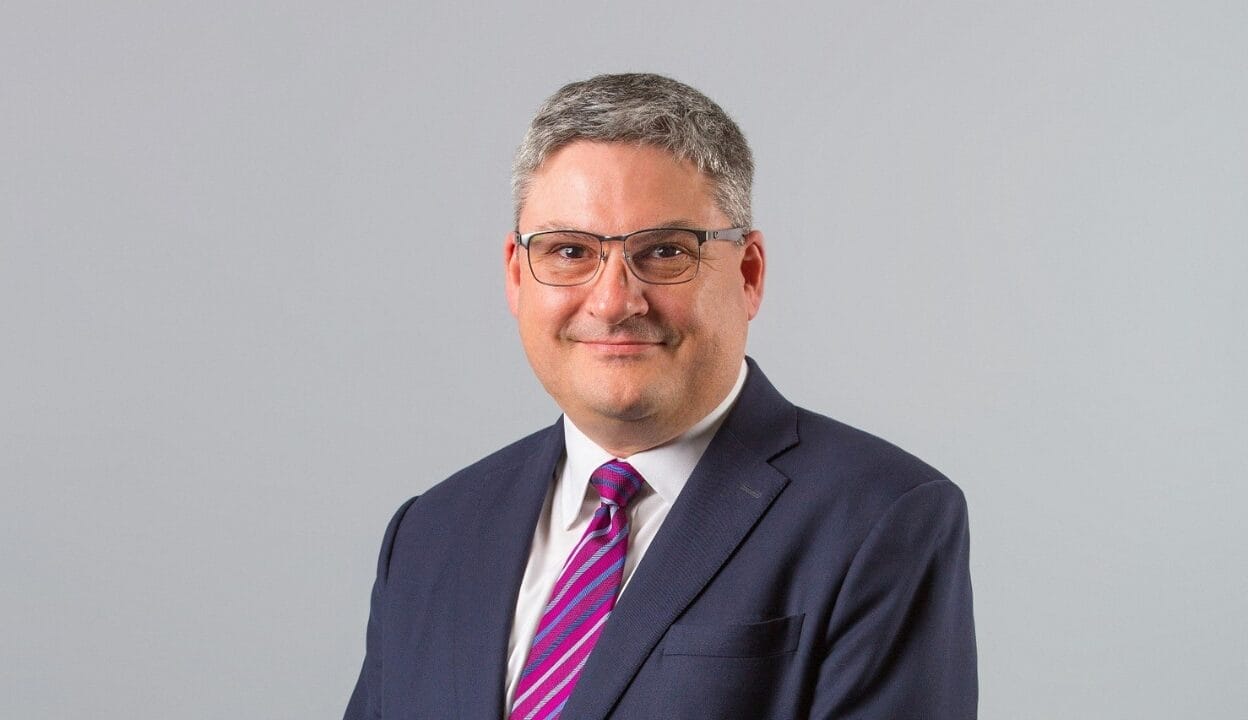
“It’s positive for our investees and for the wider Irish economy,” says ISIF senior investment director Brian O’Connor, who leads the fund’s investments in indigenous businesses as one of four investment themes that sits alongside climate, housing, and food and agriculture set out in a 2022 framework that shapes the €8.7 billion discretionary portfolio.
The remaining assets (€6.3 billion) lie in directed portfolios held separately and under direction from the Ministry of Finance. The discretionary portfolio targets returns in excess of the five-year rolling cost of government debt (2.8 per cent) over the long term, and assets are divided into equity (€3.4 billion), fixed income (€1.6 billion), real assets (€1.2 billion), absolute return (€1.4 billion) and cash and equivalent (€1.1 billion).
O’Connor says businesses and projects IDSF invests in must meet a double bottom-line, targeting both returns and supporting economic activity and employment in Ireland.
Scaling local businesses
O’Connor’s team oversees a portfolio of Irish businesses that spans investments in growth equity, private equity and private credit, managed by a range of Irish and international fund managers – the ISIF mandate to invest in the Irish economy allows scope to invest globally if there’s a benefit to support economic activity and employment in Ireland. The team also manages many of ISIF’s co-investments with fund partners and investments are roughly split 65:35 between fund and direct investment, respectively.
The ability to invest with global fund managers if it supports economic activity and employment in Ireland is vital in the fund’s ability to diversify outside Ireland’s small market. “Finding enough opportunity in the Irish economy is a challenge,” O’Connor says.
The fund does its best to invest broadly across many sectors and applies a portfolio approach to achieve a level of diversification across the risk it’s taking and the sectors it’s exposed to as it seeks to get its risk-adjusted returns right.
Investing across the capital structure
Diversity also comes with ISIF’s ability to invest at any point of the capital structure where the team use different instruments to best suit the investee. The fund can be flexible where many other investors can’t be, and is able to offer an alternative to low-risk bank funding or to private equity hunting double-digit returns, often over a three-five-year time horizon. The flexible approach plays an important role supporting an ecosystem of firms at whatever stage they are in their growth journey.
“We can provide debt at one end of the risk spectrum and equity at the other – and anything in between, whether it’s mezzanine finance, hybrid debt/equity instruments, venture capital, growth capital or private equity,” O’ Connor says.
“We aim to ensure the right mix across the capital structure. When co-investing in businesses, ISIF equity gives firms an ability to prioritise longer-term growth knowing that ISIF is not necessarily optimising to a short or medium-term exit timeframe.”
ISIF’s role of catalyst and its ability to attract co-investment capital into the economy is another central pillar. ISIF considers every investment on its ability to promote “economic additionality”, namely, benefits to gross value added (the value producers add to the goods and services they buy), while avoiding “dead weight”, meaning the economic benefits created from an investment would have been achieved in any event; and “displacement”, where the investment would simply substitute existing economic activity.
For example, avoiding dead weight means ISIF won’t invest in sectors that are already served by private-sector investors or by lenders to such an extent that ISIF’s involvement won’t make a difference. Instead, it looks to target important gaps that other investors and lenders aren’t filling.
“We do not alter our investment strategy materially based on market cycles,” O”Connor says.
O’Connor concludes with a nod to how ISIF capital has led to a new generation of international Irish companies.
“Many Irish companies have expanded to international markets in recent years,” he says. “The key is to help these types of companies by continuing to back their ambitions to grow over the medium and longer term and support them with access to funding via the co-investment partnerships.”







Leave a Comment
You must be logged in to post a comment.
Login