


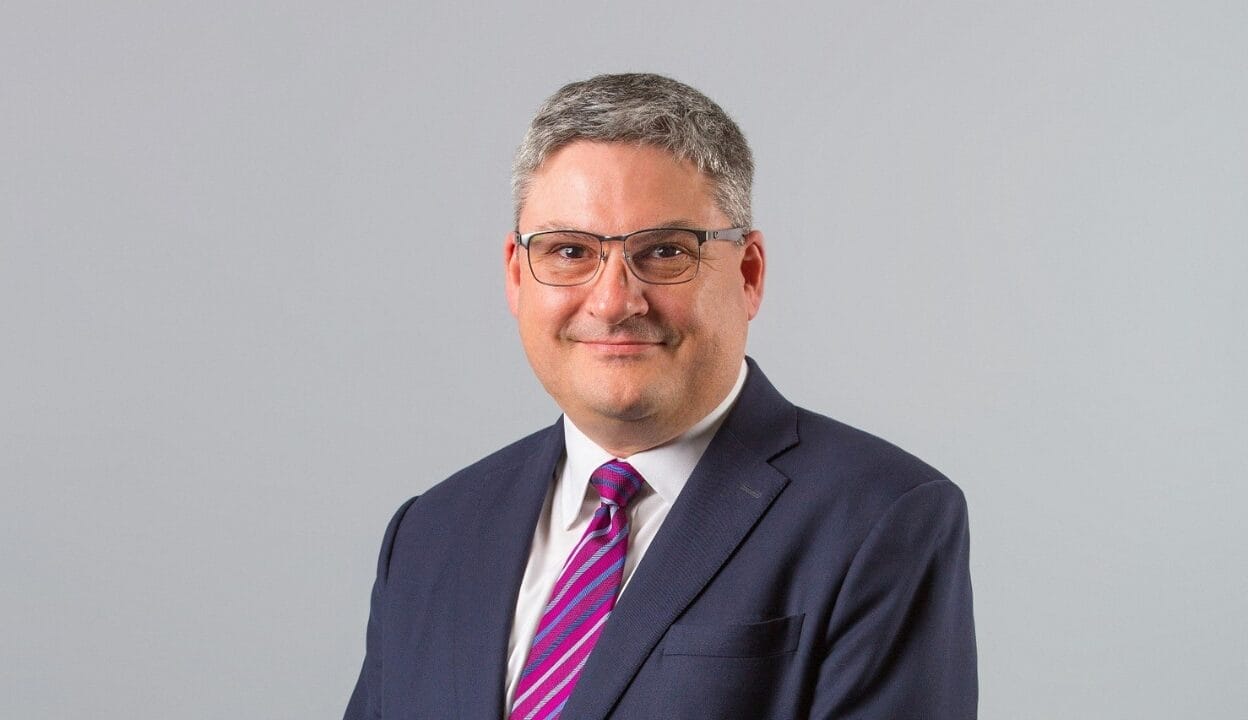
A key concern on the horizon for Timo Löyttyniemi, CEO at VER, the €21.6 State Pension Fund of Finland is the impact of higher interest rates on private assets. Investors still haven’t seen the impact of higher borrowing costs on leverage in their illiquid allocations, and he believes a reckoning could be in the pipeline.
In the coming months, it will become apparent how private asset fund managers have handled the impact like the extent they’ve hedged interest rate risk, re-financed, and successfully reduced total leverage levels.
Although he’s confident VER’s managers overseeing allocations including private equity, credit and real estate have prudently managed higher borrowing costs, he says history acts as a warning to investors that things often don’t go to plan.
“There could be negative surprises in some of the fund industry structures. I am eager to see how the impact of interest rate shocks will be passed through to these products.”
Higher interest rates have already exposed weaknesses in individual banks like the tech sector’s favourite lender Silicon Valley Bank. “SVB management had taken excessive risks, while the authorities had allowed reporting that did not require full disclosure,” he says.
As (at the time of writing) Californian lender First Republic scrambles to survive, he says investors “are trying to figure out the next victim,” although he notes the crisis is bank specific, rather than a banking crisis.
VER’s allocation to private assets was recently increased by 3 per cent to include the overweight in the portfolio due to falls in public assets. Just under a quarter of total AUM is invested in illiquid investments spanning private credit (3.3 per cent) private equity (7.4 per cent) infrastructure funds (4.1 per cent) unlisted real estate (4.3 per cent) and hedge funds (4.4 per cent) From now on any increase in the allocation will depend on performance and overall returns.
VER’s allocation to illiquid assets is less than local peers partly because of the fund’s liquidity needs. “We are already paying out more to government for employees’ pensions than we are getting in payments and over the next ten years we expect our negative net outflows to increase and continue. We shall assess the impact to asset allocation, and we won’t continually increase our allocation to illiquidity, there will be a maximum.”
Listed equity
VER’s direct, active allocation to Nordic equities accounts for around a quarter of the 40 per cent allocation to public equity portfolio. The rest of the allocation to public equity is invested globally where VER eschews mandates, with around 75 per cent in index driven funds and ETFs with service providers like BlackRock and StateStreet.
Löyttyniemi counts 59 current investments in funds, including ETFs in the portfolio and says the approach is rooted in VER’s long culture of using mutual funds and ETFs to ensure diversity, flexibility, and low costs.
“Not using mandates works well for us because we can change products if we need, ensuring diversification between products and service providers. We can really execute on the elements we want.”
He adds that the Nordic tilt helps offset the ever-growing allocation to US equity in the world’s equity index. Currently around 60 per cent, it is increasingly on European investors radar. “Even the Norwegian State Pension Fund has set the US weighting at just around 45 per cent,” he says.
Löyttyniemi has a neutral outlook for markets given geopolitical and economic uncertainty and unknowns around central bank policy. The allocation to public equity was pared back by around 5 per cent in August 2021 in a new SAA to allocate less to equities for the first time in the fund’s history. The passive allocation is currently divided between North America (27 per cent,) Europe (21 per cent,) merging markets (22 per cent,) Japan (5 per cent.)
The fixed income allocation follows benchmarks in terms of tracking error, but the portfolio is actively managed (over half by an internal team) and tilts to particular government bonds and money market instruments, credit and emerging markets. Does he see the impact of the war on Nordic sovereigns? “Now Finland is part of NATO, we don’t see this as an issue.”
But he does see geopolitics increasingly impacting corporates. Namely in their supply chains, and increasingly in investor flows. “These flows have an impact in terms of pricing and returns,” he says. “The free flow of capital and globalisation has limits, and in the coming years we’ll see the magnitude of that change in how corporations have acted.”
He notices that more investors are excluding China, and that some are starting to exclude emerging markets from their allocations too.
“We will be held to account on whether we have made good decisions in terms of evaluating what lies ahead. At this stage it is prudent to flag that geopolitics will have an impact in the future, where it lands remains to be seen.”







Leave a Comment
You must be logged in to post a comment.
Login