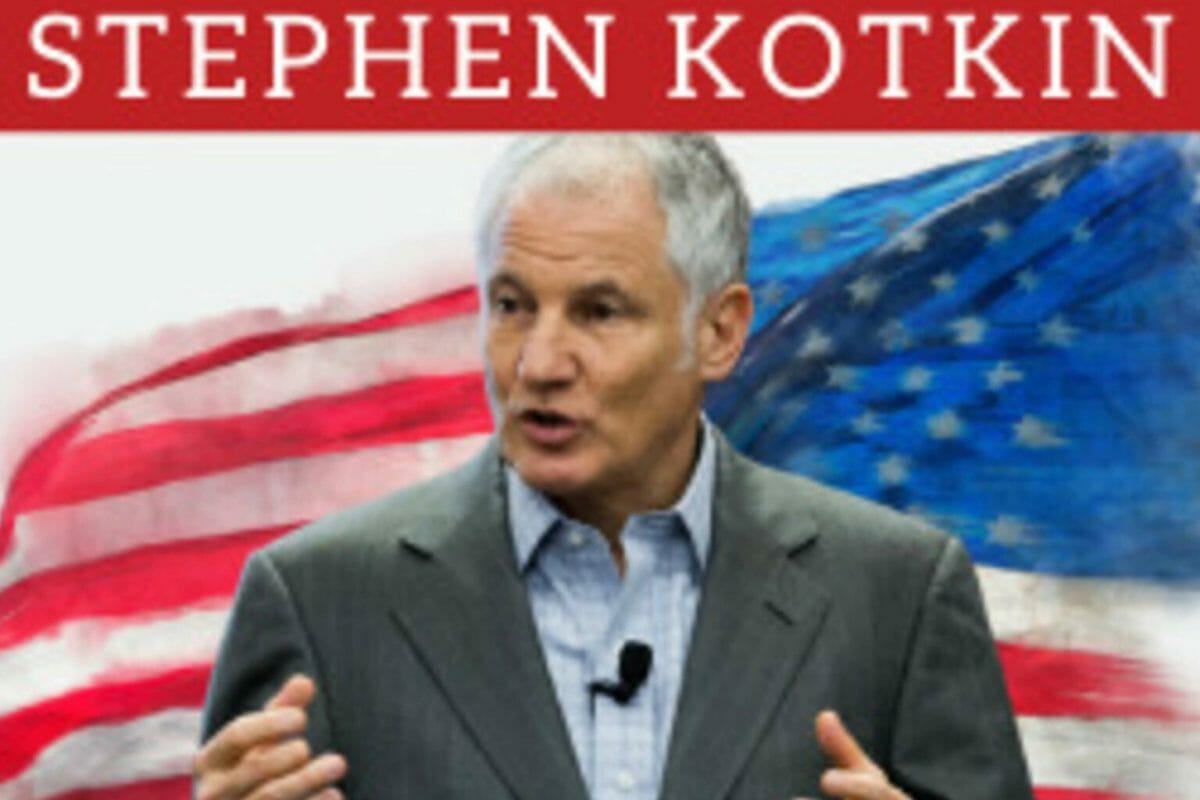

Can America be great (again) ?

An erosion in social cohesion, lack of trust in institutions and lack of social mobility have weakened the fabric of society in the US; and it is these issues that are on trial as the country goes to the polls not who wins or loses, according to Stephen Kotkin, the John P Birkelund Professor in History and International Affairs at Princeton University.

Trust in institutions and governments is a key issue, he says. But not only are people not trusting institutions, they are not trusting each other. This is in part due to the concentration of influence and power among the elite and wealthy, and the lack of social economic mobility particularly among the poor.

“Unaccountable elites have led to rage, this is a deep and fundamental problem – how to make the system accountable again. How to make sure that policies work… for larger groups,” he says. “Giving the mass population a boost, the ability for them to be self reliant, to work hard and be rewarded for that, the way we all believe the system should work.”

Speaking to Amanda White in a Fiduciary Investors Series podcast, Kotkin – who is an expert in international affairs and diplomacy – says while the politics can be fake the sentiment is real.

“Democracy is challenged but not doomed. It requires renewal, that institutions and trust renewal and that fairness renewal. That’s within our grasp,” he says.


Sponsored Content

“Broadly the implications of the US election for the world, this is something deeply unfair, the consequences are felt in just about every country but they don’t have a say in the US elections. This is deeply frustrating and fully understandable.”

Kotkin says there is also a change in America’s relation to the external world, with both the Republican and Democratic parties now consisting of certain factions that are nativist, where previously the Republican Party in particular was run by internationalists.

“That means a return to the status quo where America is fully engaged across the world doesn’t look feasible in the short term,” he says. “I predict a continuation of this trend where there’s a lessening of international commitment. America will not and cannot disengage from the world but it won’t be at the height it was under Reagan or Clinton. There is a change in the balance of how dominant internationalism is domestically which effects the role of America everywhere, and this is a healthy debate.”

Kotkin also spoke of the US/China relationship, pointing to Taiwan as the weak point.

“I worry a lot about Taiwan as the place that could unsettle everything, the whole world, all of our lives and all of our portfolios,” he says. But he also points out it is not just Taiwan, but also Hong Kong and the South China Sea that are vulnerable points.

“China is the driver here. China deserves to be recognised but also needs deterrents for some of its excessive and aggressive behaviour.”

Stephen Kotkin will speak at the Fiduciary Investors Symposium digital December 8.

Leave a Comment

Why NYC pensions CIO hasn’t drunk the ‘TPA Kool-Aid’

Why NYC pensions CIO hasn’t drunk the ‘TPA Kool-Aid’

Three decades of investing have given Monte Tarbox sharp eyes for recognising risk and opportunities, and he’s putting it to use as the new permanent chief investment officer of the $306 billion NYC Bureau of Asset Management. In an interview with Top1000funds.com, Tarbox outlines his vision for the fund, why he’s bullish on infrastructure but “nervous” on PE, and why he hasn’t drunk the TPA “Kool-Aid”.

Sort content by

Why pensions have become a beacon of female leadership in finance

On International Women's Day, Top1000funds.com celebrates the women leading some of the biggest pension funds and the purpose, long-termism and passion for learning that drives them.

Sweden’s FTN focuses on fees and returns in latest procurement

Lower management fees and higher returns defined the latest selection process at the Swedish Fund Selection Agency in its latest awarding of active global equity mandates to 12 managers, its largest and most ambitious €20 billion ($23 billion) procurement so far.

Infrastructure at the heart of Canada-Australia pension fund pact

A group of major Canadian pension funds, including the Maple 8, has entered a high-powered memorandum of understanding with top Australian superannuation funds to lobby for policy changes that would help fast-track investments. Brokered by IFM Investors, enabling infrastructure investments in both nations will be a significant focus.

AP2, AP6 merger on track; currency impacts returns

In a big year, AP2 introduces a new asset management model and completes the integration of sister fund AP6 but the fund's 2025 return feels the impact of a strong SEK on its global portfolio. Eva Halvarsson, AP2's outgoing CEO, discusses the allocation and mandate changes and opportunities it presents.

Chicago Teachers: Where succession fears put managers on watch

In a recent investment committee meeting, trustees at Chicago Teachers heard how succession risk at external managers can hit not only returns but also managers' ability to bring ideas into the investment process and consistency around portfolio construction and implementation.

NYC Comptroller on corporate stewardship escalation, Israel bonds re-entry

New York City Comptroller Mark Levine says he will leverage the city’s $310 billion pension assets and link arms with other state Treasurers to apply pressure on US corporates. In an interview with Top1000funds.com, he sets out the stewardship agenda while explaining a potential re-entry into Israel bonds.

Previous



