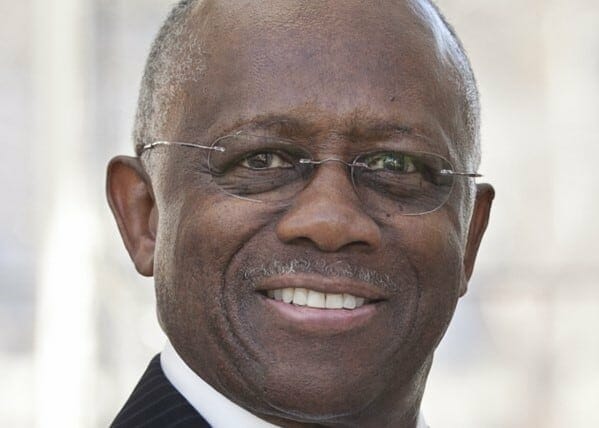

CalPERS’ role in tackling racism

CalPERS has a moral imperative to confront racism
Continue Reading

Access the full content on Top1000funds.com

Join the global institutional investment platform read by the world's largest asset owners, fund managers and consultants.

New here

Create an account

Complimentary to register. We'll verify your details and grant access to the archive, our newsletters and the Asset Owner Directory (enhanced features coming soon).
Create your Top1000funds.com subscription account
Already a member

Sign in

Already activated your account? Sign in to continue reading and access your saved articles, preferences and member-only content.

One response to “CalPERS’ role in tackling racism”

  1. William Michael Cunningham, AM, MBA

    We are in the pool of Non-Fiduciary advisors to CalPERS. As we stated in filings to the fund last year, “We note that CalPERS will find it difficult and costly to deliver benefits promised in markets riven by a lack of ethics, and in a society with growing racially targeted violence, environmental degradation and extreme social instability.” Also see: Black communities need more help from Fed https://www.americanbanker.com/opinion/black-communities-need-more-help-from-fed

Leave a Comment

Are Canada’s pension bosses paid too much?

Are Canada’s pension bosses paid too much?

Canada's public pension funds pay their executives huge salaries. But as performance continues to trail benchmarks, salary levels are coming under more scrutiny. Sarah Rundell takes a deep dive into the complex world of how to incentivise and reward pension fund executives.

Sort content by

Biodiversity: Regeneration set to become big investment theme in future

Regeneration will become a key investment theme in the future according to multiple biodiversity themes, according to Gabriel Micheli, senior investment manager, thematic equities, Pictet Asset Management.

Investors balance net zero with fiduciary duty and climate scepticism

A panel session at the Fiduciary Investors Symposium at Oxford discusses how the absence of policy is making net zero investment more challenging. Asset owners have to work hard to explain to beneficiaries why net zero targets give a better risk adjusted return.

Geopolitics: US retrenches to focus on one potential war

Leading global affairs scholar Stephen Kotkin explains why the US is retreating from its role as global policeman with profound implications for the world and warned that the rising number of regional conflicts bears comparisons with the 1930s. “It’s only after it happens that it becomes obvious,” he said.

‘Opportunity to lose a lot of money’ in net zero investments

Allocating capital to net zero opportunities doesn’t mean investors are prepared to do charity. In a universe of potential transition solutions, Battcock Professor of Environmental Economics Cameron Hepburn at the Smith School of Enterprise and the Environment, University of Oxford said investors should look at them with some filters.

Room for fee innovation as traditional models come under pressure

Asset owners and managers may not always agree on fees, but one thing both parties are thinking a lot more about these days is creating innovative structures which – if done right – could provide rewards for the former and value for the latter.

Asset allocation evolves to factor-in client needs and measure success

Institutional investors strive to link their strategic asset allocation to their key objectives and ensure it evolves alongside technological advancements. A discussion at Fiduciary Investors Symposium Oxford explored the complexities and trade-offs inherent in portfolio construction.

Previous



