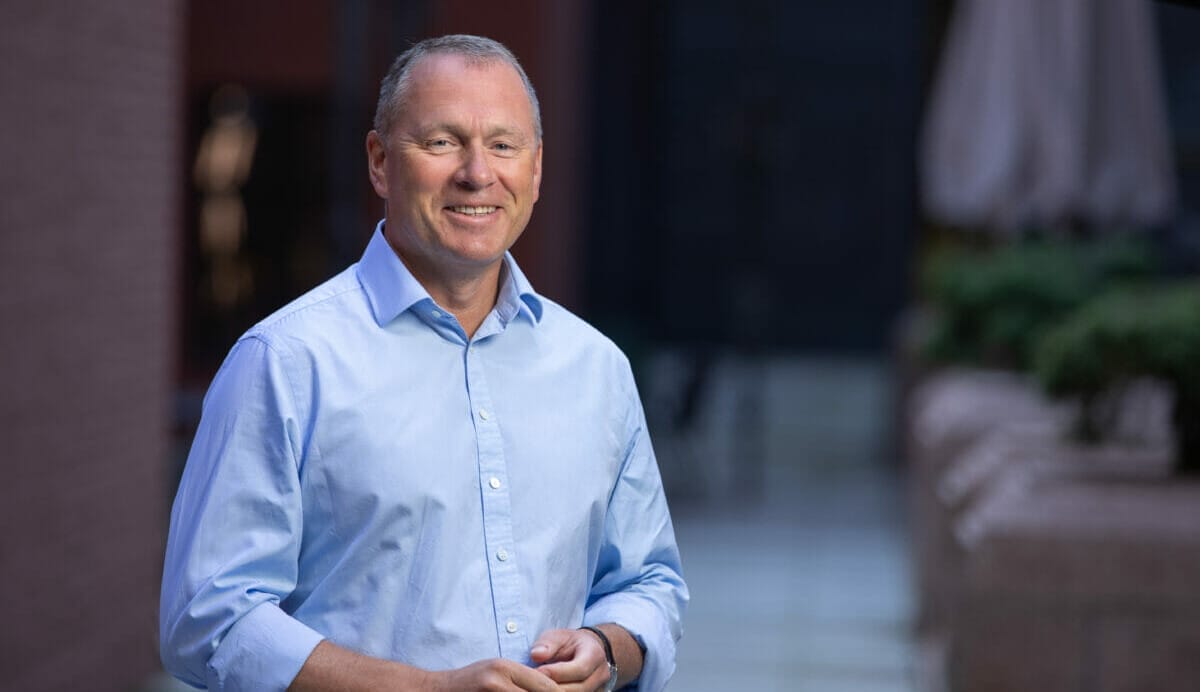
An announcement from the editor

Today marks a new chapter for our publication.

For nearly two decades, we’ve provided independent, in-depth journalism on how the world’s largest institutional investors construct portfolios, make allocations and navigate an increasingly complex investment landscape.

We’ve published more than 5,000 stories, connecting you with the thinking, strategies and peers shaping the global investment industry.

That commitment isn’t changing. But from today, access to our journalism will require you to be logged in.

This change helps us protect our original reporting from AI crawling and unauthorised republication, while ensuring we can continue investing in the depth, rigour and specialist journalism you expect from Top1000funds.com.

Registration is simple. Once your account is activated and you’re logged in, you can continue accessing the site as usual.

Sponsored Content

Thank you, sincerely, for your ongoing support. And if you have any feedback or ideas for how we can improve, please feel free to get in touch.

For more context on the change, and why we believe it’s important, watch my short video above.

Continue Reading

A Top1000funds.com subscription unlocks the full article

Join the global institutional investment platform read by the world's largest asset owners, fund managers and consultants.

New here

Create an account

Complimentary to register. We'll verify your details and grant access to the archive, our newsletters and the Asset Owner Directory (enhanced features coming soon).
Register now
Already a member

Sign in

Already activated your account? Sign in to continue reading and access your saved articles, preferences and member-only content.

Leave a Comment

Could Norway’s SWF really disappear?

Could Norway’s SWF really disappear?

Rising geopolitical risks and an AI correction could severely impact the value of the $2.2 trillion Norwegian sovereign fund, according to its chief executive Nicolai Tangen, who went so far as to say the fund could "disappear." The warning is a stark one for the world's largest sovereign wealth fund, whose 70 per cent equity allocation leaves it heavily exposed to any sharp correction in global and particularly US tech markets.

Sort content by

CDPQ’s real estate arm Ivanhoé Cambridge talks agility and evolution

Two thirds of Ivanhoé Cambridge's real estate allocation used to be invested in return-dragging office and retail assets. Now, in a complete reversal, two thirds is invested in logistics and residential real estate alongside a growing allocation to alternative life sciences

Eyes on SE Asia, divergent views on China among global funds

Australia’s second-largest superannuation fund, the A$240 billion Australian Retirement Trust, will likely “do more, not less” investing in China, said the fund’s head of strategy, following significant internal debate over geopolitical developments and how they will impact the portfolio.

CIOs’ confidence wanes as agility becomes the focus

The 2023 CIO Sentiment Survey, a collaboration between Top1000funds.com and CaseyQuirk, finds asset owners focusing on agility as they observe dramatic market changes not seen in a generation. Only 36 per cent of CIOs are confident they will reach their return targets in 2023.

HOOPP eyes bonds as source of incredible return once again

Given current levels in real interest rates, real return bonds (namely Canadian government bonds and US Tips) represent an 'incredible' return compared to the underlying risk, Canada's HOOPP plans to build on its exposure.

SVB collapse reminds us long-term investors, too, can panic – but don’t

"A long-term investor sells when it wants to, not because it has to." This is an especially clear and succinct definition of long-term investing. Long-term investing is about how the institution behaves, not a fixed time period.

Giant sovereign, pension funds re-think portfolios as market shifts

Speaking at Conexus Financial’s Fiduciary Investors’ Symposium held in Singapore, leaders from sovereign wealth funds in Singapore and Malaysia, along with United States pension giant CalSTRS, discussed how investors are viewing global macro risks and opportunities, and strategies they are considering to future-proof their portfolios.

Previous