
How AP4 integrates sustainability in alternatives

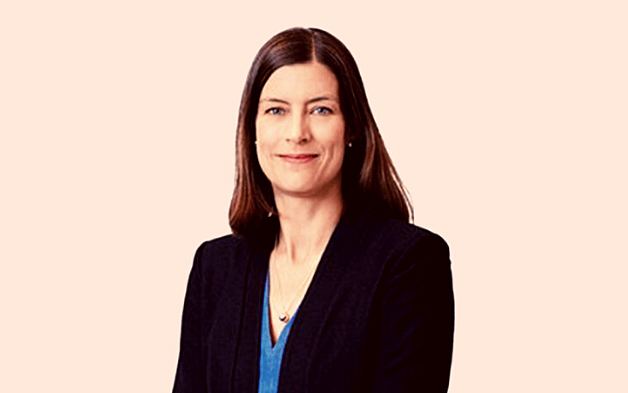
AP4’s head of alternatives Jenny Askfelt Ruud discusses how the pension fund integrates sustainability in its alternatives portfolio which includes avoiding investments in some sectors in line with its decarbonisation strategy and investing in sustainability themes by finding companies that are driving the transition with new technologies and services.

AP4, one of the five Swedish buffer funds, has around 17 per cent of its $50 billion portfolio in alternatives in a strategy designed to complement public markets and generate real cash flow. The pension fund also has the capacity to substantially increase the allocation since changes to its mandate in 2019 – a consequence of a vocal campaign for change pushed for by AP4 chief executive Niklas Ekvall, amongst others.

At AP4 the majority of its alternatives portfolio lies in real estate, with the balance in infrastructure, private debt and private equity.

Speaking at Sustainability in Practice, Jenny Askfelt Ruud, head of alternatives says AP4 has a core, holistic approach to integrating sustainability in alternatives and is targeting net zero emissions in the portfolio by 2040 with a half-way target to halve the carbon footprint by 2030. The fund uses its influence to actively engage with companies in a bespoke approach tailored to each investment.

“We apply different measures in public and private investments,” says Ruud. “We find the right tools for each type of investment.”

The fund avoids investing in some sectors in line with its decarbonisation strategy and invests in sustainability themes by finding companies that are driving the transition with new technologies and services.

Sponsored Content


Partnerships

In private markets you can’t vote with your feet, said Ruud. Here her focus is on investing with like-minded partners where investment is shaped around long-term relationships chosen for shared values and culture, underscored by investment rigour.

“Talking the talk is easy, but we prefer to put measuring and reporting into legal documentation,” she said.

The asset owner seeks to invest in structures where it can have real influence around sizing and legal documentation, and also invests via platforms. Transparency and measuring are a key tenet to the portfolio where the firm hopes to drive efforts where international standards are lacking, she said. For example, the fund already reports emission from its real estate portfolio which accounts for around 75 per cent of its alternatives allocation.

Noting growing dialogue amongst peer real asset investors in how best to position for climate related risk, Ruud described how she has built expertise within her team to ensure they can ask the “uncomfortable” questions themselves.

“Sustainability experts give great support, but I want this within my team,” she said.

Ruud said investors need to take a long-term approach when deciding where and where not to invest, and advised on a long-term thematic approach that avoids high emissions when allocating new capital. In the legacy portfolio, engagement and dialogue are key to “put pressure” where needed. Elsewhere the fund’s active decarbonisation strategy means it is not investing in some sectors.

She said a particular area of focus is sustainability themes like the energy transition, mobility and renewables, services and technology – markets which face lower risk over time. “It is a live discussion where we add themes and sectors as they mature,” she said.

Together with sister AP funds, AP4 has set up Polhem Infra, an investment company that invests and manages infrastructure assets targeting long-term sustainable investments in the Nordics. Elsewhere, again with other buffer funds, AP4 co-led financing in Northvolt AB, a Swedish battery developer and manufacturer specializing in lithium-ion technology for electric vehicles. We want to be part of the evolution of the European battery industry, she said.

She concluded that a key focus going forward will be around measuring and finding the right standards. “Data is crucial in private markets, particularly in more private equity focused investment.”

Asset Owner:AP Fonden 4 (AP4)

Leave a Comment

America’s net zero opportunity

America’s net zero opportunity

Research from Princeton University plots a Blueprint for how the US can achieve net zero emissions in the next decade showing the key is overcoming execution challenges including the infrastructure deployment and the mobilisation of capital and labour.

Sort content by

Climate Scenario Analysis: A Rigorous Framework for Managing Climate Financial Risks and Opportunities

Climate change is one of the defining issues of our age. Its physical manifestations are negatively affecting ecosystems, human health, and economic infrastructure. And even if the world is able to keep global temperature increases to 1.5° above pre-industrial levels, much more disruptive outcomes are coming.

The importance of engagement

In this episode Amanda White talks with engagement specialist at Robeco, Peter van der Werf, about the importance of engagement; what good engagement looks like; and what financially material sustainability themes are important right now.

Looking forward with the PRI

In conversation with Fiona Reynolds, chief executive of the PRI, this episode looks specifically at some of the activities of the PRI and its engagement with stakeholders around COVID-19, their ESG priorities and what a sustainable recovery looks like.

NY Common’s sustainability integration

Andrew Siwo is the first director of sustainable investments and climate solutions at the $200 billion New York State Common Retirement Fund (CRF). Here he talks about the fund’s approach to ESG integration.

Overcoming deepening inequality: CalPERS

How can investors work together to combat inequality? In this podcast episode Amanda White speaks to the president of CalPERS, Henry Jones, about his own experience and the fund's journey in tackling diversity and inclusion, in particular issues of racism.

The path to a sustainable economy

This episode explores the key pillars of a sustainable recovery including the three important long term trends that need to be addressed climate change, loss of biodiversity and inequality. It explores the key role for the finance industry which includes building new models that are not only about maximising monetary profits but also transition theory, and the value of ecological and social capital.

Previous