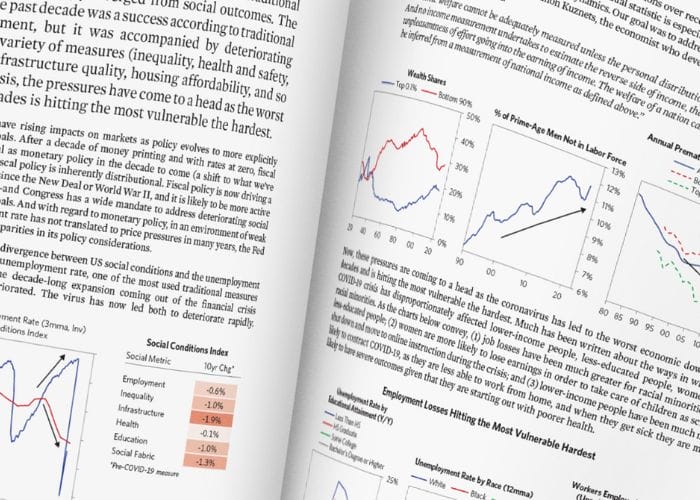
Social conditions and the economy

The ultimate goal of economic policy is simple and timeless—to ensure prosperity and maximize living standards. Broad macroeconomic measures such as GDP growth, the unemployment rate, and inflation had for decades been a good proxy of rising prosperity, so they have dominated economic policy making and are enshrined in most central bank mandates. But even before the COVID-19 crisis, it had become clear that traditional economic measures have increasingly diverged from social outcomes. The economic expansion of the past decade was a success according to traditional measures of full employment, but it was accompanied by deteriorating social conditions across a variety of measures (inequality, health and safety, educational attainment, infrastructure quality, housing affordability, and so on). With the COVID-19 crisis, the pressures have come to a head as the worst economic downturn in decades is hitting the most vulnerable the hardest.

Click here to read the full paper.
Sponsored Content

Leave a Comment

Climate the No.1 priority for 2021

Climate the No.1 priority for 2021

Climate is by far the number one sustainability priority for investors in 2021 according to a poll of asset owners from more than 32 countries which came together for the Top1000funds.com online Sustainability event in March.

Sort content by

What’s next for investor action?

This session looks at two case studies activist stewardship (with Exxon) and whether investors are funding treason (the case of the US congress riots).

Engagement: labour rights and covid-19

This session looks at how investors can influence investee companies to change their focus and put people before profits to create a more sustainable economy.

The global labour market is broken

This session examines why there needs to be a new social contract between workers, government and business and what will happen if there isn’t.

Impact in public markets

Karen Karniol-Tambour, discusses frameworks for assessing the sustainability and impact characteristics of public assets including equities, fixed income assets and commodities which investors can apply to their own portfolios.

Gender lens investing

This session looks at the gender gap and the tools and processes available to improve the gender lens for investors both organisationally and for the companies they invest in.

What’s at stake

This session examines research from Woodwell Climate Research Centre that assesses near-term physical and socioeconomic risks associated with climate change and demonstrates a model for embedding the insights of climate science into both public- and private-sector decision-making.

Previous




