
Transparency, predictability underpin impact investing at Norges Bank

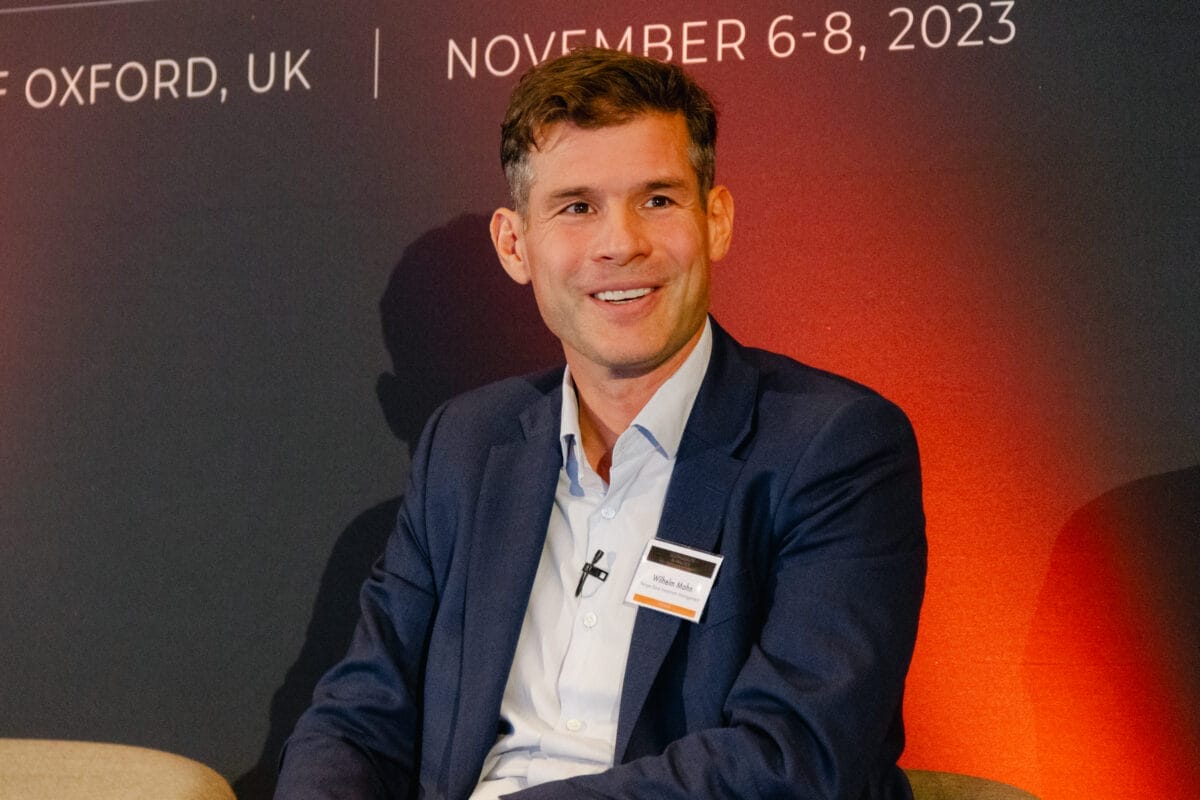
Predictability and transparency are fundamental to having impact as a global responsible investor, according to Wilhelm Mohn, the global head of governance at Norges Bank Investment Management, which manages Norway’s $1.43 trillion Government Pension Fund Global.

Owning around 1.4 per cent of the world’s equities and managing 95 per cent of them in-house, Norges took top spot in this year’s Global Pension Transparency Benchmark.

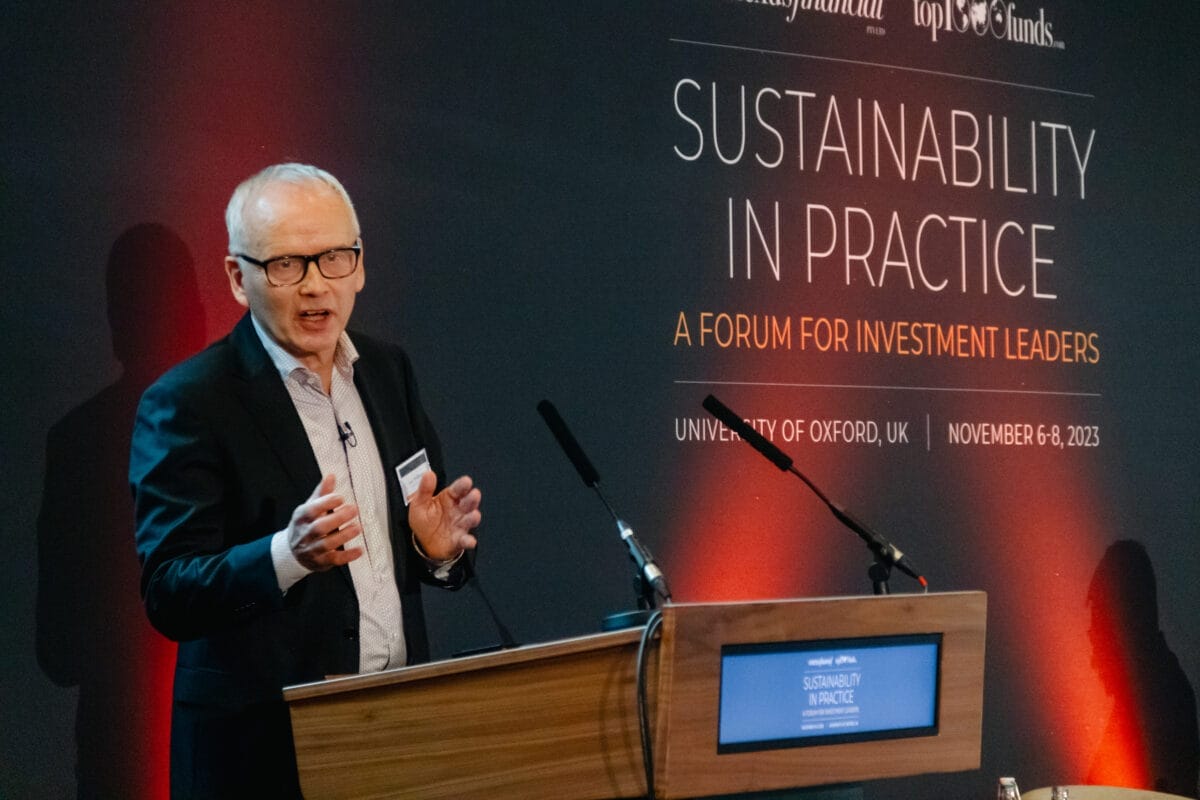
“Being predictable and transparent is, in itself, something that can make us more effective, make us have a bigger impact,” said Mohn, speaking at the Sustainability in Practice conference, organised by top1000funds.com and held this year at the University of Oxford.

Norges has a straightforward governance framework, Mohn said, with 70 per cent listed equities, 25 per cent listed bonds of which 70 per cent are government bonds, along with some unlisted real estate and unlisted renewable infrastructure investments.

In its corporate governance efforts to engage with companies, Norges has stewardship experts or subject matter experts on sustainability that take views on companies’ exposure to governance and sustainability risks and develop strategies to engage for change.

Its benchmark is determined by a department in the Norwegian Ministry of Finance, and its main strategic decisions are anchored in parliament, giving a lot of transparency to its operations. Norges publishes five days in advance how it is going to vote in board resolutions, with detailed explanations of its reasons if it decides to oppose a resolution.

Sponsored Content

This policy is based on three tenets carried since the beginning, Mohn said. “We should be principled in our approach that we build on clear principles and standards; We should be quite predictable so that it’s possible for our stakeholders and the company that you invest in to understand where they’re coming from and what we might do next; And then that that has to be underpinned by transparency.”

When the fund implements changes to its guidelines in a specific market, such as previously changing how it votes in Japan on independence or diversity, the fund tries “to be ahead of it to start conversations at market level,” Mohn said.

Norges has divested from 74 companies in 2022 and more than 440 since 2012, clearly viewing divestment as an effective tool while other asset owners are increasingly reluctant to use divestment as a tool, noted session chair Amanda White, director of international at Conexus Financial, publisher of Top1000funds.com. What is the thinking behind this?

Mohn said the engagement versus divestment discussion “is a little bit too binary at times,” and there are times when the fund decides “the risks are too high, and they’re not managed particularly well, and it’s not for us.”

The fund also has ethical exclusions about products or conduct it doesn’t want to invest in. Net zero is a central topic, along with anti-corruption, tax and transparency, human rights, human capital management, responsible AI, and water. 

Developing better analytics is a key pillar of being a responsible investor, Mohn said, by sharing coherently the results of its stewardship over time. 

“That’s essentially all a big accountability exercise and for us that’s really important,” Mohn said. “Because really what we’re trying to do by being a responsible investor is to safeguard these assets for the future. And it’s more important than anything that our ability to invest and to invest smartly and not to react with knee jerk reactions to anything, it’s the stability of all that that really decides whether we are a good investor for future generations.”

Leave a Comment

Meeting multiple objectives: The pension fund addressing mental health

Meeting multiple objectives: The pension fund addressing mental health

With the right governance models pension funds can play a role in broader societal issues, such as mental health in the workplace, while still delivering financial security for members. A unique “democratic governance structure” at the Danish Velliv Association allows it to manage multiple objectives, chief executive Lars Wallberg said.

Sort content by

Under-priced climate risk plagues pension portfolios

Climate risk remains systematically under-priced and the world isn’t on course for net zero. Investors need to prepare for the risks of climate and environmental change and re-evaluate the risk in their portfolios, University of Oxford researcher Nicola Ranger warned delegates to Sustainability in Practice.

Emerging tech and a little pragmatism make biodiversity investible

Finding “nature positive” companies to invest in is a challenge, delegates to Sustainability in Practice at the University of Oxford have heard. But Institutional investors can play a key role in turning corporate laggards into leaders.

PGGM prepares to incorporate impact in three dimensional approach

Dutch asset manager PGGM is working with Bridgewater Associates to integrate impact across its portfolio. PGGM's Arjen Pasma and Bridgewater's Carsten Stendevad discuss the strategy, which promises to dramatically reshape PGGM's €228 billion portfolio.

Sustainability in Practice: Time to get realistic about net zero

Many asset owners have net zero commitments in place, but few of these targets are being met with implementation. In the opening session of Sustainability in Practice at the University of Oxford, delegates discuss how investors should get realistic about net zero.

How large would you like your climate risk to be?

Tim Hodgson, co-founder of the Thinking Ahead Institute at WTW, explores the possible consequences of breaching planetary boundaries and triggering systemic risk.

Dutch, British and Australian funds latest to back timberland

Investors are hunting forestry assets because they combines a large-scale sustainable investment with compelling risk-adjusted, inflation proof returns and diversification. Funds like Nest, APG and AP2 explain their approach.