
Impact investors, be wary of labeled bonds

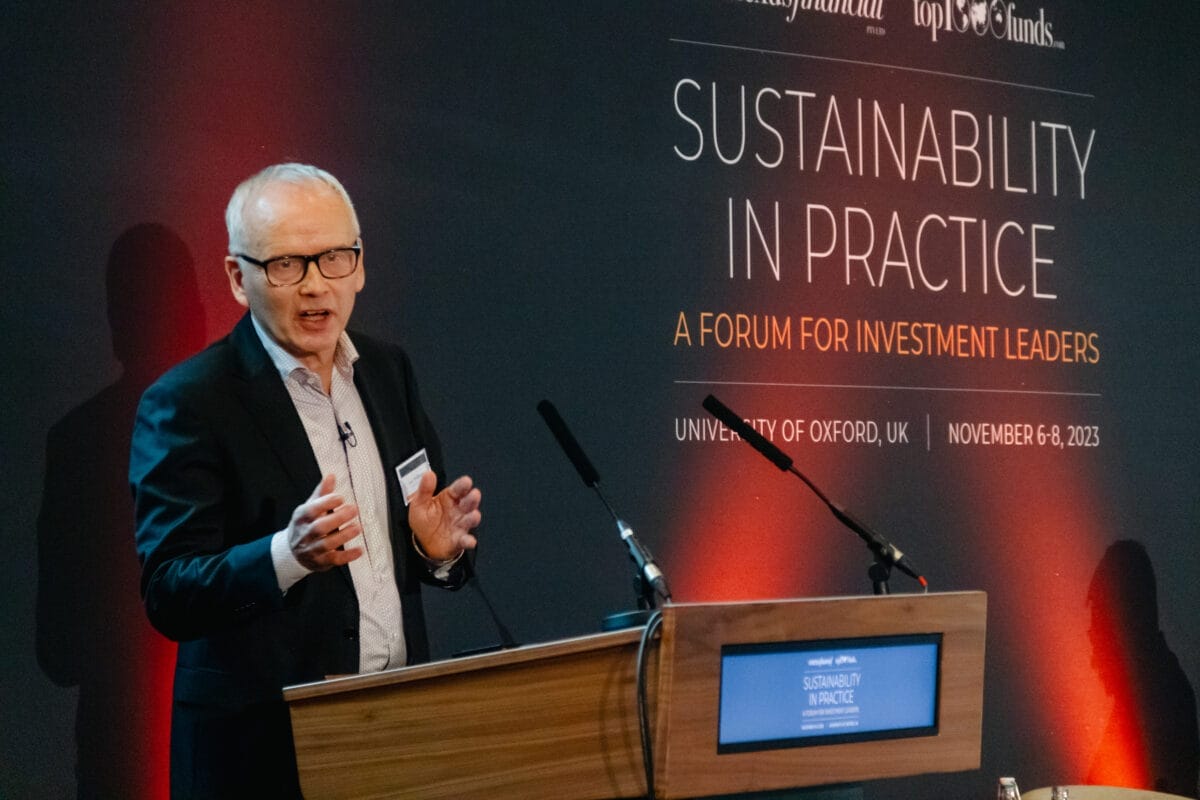
Investors should be “asset class agnostic” when it comes to impact investing and can’t afford to neglect the fixed income market, according to Oyin Oduya, impact measurement and management practice leader at asset manager Wellington Management. However she told investors at the Sustainability in Practice event at Oxford University last week they should approach labeled bonds with a critical lens due to risks of greenwashing.

S&P Global Ratings predicted in September that green, social, sustainable, and sustainability-linked bonds (GSSSB) will account for 14 to 16 per cent of total bond issuance in 2023. The asset category is forecast to have $900 billion to $1 trillion worth of issuance for the whole year, with green bonds expected to account for 59 per cent of the total GSSSB.

Oduya highlighted that labeled bonds are fundamentally “based on promises” before they are issued. While bond issuers will usually tout regular allocation reports and strong investment frameworks, there are risks that the promises will not be fulfilled in the long-term.

But there’s also the issue created by the independence between the bond and the issuer. “You could have a bond, which is doing something good, issued by an issuer that’s doing something bad,” she said. These are exactly the reasons why Wellington doesn’t focus exclusively on labeled bond, despite their obvious appeal. In fact, the asset category is currently a minority in its global impact bond portfolio.

She suggested that investors stay clear headed on labeled bonds by examining revenue materiality (Wellington’s benchmark for labelled bonds is 90 per cent of use of proceeds going to impact themes), additionality (where the enterprise itself is doing additional works) and measurability (a defined KPI at the time of investing).

According to the Global Impact Investing Network (GIIN), the impact investing market stands just above $1 trillion, a drop in the bucket compared to $100 trillion in global assets under management.

Sponsored Content

In terms of choosing between public and private assets, Oduya suggested investors note the differences in measurement such as data availability. For example, private markets tend to have scarce data due to a lack of sustainability departments or staff, and investors have to do the work in encouraging them to develop relevant disclosure. But the public markets’ problem can be the exact opposite, because public companies tend to have significantly more resources and an abundance (or an excess) of data.

“Once the money has been invested, the issue we have in public markets is that they are very good at giving you ESG data,” she said. “They’ll be able to give you scope one or two emissions, numbers about the diversity of their board, and how many volunteer days they’ve done that year. But they can’t tell you where their product is being used, how much GHG emissions are being avoided, or how many people are getting access to health care at an affordable cost.”

Oduya conceded that for impact investing to become really institutionalised, investors need to set their sights beyond alternatives to the entire capital markets and recognise that investment performance will be absolutely crucial.

“I’m saddened, but it does come up in meetings where people ask: ‘If you’re an impact fund, does that mean it’s a concessionary strategy? Do you think that if a company has more impact, you can put it in the portfolio even if it has a less attractive financial return?’

“The answer is always we have to have both attractive financial returns and positive impact. It doesn’t make sense for us to have a portfolio which is concessional, but you want to be able to grow, scale and attract investors. Impact is not sustainable in this framework, if it doesn’t make money.”

Leave a Comment

Meeting multiple objectives: The pension fund addressing mental health

Meeting multiple objectives: The pension fund addressing mental health

With the right governance models pension funds can play a role in broader societal issues, such as mental health in the workplace, while still delivering financial security for members. A unique “democratic governance structure” at the Danish Velliv Association allows it to manage multiple objectives, chief executive Lars Wallberg said.

Sort content by

Products and services, not operations, key to assessing ESG

Global asset management firm Robeco has differentiated its ESG assessment methodology to give a more accurate picture of the impact investors have on sustainable development goals (SDGs), according to Rachel Whittaker, the firm’s head of sustainable investment research.

Thoughtful ESG engagement the epitome of good active management: Pictet

Investors’ approach to ESG has evolved considerably, particularly in the area of engagement with portfolio companies, and encouraging change through active and targeted engagement is “the epitome of what active managers can do”, the Sustainability in Practice conference at Oxford university has heard.

Politicisation, poor governance to blame for backlash against ESG

CIOs need to fight back against the politicisation of ESG in the United States by adopting sound governance principles and not allowing their funds to be “pinned down to one side of the [political] spectrum”, the Sustainability in Practice conference at Oxford University has heard.

Board control critical to ESG stewardship in unlisted infrastructure

Investors can de-risk and increase the long-term returns of unlisted infrastructure assets by enacting forward-looking ESG transitions, investors say, but they need to ensure sufficient control at the board level.

The unique challenge of decarbonising real estate as the population grows

Demand for more agricultural land alongside the need for greater biodiversity and zero deforestation will drive investment in responsible land management practices and natural capital says Abi Dean, global head of strategic insights, at Nuveen Real Assets. 

Why these impact investing veterans don’t care about ESG ratings

BlueOrchard and Schroders Capital’s impact investing veteran, Maria Teresa Zappia, isn’t a fan of using ESG performance to evaluate her portfolios, suggesting that investors are limiting their options if they are not willing to consider companies with lesser ratings.