
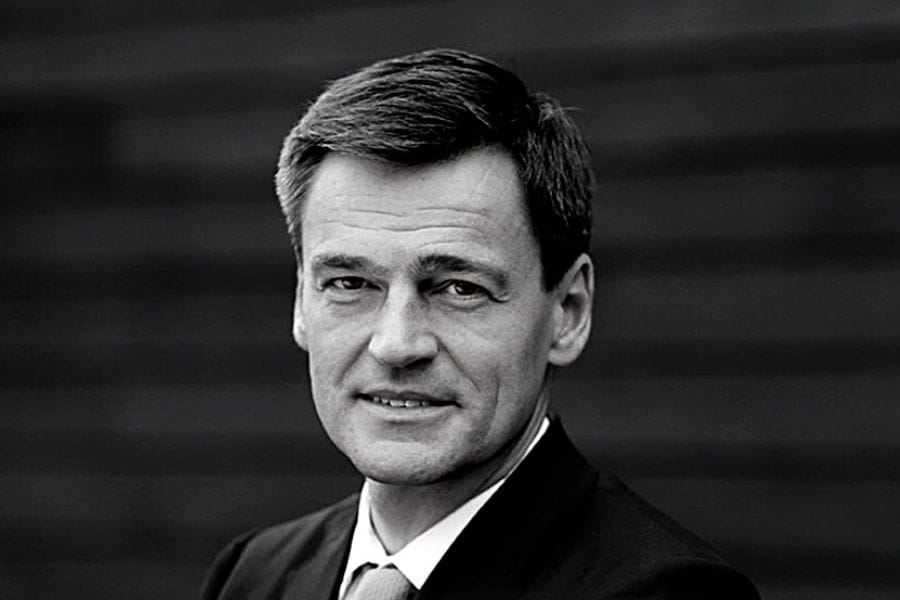

In today’s hot inflationary environment and where prices are forecast to rise further still, the commodity markets (excluding oil and gas) could offer returns, inflation protection and impact, argued Carsten Stendevad, co-chief investment officer for sustainability at Bridgewater Associates, the world’s biggest hedge fund.
Speaking at Sustainability in Practice at Cambridge University, Stendevad said demand for inflation-proof commodities like copper, aluminium and nickel will grow given these metals’ role powering the energy transition, the essential components in building the renewable future from electric cars to offshore wind farms. Investing in these kinds of commodities also fits into Bridgewater’s 3D investment lens that focuses on impact as deeply and rigorously as risk and return.
Moreover, for the last decade investment in commodities has steadily fallen.
“Across all commodities there is a supply demand imbalance that will be exaggerated by the loss of Russian supply and the invasion of Ukraine,” he said. “It is very difficult to get to net zero without leaning into commodity production.”
Inflation on the rise
Stendevad argued that inflation is set to rise much more ahead.
“There is a market expectation that this is transitory and that after a tough environment, we will return to normal life. We don’t think this is realistic.”
Inflation will be fuelled further by the cost of financing the transition. Green public spending on renewables will fuel inflation further while supply and pricing of both fossil fuels and renewables will impact the macro environment. He noted however that advances in technology will have a disinflationary impact.
For the past four years, Bridgewater has been building out its sustainable assessment of individual metals and mining securities, exploring what different commodity companies are producing and how they are producing it. Stendevad advised investors to dig deep into individual companies to ascertain ESG integration in their production process like labour rights and the use of fossil fuels in extraction, as well as their products Scope 3 emissions.
He estimated that only around a quarter of the world’s companies have mapped their revenues, services and production processes to the SDGs in which cohort, listed metals and miners are few. While it is important to support mining companies on their transition journey, he noted that many mining groups are uncertain of their own transition path and don’t have a forward-looking carbon plan.
“It is too early for us to say that if we engage with companies, they will improve. It is really hard to assess most companies transition path.”
Still, Stendevad noted that some companies are doing better than others. A handful of mining companies provide increasingly valuable and granular data on their operations spanning water use, labour practices and community engagement.
“In the last year we have been surprised by the amount of information companies are starting to release,” he said. “It is about drilling into individual securities, and putting it into a portfolio that will be resilient in a tough economic environment. It is a complex task.”
3D approach
Stendevad said that the compulsion to invest for risk, return and impact is growing.
“Truly sustainable portfolios have an objective on carbon and financials,” he said. He noted that some investors find impact “a step too far” and that there are still asset owners who feel sustainability is not their responsibility. Yet he argued it is liberating to put sustainable investment through the lens of risk and return. He reiterated the importance of investors understanding the goal of their portfolios and a systemic approach to define what they mean by sustainability.
“You have to own the concept and define what it means to be sustainable,” he said.
Different industries have different challenges. For instance the auto industry faces the challenge of shifting to electric vehicles. In the case of metals and mining, the challenge is less about the product and more about how it is produced. In the mining industry, core business will need to be transformed with KPIs around operating practices; investors will need to take a view on the key items that companies need to address and the credibility of those plans.
“Are they spending money to make the changes required?” he asked. “There are a whole set of things you need to look at to give you confidence.”
He warned investors to not be too reliant on commitments but look for signs of action and real transition.
“Companies know they need to change; when we speak to companies, we see a level [of commitment] we didn’t see before,” he concluded.







Leave a Comment
You must be logged in to post a comment.
Login