
IFSWF marks rise of protectionism

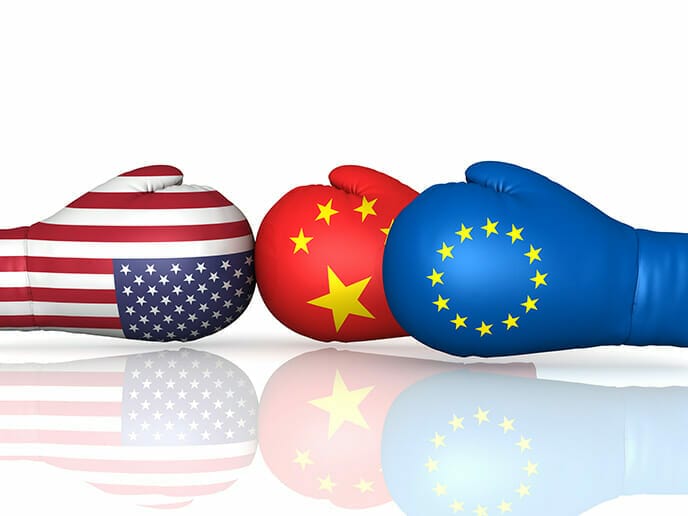
Geopolitical issues, in particular the rise of protectionism, are a threat to the free flow of capital, a condition of investment extremely important to large global institutions, says Shahmar Movsumov, executive director of the $39 billion State Oil Fund of Azerbaijan.

In an interview at the International Forum of Sovereign Wealth Funds in Morocco, Movsumov, who was elected to the board of the IFSWF on Wednesday, said protectionism needed to be addressed.

At the forum, participants are celebrating 10 years since the creation of the Santiago Principles, which are credited with bringing transparency, accountability and a rule book on best practice to the sovereign wealth fund community, which represents about $10 trillion.

“When the principles were created 10 years ago, they were far-sighted and achieved a lot,” Movsumov said. “Today, there are new threats, protectionism is rising again…This might mean renewing the Santiago Principles, or maybe there are other ways we can impact that.

“The free flow of investment and capital is the most important thing for all of us, and protectionism is becoming a threat to that.”

The Oil Fund of Azerbaijan was one of the first member funds of the IFSWF to do a self-assessment of progress on the principles.

Sponsored Content

“This helped us see our gaps in relation to governance, accountability and disclosure and we made some minor adjustments,” Movsumov said. “For other SWFs, newcomers, it has been a rule book, an important set of best practices.

“They have also been important for the whole industry. [A decade] ago, SWFs were not well known players, and there were some misconceptions and concerns around their investments. This has disappeared. We are what we declare and thanks to the Santiago Principles and the IFSWF, we can show we are prudent, institutional investors without any hidden objectives.”The Oil Fund of Azerbaijan was established in 1999 with $270 million and has grown to about $39 billion.

Its policy portfolio is 60 per cent bonds, 25 per cent private and public equity, 10 per cent real estate and 5 per cent gold. The fund has dual purposes – the stabilisation of the economy and the needs of future generations. Due to the stabilisation objective, it currently has a lot of liquidity so, in reality, about 80 per cent of investments are in bonds, managed internally.

This year, the fund will contribute about $6.5 billion to the government’s budget and will receive about $10 billion from oil contracts. Azerbaijan is one of the fastest-growing economies in the world, due to its energy sector.

The executive director of the oil fund is appointed and dismissed by the president of the Republic of Azerbaijan.


For more on the Santiago Principles see:

SWFs could help global stability: forum

Abu Dhabi sovereign fund coughs up: first ever review published

Sovereign wealth funds look to risk[vc_images_carousel images=”25444,25443,25442,25441,25440,25439,25438,25437,25436,25435,25432″ img_size=”full” title=”Photos from IFSWF 2018″]

Leave a Comment

Impact investing’s case for scale

Impact investing’s case for scale

Impact investing has come a long way in the past two decades, going from a niche strategy to a $1.5 trillion industry, but there are still challenges for it to reach institutional scale due to the lack of products and insufficient evidence of outperformance in some parts of the market.

Sort content by

Impact demands complete portfolio redesign

Panellists speaking at Sustainability in Practice urge investors to redesign their portfolio building process to better understand the impact of their investments and achieve greater social and environmental stewardship.

Consumers driving impact integration

Growing transparency and the measurement of impact in portfolios is transforming the flow of capital in ways comparable to the introduction of auditing in the 1930s and the measurement of risk from the 1950s, says philanthropist and venture capitalist Sir Ronald Cohen.

Measuring outcomes is what really matters: Serafeim

Investors interested in ESG should be aware of the intensity of the commitment and develop their own deep expertise and impact-weighted accounts, according to ESG pioneer and academic, Professor George Serafeim. He will speak at the Sustainability in Practice event at Harvard University in September.

APG talks crypto: Those who got rich in the gold rush didn’t do the digging

APG’s chief economist Thijs Knaap and senior strategist Charles Kalshoven lay out the case for not investing in crypto. They find that only an expected return of 25% pa would make it worthwhile and even then there’s no cashflows. They argue pension funds can afford to ignore this asset.

Energy markets post-COVID, amid a conflict and in a decarbonising world

Tom Nelson, head of thematic equity at Ninety One, talks to Conexus Financial managing editor Julia Newbould about the extent of the shock to energy markets through the Ukraine War and how it will impact the transition to clean energy and how portfolio managers can invest in renewables and achieve carbon zero targets in this

Beyond traditional asset allocation

Today’s challenging climate has led diversified investors like GIC, Singapore's sovereign wealth fund, to explore different approaches to portfolio construction to build resilience. Grace Qiu and Ding Li, both senior vice presidents in total portfolio policy and allocation at GIC discuss their new research.

Previous



