
Why investors should harness the power of the artworld

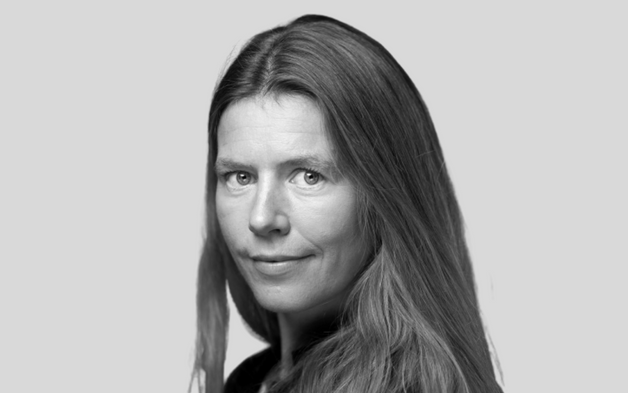
Investors have much to learn from the art world that goes beyond just investing in art for a return, or adorning their office walls with beautiful pictures. An appreciation of art will support better leadership, foster an organization’s culture and nurture diversity of thought, argued Rachel Pownall, chair of the finance department and Professor of Finance at the school of business and economics at Maastricht University.

Speaking at FIS Maastricht, she said that art brings positive externalities to an organization’s culture. Cultural experiences from visiting a museum to listening to music engender positive feelings, creating an energy that is possible to harness.

Witness the negative externality of, say, pollution that is not priced into the investment process. Access to art and culture bring a positive externality that is similarly undervalued, Powell who is founding director of the executive master in cultural leadership argued.

“Art brings a positive role within an organization that is possible to harness.”

Art investment

The investment community can buy art and hang it on the wall of their offices and homes. Art is an established asset class, but it is a small market.

True, it offers a source of diversification for investors, and record-breaking sales like Andy Warhol’s portrait of Marilyn Monroe, recently sold for $195 million fetching the highest price ever paid for an American artwork at auction, show the possible return.

Sponsored Content

Successful investors include the United Kingdom’s Railways Pension Scheme which made positive returns on art in the 1970s, a period of high inflation. Elsewhere, art has also been a source of investment amongst family offices. Microsoft co-founder Paul Allen’s art collection, up for sale this November, is expected to sell for over $1 billion.

But Pownell reasoned that few art lots sell for over a million. The art market is still small, despite growing over recent decades.

“It is clearly no space for institutional investors,” she said. She noted however that the extensive art collections at banks including Deutsche and ING offer a way to support younger artists and inspiration for employees.  “Having new contemporary art round the building is inspiring; people  choose meeting rooms according to the topic and what is on the wall. It changes the perspective of the conversation.”

Trend spotter

Art and beautiful architecture create areas where people want to work and live. Art also provides insight into key trends. Art has an “amazing ability” to provide us with a mirror image of what is happening in the world in terms of trends and the way in which society is moving over time.  She urged delegates to think about how they value culture in their organization, stressing that the younger generation seeks purpose, wellbeing and belonging as well as a culture of integrity.

Lived experiences

One of the positives to emerge from the pandemic is a new appreciation for lived experiences. This gives investors the opportunity to think afresh at how to incorporate these values – and the positivity lived experiences bring – back into their workplace culture. Art fits into a post-pandemic world where people need to touch, feel and understand. Pownall also urged investors to support creative industries. When money flows into a local economy, it has many positive externalities.

Arts also helps complex issues make sense. For example, de-colonization reflecting the post empire state is a common theme in many contemporary artworks. De-colonisation can also be viewed through the lens of an investment theme alongside other “Ds” like de-globalization, de-carbonisation or de-coupling.

“We are moving away from the notion of a globalized supply chain, increasingly thinking local and putting more emphasis on the environment around us,” she said.

Pownall argued that art increasingly represents an inclusive economy: the work of Lee Krasner is now recognised alongside her husband’s, Jackson Pollock.

She also noted how artistic people bring a diversity of thought to decision making. “Artists think differently from the financial world. By working together, art and finance could come up with amazing creative products that will help solve the challenges of the future, building and using the innovation that is within our society,” she concluded.

Leave a Comment

Impact investing’s case for scale

Impact investing’s case for scale

Impact investing has come a long way in the past two decades, going from a niche strategy to a $1.5 trillion industry, but there are still challenges for it to reach institutional scale due to the lack of products and insufficient evidence of outperformance in some parts of the market.

Sort content by

Investors wrestle with Europe’s demographic time bomb

Sharply declining populations in Europe, as well as countries like South Korea and Japan, have dramatic implications for economic growth and investment opportunities. Investors at FIS Oxford were warned that as depopulation occurs in certain areas, highly skilled workers will leave, creating a loss of services and fuelling political instability.

Investors face ‘economic paradigm vacuum’ post-neoliberalism 

The global economy is running in a “paradigm vacuum” as the classical theories of marginal change, equilibrium and rational markets are breaking down. Amid the void, University of Oxford professor Eric Beinhocker said investors must seek new economic tools that reflect how the world actually works.  

Opportunities and pitfalls for LPs using AI in private markets

Asset owners have a wide selection of artificial intelligence tools that product providers tout as enhancements to their unlisted investment process, but leading private markets academic Ludovic Phalippou said the reality is not that simple. Not only can AI make mistakes, it can also be tricked.

How investors are balancing the risks of investing in defence

As European countries increase defence spending, allocators are weighing up the risk and opportunity of allocating more to the sector. For some, investing in defence sits relatively comfortably with stakeholders but for others, investing "in things that kill people" remains a highly controversial conversation. 

Timothy Garton Ash: Reflections on the future of Europe

Celebrated academic Timothy Garton Ash reflects on the vital changes that Europe needs to achieve to thrive in its next evolution: success in Ukraine, its own defence industry, implementation of Draghi's recommendations, and a resolution to the cultural and social tensions gripping the continent – to name a few.

IMCO, USS and NBIM mull the risks of non-US dominant portfolios

The US has driven portfolio returns for decades, but investors are increasingly concerned that US-dominant portfolios are jeopardising precious diversification. USS, NBIM and IMCO share strategies to foster diversification including different currency exposures and investing in emerging markets.

Previous



