
White-collar roles not safe from AI

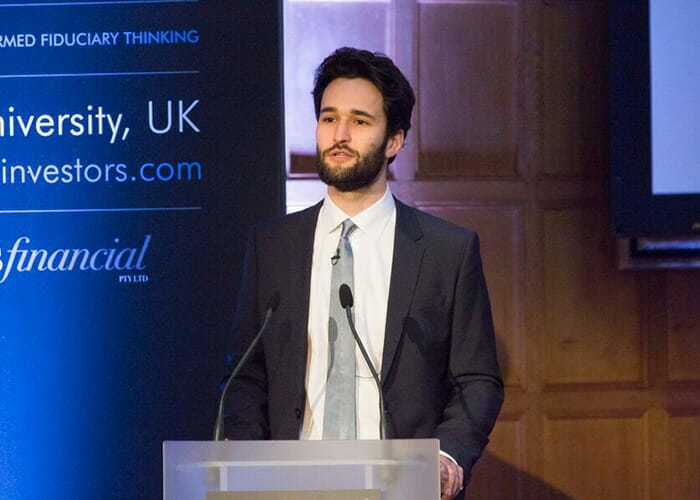
The impact of artificial intelligence on employment has tended to focus on blue-collar workers in sectors like agriculture and manufacturing. But its impact will be just as keenly felt by white-collar workers in professions like medicine, law, journalism and investment, where many decisions are made according to judgement, empathy and creativity, argued Daniel Susskind, career development fellow in economics, Balliol College at the University of Oxford.

It has already started to happen. AI can tell from a photograph whether a freckle is cancerous; newswires and media outlets are using algorithms, rather than journalists, to produce content; disputes are being mediated and resolved without lawyers. In Japan, an insurance firm is using algorithms to generate premiums and in architecture, algorithms are designing new buildings that look just like they have been conceived by a human hand. AI is even taking on tasks usually assigned to clergy – preparing people for confession, complete with a tool for tracking sin.

“That caused such a stir the Vatican has said it shouldn’t substitute the real thing,” said Susskind, who spoke at the Fiduciary Investors Symposium at Oxford.

AI is being driven by the exponential growth in the technologies that underpin it, namely computer processing power, bandwidth and data storage.

“By 2020, the average computer will have the same processing power as the human brain,” said Susskind, who adds that data accumulation is growing as more and more aspects of our daily lives become digitised.

“Every decision we make leaves behind a data exhaust,” he noted.

Sponsored Content

The ability of computers to solve problems was celebrated back in 2011 when IBM’s Watson wowed the tech industry by winning at the game show Jeopardy against two of its greatest human champions. Since then, the popularity of Alexa and Siri has made systems that can answer questions increasingly commonplace. And more big changes are on the horizon; for example, you have only to look at the forecast growth in driverless cars to see how robotics will change our lives, Susskind asserted.

“As recently as 2004, few people believed cars could ever be automated,” he said.

White-collar workers should be on notice because even areas long thought of as the preserve of human beings, such as judgement, creativity and intuition, are under threat. In fact, Susskind argued that machines already can replicate human emotions. Effective computing, a term that refers to computers’ increasing ability to interpret complicated human emotions – such as distinguishing between different types of smiles – has implications for professions where humans are thought to have an edge due to personal interaction.

To help explain why, Susskind said that whether machines could execute judgement was the wrong question. The right one, he argued, was: For what problem is judgement the solution? The answer is uncertainty.

“A machine can deal with uncertainty better than a human,” he surmised.

Susskind said machines wouldn’t take over entire professions. Instead, he predicted, they would take over specific tasks within a profession, performing them in a different way to humans by using their processing power and data storage.

“Machines will operate in terms of tasks, not jobs,” he said, and explained that AI would cause professions to be broken down into constituent parts. Machines will do some of those tasks, leaving others for people. Professionals face two options. Either they can try to compete with machines or they can try to build the machines themselves.

AI presents important questions, some of which Susskind highlighted. How do we train young people and retrain older people? Who should own and control tomorrow’s practical expertise and intellectual property? Moral questions about what tasks machines shouldn’t control needed to be addressed, too, he said.

“Are we comfy with machines informing parole decisions?” he asked. “How would we feel about a machine making a decision about turning off a life support machine?”

Leave a Comment

Pooling funds worth the trouble

Pooling funds worth the trouble

Combining pension funds involves merging cultures, acting as both an investor and a body that answers to its constituent funds, and more. A panel of CEOs discussed the difficulties and benefits.

Sort content by

Cbus moving raft of assets in-house

Australia’s $34 billion pension fund for the construction industry is moving nearly half of its asset management in-house, starting with active equity and infrastructure.

Call to ‘take a stand’ for workers

UNI Global Union general secretary Philip Jennings implored asset owners to use their influence to help the global workforce, for the sake of the economy, society and their supply chains.

The fix for ‘extractive capitalism’

In Western economies, the idea that if you contribute you get something back has died. Oxford’s Eric Beinhocker says the key to fixing things lies in the system’s ability to foster innovation.

Renewables gain energetic support

Renewable energy sources are thriving as a long-term asset class, thanks to consumer demand from corporations, emerging technology and other factors. A panel of experts explained the appeal.

Oxford U. fund knocks private equity

The CIO of the $4.3 billion fund manager argued in a panel discussion that an excess of capital in the market and lack of access to top general partners have hurt the asset class.

Managing the risk of fake news

Fraud and falsehoods are nothing new but technology has made it much more difficult to separate fact from fiction. Professor Stephen Kotkin discussed investing in a world of deception.