
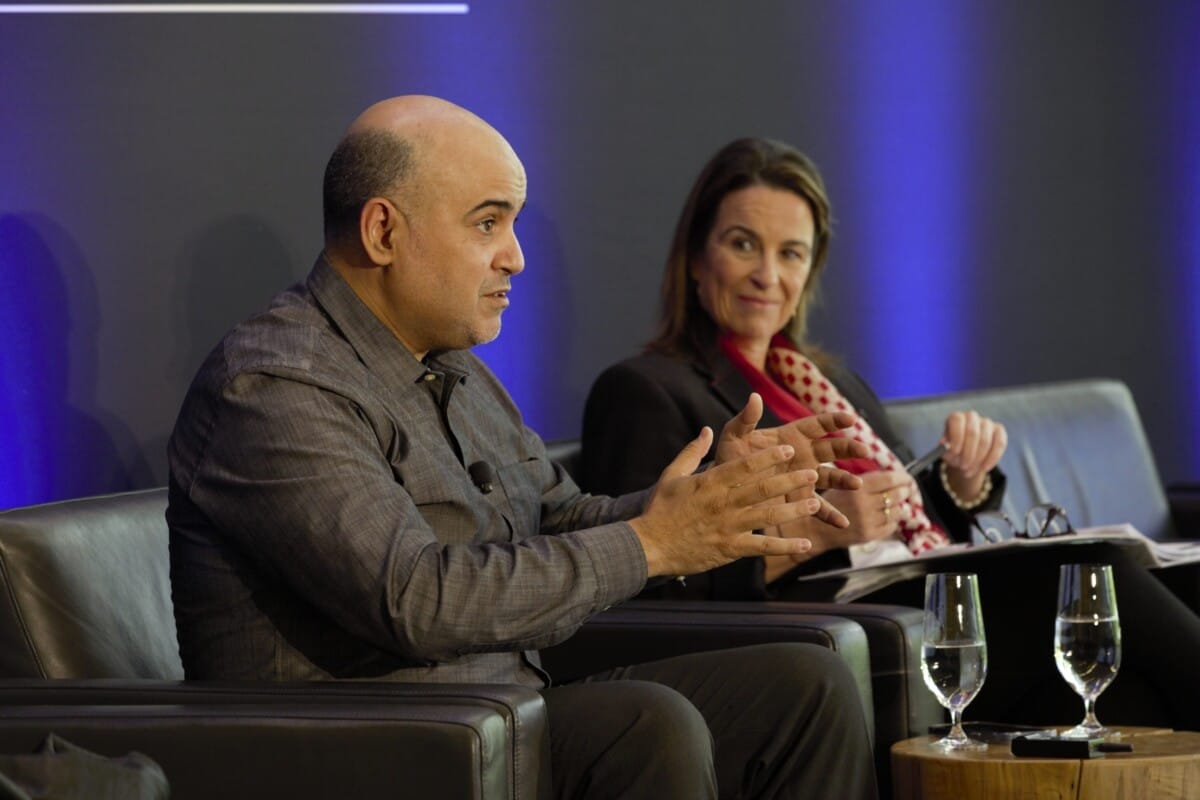

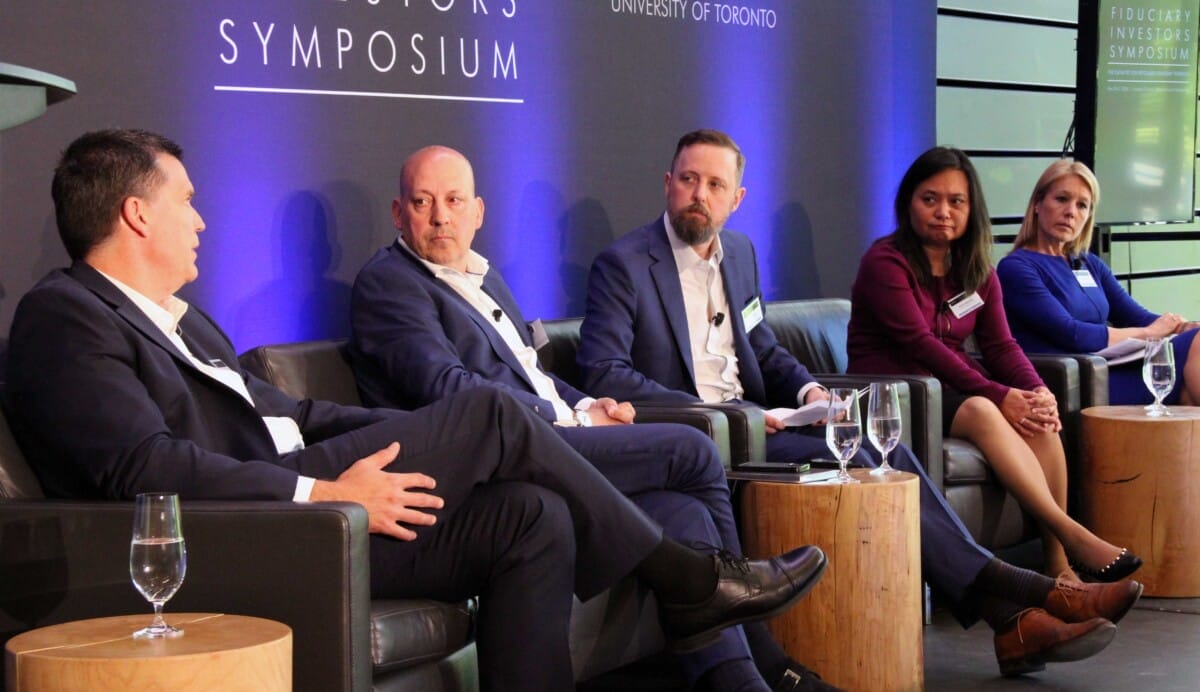
Innovation in asset allocation and portfolio construction will come from creating the right structures to allow investment teams to flourish, the Top1000funds.com Fiduciary Investors Symposium heard.
University of Toronto Professor of Finance Redouane Elkamhi told the symposium that he is “a big believer that structure drives everything”.
“People realise that asset allocation matters way more than security selection. You [could] be like a genius at choosing stocks or bonds, but then … if you lose 40 per cent of the portfolio [that] is dramatic,” he said.
“What have we noticed after that? We have noticed a rush toward doing some new structure thinking,” he said.
“You have to give credit to thoughtful people trying to basically think outside the box and say we need to give possibility to management tilting portfolios and to make asset allocation value-add.”
But he noted that “what you want people to do and what you design them to do are two different things”.
“You want people to be able to do asset allocation tilting, and you also want them to do some security selection.
“That’s really what you want them to do. You have to ask, do you [really] want them to do that? There’s nothing wrong, you may actually decide no, I don’t want them to do that.
“It’s a choice. You agree it’s a choice? It doesn’t mean it’s wrong.”
But Elkamhi said asking investment professionals to do one thing but putting them in a structure that doesn’t allow them to do that – or which encourages them to do something else – is counterproductive. He said it’s like taking a kid to a playground and then telling them they can’t play on the slide.
“That’s a bad design,” he said.
“You design the sandbox for which they can play, but then you let them play. Play means invest. Don’t design the sandbox, tell them you can play but you don’t really let them play. And I noticed this almost in every fund.
“If you believe in asset allocation, hire the CIO that can do it. And if you hire a CIO that can do it, give them a structure that allows them to do it without screwing everybody else if they get it wrong. And that’s an important design.
“There are some approaches people are thinking about it. It’s going quite well, hopefully things are moving. But that’s what I think [of] as new thinking in the pension industry in terms of structure.”
Elkamhi said the key to innovation was bringing together two different types of thinking – one scientific and often largely theoretical, and one more like engineering, rooted in real-world solutions.
“An engineer is making something work, but doesn’t have to find the law of physics,” he said.
It’s the scientist’s job to define the laws of physics, “but you need an engineer to make something out of it”.
“This is something I think missing a lot in the asset allocation – it is not missing in risk management, by the way, or pricing models – but in the asset management industry, you almost don’t see this bridging the gap easily between what I call an engineering-type of structure…and build-it-on-paper or the academic trying to find the best optimization, the best way to do things on the portfolio construction,” he said.
Elkamhi said you “need a brain” to bring the two sides together, because an approach that is little more than crystal-ball gazing, or “you have somebody who just says ‘no, I have a feeling’, then the discussion, the communication can never happen”.
Elkamhi said it’s important for pension fund boards to “create an environment that allows scientists to be very open minded about what they do. But [to solve] the problem you need to have an engineer that understands what they do”.
“In my opinion, to flourish [you need] collaboration between the way of thinking about things as a scientist, and the way of thinking about this as an engineer.
“It means don’t create silos, create collaboration.
“You have to think of structure way more deeply. And I don’t think anybody yet solved that problem, because they just switch from one to one. And remember, there is no perfect solution for everyone. It’s just the consistency there is a problem between the incentive what the Board want [and] the structure you put in place.”
Elkamhi that innovations in asset allocation also depend on being able to translate discoveries in academic research into practical real-world solutions.
“One of the things I noticed personally through the years is that few research papers found adoptions in the asset allocation space.
“You have almost like a tale of two stories,” he said. On the one hand, you have academics undertaking research largely for the sake of research, and on the other, you have professional investors trying to create portfolios that are both resilient and which meet the return targets needed to support pensions.
Elkamhi said the role of a researcher in a university is to “get tenure and push the boundaries of research”. They do not need to concern themselves with the practical applications of what they discover.
“That’s not part of the objective function of research,” he said. “But that doesn’t mean it’s not useful.
“We need to spend some time to understand how to make them useful. And this is really what we’ve been thinking about.”
Elkamhi said there is “very good innovation in the academic literature that actually can find very useful application in the industry”, it’s just a question of identifying it and then adopting it effectively.
“You just need a way to bridge the gap between what have been developed in all the academic research.”







Leave a Comment
You must be logged in to post a comment.
Login