
The hands and feet of AI and the renewable energy transition

A foundation stone of the transition to renewable energy is paradoxically a major contributor to the problem it’s helping to solve. How asset owners think about investing in a solution that is also part of the problem is a challenging and complex task.

Semiconductors are integral to the transition to renewable energy and the development of AI. But investors face a paradox when semiconductor production itself has such a large environmental footprint.

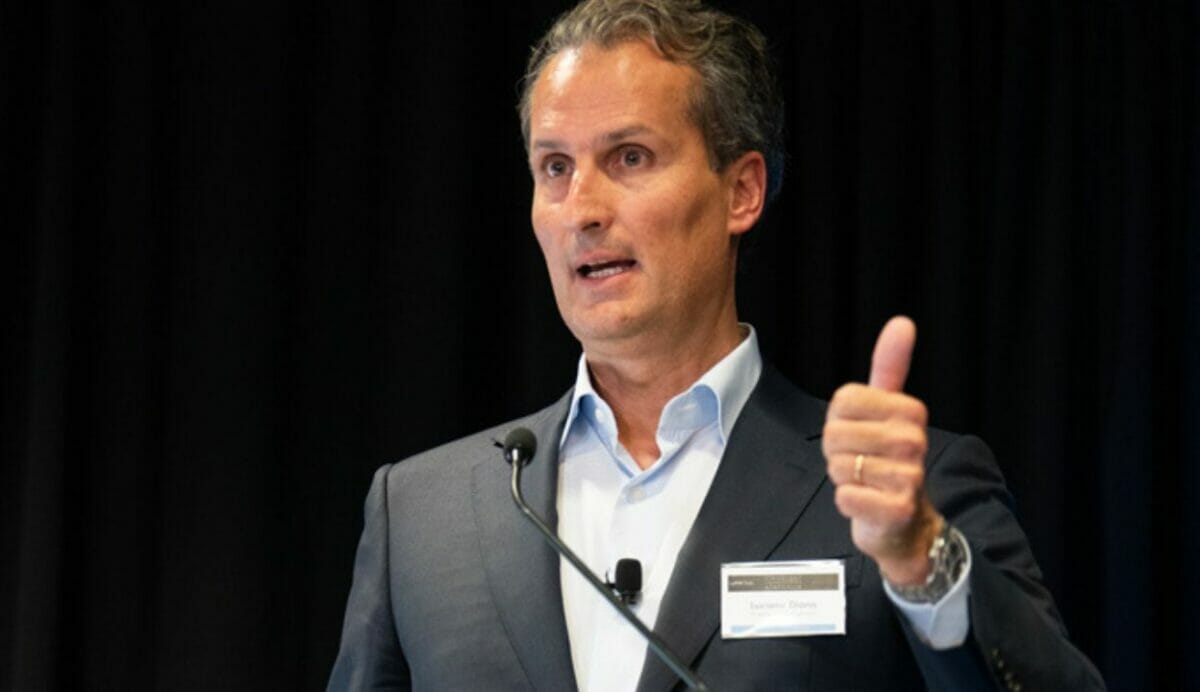
The energy transition and the growth of AI is inconceivable without semiconductors, Pictet Asset Management senior portfolio manager Luciano Diana told the Top1000funds.com Fiduciary Investors Symposium at Stanford University.

Diana said the question facing investors is whether semiconductors are a very simple enabler of the energy transition, or whether they a growing environmental problem, “and the answer is both, actually”.

“We do have a paradox, because they are crucial for the green transition,” he said.

“They enable electrification, decarbonisation and energy efficiency. At the same time, they have an environmental footprint which is growing very rapidly in-line with our data economy.”

Sponsored Content

That footprint includes the use of large quantities of water, and (perhaps ironically) energy consumption.

“Should an investor like me, a responsible investor, allocate capital to this important and growing industry? Should I avoid it altogether? It’s a very complex topic,” Diana said.

Diana said calculating the footprint of semiconductor manufacturing is complex and bedevilled by incomplete data and, in any case, only tells part of the total story. But the energy transition can’t happen without increased semiconductor production so Pictet applies two conceptual frameworks to its investment decisions. The first is the concept of planetary boundaries, originally developed by the Stockholm Resilience Centre.

“It comprises nine dimensions [including] climate change, biodiversity, freshwater, chemical pollution,” Diana said.

“These are all interconnected, it’s really crucial to understand this. And each dimension has a boundary that shouldn’t be crossed if we want to avoid nonlinear and irreversible change.”

(The Stockholm Resilience Centre reported earlier this month the six of the nine boundaries have already been crossed.)

The second conceptual framework is lifecycle analysis, which is an estimate of energy, water and raw material-related emissions that are associated with a product’s lifecycle. And the lifecycle analysis gives rise to the concept of a company’s “handprint”.

Diana said a company generates a handprint when it offers its customers a solution that has a lower footprint than business as usual. It is a positive environmental measure, and the bigger the better, and there’s theoretically no limit to a company’s handprint.

“This is the opposite concept to that of the footprint, where with the footprint we want to reduce it down to zero as much as possible,” he said.

“Here, we want to maximize it. And because it’s a difference between a baseline and a counterfactual scenario, measuring a handprint inherently is complex and cannot be done very precisely.”

This approach can, and does, give rise to scenarios whre an investor commits capital to a company it knows has a large and often growing environmental footprint, but for the sake of the role the company plays in reducing the footprints of others.

Diana says the aim is to identify and invest in companies that “only want to minimize their own footprint, but they also at the same time want to maximize their handprint on the rest of the economy”.

Semiconductors are a good example of this approach, and there are others. And while there’s been significant focus on the production of semiconductors, particularly as a result of heightened public interest in renewable energy and AI, Diana says it’s important to keep the environmental issues in perspective for two reasons.

“The first reason is that the emissions from semiconductor manufacturing alone are around 100 million tons of CO2 equivalent per year,” Diana said.

“That’s 0.2 per cent of the global total. But more importantly, this footprint of an industry doesn’t tell the whole story about the environmental impact that it has on the rest of the economy. It’s important and essential I should say to also look at the handprint.”

Leave a Comment

Why venture capital is a better AI play than large-cap equities

Why venture capital is a better AI play than large-cap equities

Sceptics cautious about the hype surrounding artificial intelligence underestimate the major scientific and civilisational advancements the technology will bring, says former Google Cloud chief scientist Fei Fei Li. She says investors should look beyond household tech names, and explains why Chat GPT-style large language models are just the beginning.

Sort content by

Managing not just measuring risk is key to long-term returns

Nobel Prize-winning economist Myron Scholes told the Fiduciary Investors Symposium at Stanford University that the focus of asset owners needs to shift from measuring risk to managing it, to avoid the downside while capturing the upside and allowing compounding to do its thing.

Asset owners need organisational prowess to take advantage of distress

The market has already entered the early stages of a multi-year restructuring cycle that will present many opportunities for credit providers. Researchers and investors from GIC, CalPERS and IMCO recommend some organisational changes that will ensure asset owners can make the most of those opportunities.

Operational excellence as critical as asset allocation for success

Asset allocation is often nominated as the most important element in long-term investment performance. But the Fiduciary Investor s Symposium at Stanford University heard that no investment strategy or process can operate in a vacuum – it can’t happen effectively without operational excellence.

Get on board: why the megatrend is your friend

Megatrends are the forces that will shape our planet, our society and our lives decades into the future. The Fiduciary Investors Symposium at Stanford University heard Megatrends provide potentially rich pickings for investors, as long as they know how to use them,.

The future of portfolio construction

Evolving portfolio construction techniques that include more attention to liquidity management, diversification and resilience are needed in a macro environment that has more complexity and volatility delegates at the Fiduciary Investors Symposium at Stanford University heard. Investors from CalSTRS, CPP Investments and MFS share their approach.

Politics rivals profits for portfolio influence, says Bridgewater co-CIO

Bridgewater co-CIO Greg Jensen said government policy has steadily increased in influence over the economy and portfolio construction over the past 20 years and now outstrips the importance of private sector incentives. He says the pace of deglobalisation is a key trend for institutional investors to keep abreast of.