
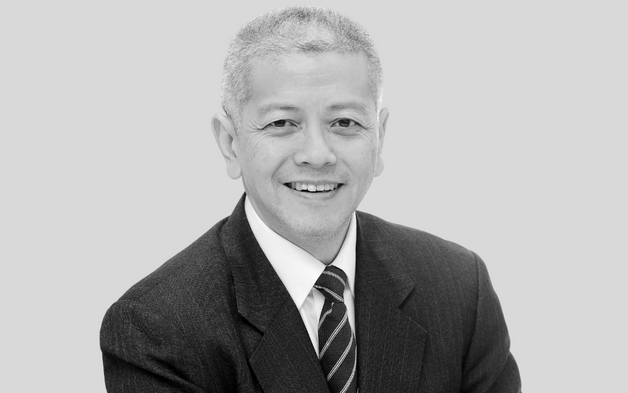

It is critical for stakeholders in all nations to find nuanced ways to navigate rising tension between the US and China, with 80% of the world’s population living outside these two nations, argued Danny Quah, Dean and Li Ka Shing Professor in Economics at Lee Kuan Yew School of Public Policy at the National University of Singapore.
If the future moves towards two bifurcated realms where the only choice for smaller powers is to decide whose sphere of influence they fall into, the third nations of the world “will have surrendered our agency to the interests of great powers who are much more interested in a zero sum game of ascendancy,” Quah said, in a talk examining the future of the global economy and the role of Asia.
Speaking with Amanda White, director of international at Conexus Financial, at Conexus’ Fiduciary Investors Symposium held in Singapore, Quah said “the great powers will not figure it out well without us getting involved.”
“Unless we get into the thick of that and help determine the way forward based on cold, hard-nosed, grim analysis of economic circumstances, if we leave it only to a political narrative of confrontation between democracy and freedom versus tyranny and authoritarianism, the solution won’t be a happy one,” Quah said.
In a provocative talk containing hard truths for both major powers, Quah began by looking at a news headline in local finance wires which talked about Singapore investors needing to “walk a fine line” amidst rising tensions between the US and China. How did things change so quickly from an “age of innocence and healthy optimism [where] we all thought Asia was the future?” he asked.
He presented a global map plotted with the “economic centre of gravity,” which was the average location of the planet’s economic activity, measured by GDP generated across hundreds of locations on the Earth’s surface. Beginning in the 1980s, it began shifting east, away from London and New York, crossing the Arabian Peninsula and ultimately after 2010 settling roughly on the GMT+8 timezone of Beijing (and Singapore).
But optimism began to morph into tension as the political situation shifted alongside the economic landscape, with the growing sense in Asia that the region did not have global decision-making power commensurate with its size.
“The smallest circle that can be drawn on the Earth that contains half the world’s people is this circle centred on GMT+8,” Quah said.
“If you think peoples’ awareness, choices, political decisions matter, then grew the idea that if the world were truly a democracy, this is where it would begin to make decisions of global significance,” but this was clearly not where global decisions were being made.
China’s increasing aggression and “bullying attitude” has not helped its case, Quah said, pointing to the “Wolf Warrior diplomacy” famous among its diplomats and spokespeople, and its cross-border territorial aggressiveness in the South China Sea.
This undermined trust in Beijing’s narrative that it respected national sovereignty, to the point that when Russia invaded Ukraine, and China sent humanitarian aid to Ukraine without sending military aid to Russia, the United States was still able to easily spin a narrative about China being on Russia’s side, he said.
There is a lot “in play” over the next few years and governments and investors should avoid “sudden moves,” Quah said.
It is still “up in the air” whether the US or China will lead on the key technologies for the future, with some analysts finding China is leading the US on most key future technologies. And China manufactures a large proportion of the world’s wind turbines, solar panels and lithium ion batteries critical for the green transition, and cutting off China will pose major challenges for the global zero-carbon transition.
“In the midst of this great power rivalry, we need all the help we can get to carve out a future that works well for all of us,” Quah said.








Leave a Comment
You must be logged in to post a comment.
Login