
Supply chains are an unprecedented disincentive for great power conflict

It is inaccurate to refer to rising US-China tension as a “new Cold War,” according to a former permanent secretary of Singapore’s Foreign Ministry, as both countries are “vital and irreplaceable components of a single system” with supply chains that are unprecedented in their density, complexity and scope.

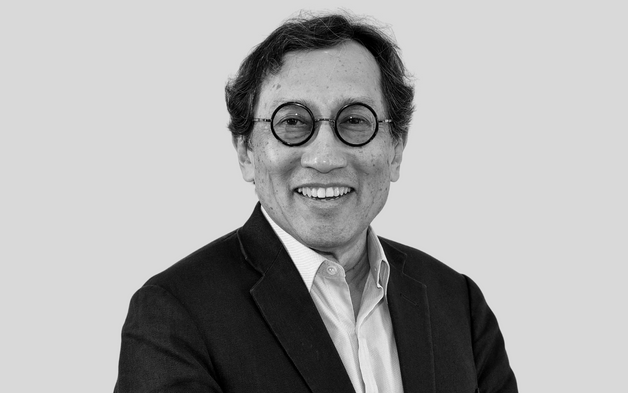
In a discussion about the future of capitalism and how the West can adapt to a rising Asia, Bilahari Kausikan, now chair of the Middle East Institute at the National University of Singapore, said the US and China will most likely continue to compete fiercely for advantages while trying not to disrupt the system too much.

Kausikan worked in Singapore’s Foreign Ministry for 37 years in a variety of appointments including ambassador to the Russian Federation, permanent representative to the UN in New York, and permanent secretary to the Ministry.

Speaking with Amanda White, director, international at Conexus Financial, at Conexus’ Fiduciary Investors Symposium held in Singapore, Kausikan began with an anecdote about former Chinese leader Deng Xiaoping–who pioneered China’s opening up to world markets after the devastating era of the Cultural Revolution–meeting Indian Prime Minister Rajiv Gandhi in 1988, when speculation had begun about the 21st Century being the Asian Century. 

Deng said he didn’t believe it, according to Kausikan’s description of notes from the meeting. It could only be the Asian Century if India and China get along and grow together, he reportedly said, before naming a range of other important countries, not all of them in Asia.

“China is rising, but it is not rising in a vacuum,” Kausikan said. “It is rising and becoming increasingly important component of the global economy, and cannot be separated from the global economy.”

Sponsored Content

The global economy is under stress but Kausikan said he does not think it will fragment or break, despite the world returning to “a relatively normal period of contested order.”

The so-called “rules-based order” has always been contested, and sometimes violently, throughout history, and the period from the Berlin Wall falling in 1989 through to the Financial Crisis in 2008 was a “short, abnormal period…when the overwhelming dominance of the United States made it seem as if its conceptual order was the only possible conception of order.”

The war in Ukraine is likely to be a long war, he said–continuing for several more years at least–but it is a “second order issue” when the first order issue is US-China relations.

He said he gets irritated every time he hears talk of a “new Cold War.” “That’s a very intellectually lazy trope that fundamentally misrepresents the nature of this competition,” Kausikan said. “The US and the former Soviet Union each led two seperate systems which were connected only at their margins. Their main common interest was to avoid mutually assured nuclear destruction.

“By contrast, the US and China are both vital, irreplaceable components of a single system, and they are connected to each other, and the rest of us, by a historically new phenomenon. That phenomenon is supply chains, of a density and complexity and scope never before seen in history.”

While there will be bifurcation in certain domains, particularly high-tech domains with national security implications, this complex web can never bifurcate completely into two seperate systems, he said.

The US and its allies, for example, hold all the crucial nodes in the semi-conductor supply chain. But China is 40% of the global semiconductor market, and “you cannot possibly cut off your own companies and those of your friends and partners from 40% of the market without doing them grievous damage,” Kausikan said.

The US will therefore need to be discriminating in how it applies legislation that limits the transfer of technological goods to China, he said.

And China may be keen to rely more on domestic consumption to drive growth, but “that’s easier said than done, so for the foreseeable future they will have to compete within the same system,” he said.

Both sides will, therefore, be keen to gain advantage over the other competitor “without disrupting the system too much.”

He also said he did not believe China was “eager to use force to re-unify Taiwan.” China “simply doesn’t have the capability either in hardware or software,” he said. It will eventually acquire this ability, but will still be aware that amphibious operations are extremely difficult, and the only country with great experience in these operations is the United States.

An invasion of Taiwan would be “a tremendous gamble for the CCP,” he said. If it failed, Chinese leader Xi Jinping would be unlikely to survive in power, and the foundation of the legitimacy of the Chinese Communist Party would be shaken. 

Leave a Comment

Cross-checking data, wringing necks: the ESG journey

Cross-checking data, wringing necks: the ESG journey

Making a portfolio more resilient to climate change, and playing a role in decarbonising the real economy, requires a range of creative solutions to complex problems, along with a good measure of determination, said a panel of leaders driving ESG efforts at GIC, New Zealand Super and APG.

Sort content by

Appeal of cash will suck money from other asset classes in coming years

Cash is now a viable investment option for the first time in many years, and its appeal will draw money from other asset classes leading to poor performance both in financial assets and the real economy, according to Greg Jensen, co-chief investment officer at global investment management firm Bridgewater Associates.

Billions in dry powder waiting for signs of distress in real estate

The challenges currently outweigh the opportunities in many classes of real assets, and funds have billions in dry powder waiting for better deals, but strong fundamentals will ultimately prevail in the long term, said the head of asset manager Nuveen’s real assets business. The listed real estate sector was last year “trading at some of

60/40 may be ‘flipped around’ as fixed income appeal rises

After more than a decade of high-priced bonds, fixed income is now compensating investors more than many asset classes, argued Raymond Sagayam, chief investment officer, fixed income at Pictet Asset Management in the United Kingdom.

Machines can now detect when bullish executives doubt their own words

Three major trends have converged to drive growing appeal in new alternative data classes of quantitative investing, according to a leading quant researcher. “Quants like us who were in the right place at the right time in history can take advantage of the confluence of these three major secular trends,” said Mike Chen, head of

Recession is a lot more likely than markets are expecting

A slight moderation in inflation statistics, and a rising belief that growth is more durable than expected, has lulled markets into a false sense of security, according to senior portfolio strategist Phil Dobrin at American investment management firm Bridgewater Associates. Markets are now changing their prices and discounting a future that is at odds with

Re-shoring is a fad, services exports will drive Asia to new heights

There is no such thing as deglobalisation, and the reshaping of global trade amidst increasing protectionism is simply globalisation taking a different form, according to the chief economist at the asset management arm of two-century-old Swiss bank Pictet.