
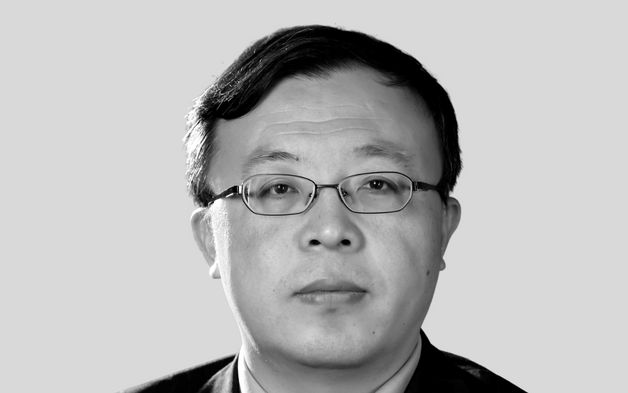

Investors in China need to look beyond the top-down narratives coming from foreign countries and media to dig up the true story of what’s really happening in the market, argued Lirong Xu, the Shanghai-based chief investment officer of Franklin Templeton Sealand Fund Management.
“I think that’s our job as stock pickers to dig into different sectors’ companies to find opportunities,” Xu told an audience of global asset owners managing around US$7 trillion at Conexus Financial’s Fiduciary Investment Symposium held in Singapore.
“That may be quite a different story than what you hear from the top-down angle, especially from the media.”
Franklin Templeton Sealand Fund Management is an 18-year joint venture between US asset manager Franklin Templeton and China’s Sealand Securities. Xu said some in the audience may be surprised to hear that during the last three to five years, the median return of mutual funds in China has been quite high.
“Last year and this year to date, the market has been volatile and challenging, but from a longer perspective looking at the next three years as a stock picker, I’m confident we can find good opportunities in almost all sectors to achieve good alpha returns for investors.”
Old economy sectors contain industry leaders that, over the past three years, have increased their market share during a difficult market environment, Xu said. And in the new economy there are a lot of exciting stories of growth.
Innovation is playing a growing share in driving both old and new sectors of the economy, he said. And valuations are relatively cheap compared to historic levels and also compared to other emerging markets.
The disruption to supply chains is also a story that is overblown, Xu said, noting he is “not too worried about that.” China is moving up the value chain of production in the same way other Asian economies have done in the past, with some parts of the supply chain leaving China and other parts moving in and taking their place.
“FDI in China grew substantially in the last three years compared to the last ten years,” Xu said. “And with the new situation of the regionalisation of supply chains and becoming less kind of globalised, there are both good sides and bad sides of that in terms of supply chains in China.”
“So things are not that bad. Maybe not as good as the last 20 years, but definitely not as bad as the media has pictured.”
And on the issue of transparency, the Chinese market is becoming more institutionalised having previously been dominated by retail investors, Xu said. This has helped the situation, although it can be challenging for foreigners who don’t speak the language. An increasing number of companies are producing English versions of their annual reports, he said.
“We’ve seen a trend where many companies that are not so good have good PR and fluent English, so they get more attention than they deserve,” Xu said.
Despite the solar industry being a cyclical and crowded market, leading solar producers are promising and were able to expand market share when the government stopped subsidising the sector five years ago, Xu said.
“I believe they will continue to grow as long as they stay focussed on innovation and new technology to grasp opportunities in the solar sector,” Xu said.
The online wealth management industry is also seeing a range of smaller companies emerge that are focussed on core areas of business, particularly mutual funds which are appealing in a country with a high savings rate.
“We continue to focus on these companies and still have a high conviction on these names,” Xu said.








Leave a Comment
You must be logged in to post a comment.
Login