[vc_empty_space height=”10px”]
In conversation with the current recipient of the Nobel Prize in Economics, Esther Duflo, this session will look at the phenomenon of inequality and the way in which economics and finance can help meet the challenge for a better, more equal, world.[vc_quotes layout=”accordion” quotes=”%5B%7B%22name%22%3A%22Esther%20Duflo%22%2C%22job_role%22%3A%22Professor%20of%20Poverty%20Alleviation%20and%20Development%20Economics%2C%20MIT%3B%20current%20winner%20Nobel%20Prize%20in%20Economics%20(United%20States)%22%2C%22content%22%3A%22Esther%20Duflo%20is%20the%20Abdul%20Latif%20Jameel%20Professor%20of%20Poverty%20Alleviation%20and%20Development%20Economics%20in%20the%20Department%20of%20Economics%20at%20the%20Massachusetts%20Institute%20of%20Technology%20and%20a%20co-founder%20and%20co-director%20of%20the%20Abdul%20Latif%20Jameel%20Poverty%20Action%20Lab%20(J-PAL).%20In%20her%20research%2C%20she%20seeks%20to%20understand%20the%20economic%20lives%20of%20the%20poor%2C%20with%20the%20aim%20to%20help%20design%20and%20evaluate%20social%20policies.%20She%20has%20worked%20on%20health%2C%20education%2C%20financial%20inclusion%2C%20environment%20and%20governance.%5CnProfessor%20Esther%20Duflo%E2%80%99s%20first%20degrees%20were%20in%20history%20and%20economics%20from%20Ecole%20Normale%20Superieure%2C%20Paris.%20She%20subsequently%20received%20a%20Ph.D.%20in%20Economics%20from%20MIT%20in%201999.%20%5CnDuflo%20has%20received%20numerous%20academic%20honours%20and%20prizes%20including%202019%20Sveriges%20Riksbank%20Prize%20in%20Economic%20Sciences%20in%20Memory%20of%20Alfred%20Nobel%20(with%20co-Laureates%20Abhijit%20Banerjee%20and%20Michael%20Kremer)%2C%20the%20Princess%20of%20Asturias%20Award%20for%20Social%20Sciences%20(2015)%2C%20the%20A.SK%20Social%20Science%20Award%20(2015)%2C%20Infosys%20Prize%20(2014)%2C%20the%20David%20N.%20Kershaw%20Award%20(2011)%2C%20a%20John%20Bates%20Clark%20Medal%20(2010)%2C%20and%20a%20MacArthur%20%E2%80%9CGenius%20Grant%E2%80%9D%20Fellowship%20(2009).%20%20With%20Abhijit%20Banerjee%2C%20she%20wrote%20Poor%20Economics%3A%20A%20Radical%20Rethinking%20of%20the%20Way%20to%20Fight%20Global%20Poverty%2C%20which%20won%20the%20Financial%20Times%20and%20Goldman%20Sachs%20Business%20Book%20of%20the%20Year%20Award%20in%202011%20and%20has%20been%20translated%20into%20more%20than%2017%20languages%2C%20and%20the%20recently%20released%20Good%20Economics%20for%20Hard%20Times.%5CnDuflo%20is%20the%20editor%20of%20the%20American%20Economic%20Review%2C%20a%20member%20of%20the%20National%20Academy%20of%20Sciences%20and%20a%20Corresponding%20Fellow%20of%20the%20British%20Academy.%5Cn%22%2C%22image%22%3A%2231867%22%2C%22linkedin%22%3A%22%22%7D%5D” title=”Speaker” el_class=””][vc_quotes layout=”accordion” quotes=”%5B%7B%22name%22%3A%22Amanda%20White%22%2C%22job_role%22%3A%22Director%20of%20institutional%20content%2C%20Conexus%20Financial%20(Australia)%22%2C%22content%22%3A%22Amanda%20White%20is%20responsible%20for%20the%20content%20across%20all%20Conexus%20Financial%E2%80%99s%20institutional%20media%20and%20events.%20In%20addition%20to%20being%20the%20editor%20of%20Top1000funds.com%2C%20she%20is%20responsible%20for%20directing%20the%20global%20bi-annual%20Fiduciary%20Investors%20Symposium%20which%20challenges%20global%20investors%20on%20investment%20best%20practice%20and%20aims%20to%20place%20the%20responsibilities%20of%20investors%20in%20wider%20societal%2C%20and%20political%20contexts.%20She%20holds%20a%20Bachelor%20of%20Economics%20and%20a%20Masters%20of%20Art%20in%20Journalism%20and%20has%20been%20an%20investment%20journalist%20for%20more%20than%2025%20years.%20She%20is%20currently%20a%20fellow%20in%20the%20Finance%20Leaders%20Fellowship%20at%20the%20Aspen%20Institute.%20The%20two-year%20program%20seeks%20to%20develop%20the%20next%20generation%20of%20responsible%2C%20community-spirited%20leaders%20in%20the%20global%20finance%20industry.%22%2C%22image%22%3A%2231870%22%2C%22linkedin%22%3A%22https%3A%2F%2Fwww.linkedin.com%2Fin%2Famanda-white-101a7515%2F%22%7D%5D” title=”Moderator” el_class=””][vc_empty_space height=”10px”]
Key takeaways
COVID-19 is not the great leveller – there are huge differences between how the virus is impacting the rich and the poor within the US for example.
Developing countries are less well equipped to weather uncertainties in these times. However, even within the US inequality has been growing for decades and is now clearly unsustainable.
We need to trust developing countries enough to help them drag themselves out of poverty.
We need to spread out global supply chains to reduce geographic concentration risk and simultaneously provide income across the world. This will require collaboration and the deprioritisation of commercial self-interest.
We need to create wealth for the poor, not just take wealth from the rich. To reduce poverty incrementally, we need to focus on the simple things that work, for example providing cash incentives for sending children to school.
Let’s not forget, we have made huge progress in alleviating poverty, but that is not full credit to the World Bank, it is credit to the people of the developing nations.
If you invest responsibly as an institutional investor, you are by default helping to alleviate poverty.
‘Impact washing’ is the new greenwashing and it’s very concerning. How do you really select the investments that truly drive social impact? We should apply the same rigour to impact assessment as investment assessment.
The Florida State Board of Administration has made some strategic moves to take advantage of opportunities in the dislocation, including in private equity, distressed debt and active listed equities.. But CIO, Ash Williams, is concerned about the underlying real economy.
As trade wars between the US and China dominate financial markets, Princeton historian Stephen Kotkin has assured pension funds that the world order that has been in place since World War II remains intact.
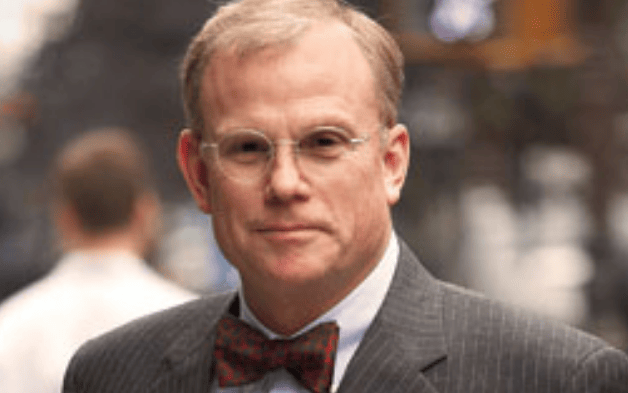
Understanding the fractious relationship between US and China is more important– and simultaneously more confronting – than it has been in the past, according to Stephen Kotkin, professor of history and international affairs at Princeton University. While the China investment challenge has always been to capture the aspirational middleclass, the high-profile historian says “the big money that’s going to be made in China is going to be made from the dislocation”.
Institutional investors' investment strategy should be serving the China middle class and the dislocation from within Asia, according to Stephen Kotkin,Professor of History and International Affairs at Princeton University speaking at the Fiduciary Investors Symposium at Cambridge University. He explored what the geopolitical conflicts of the past can teach us about the future. He looked at some of the key points in history, how China, the European Union and the US have survived, and what it means for the future.
Whither United States-China? Stephen Kotkin, Professor in History and International Affairs at Princeton University and adviser to conexust1f.flywheelstaging.com, discusses the changing nature of the complex relationship between the US and China and the struggle underway as these two large economies find their positions in the economic and technological hierarchy. So what should investors watch for?
The China-US trade war is the latest development in a tense relationship that threatens to bubble over into war over Taiwan, “incinerating” portfolios, Stephen Kotkin said.
Global tensions are an important consideration in decision-making. At a recent roundtable, geopolitical expert professor Stephen Kotkin discussed the risks related to China and the US.
Leave a Comment
You must be logged in to post a comment.
Login