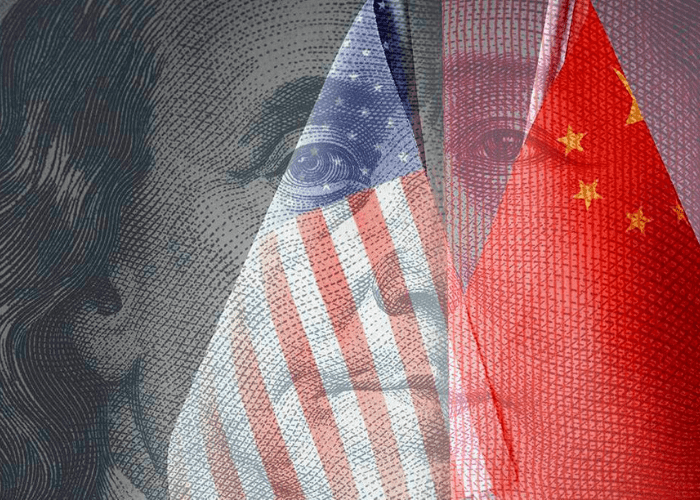
The shape of Asia’s new cold war

China’s decision to demolish the “one country, two systems” arrangement in Hong Kong appears to be a fait accompli, and in fact seems to have been preordained. Viewed in a broader context, the move represents a major salvo in a new cold war that is already playing out across three critical dimensions.

SEOUL – In retrospect, the decision by the Communist Party of China (CPC) to impose a new security law on Hong Kong seems to have been preordained. Historically, rising powers always try to expand their spheres of geopolitical influence once they pass a certain stage of economic development. It was only a matter of time before China would do away with the “one country, two systems” arrangement and impose its laws and norms on Hong Kong – a territory that it considers integral to the motherland.

Read The shape of Asia’s new cold war, published in Project Syndicate on June 10, 2020.

Sponsored Content

Leave a Comment

Florida: Opportunities in a crisis

Florida: Opportunities in a crisis

The Florida State Board of Administration has made some strategic moves to take advantage of opportunities in the dislocation, including in private equity, distressed debt and active listed equities.. But CIO, Ash Williams, is concerned about the underlying real economy.

Sort content by

Post-lockdown economic recovery in China

This report looks at official, and non-official data, to assess the post-lockdown economic recovery in China.

The macroeconomics of epidemics

This research studies the interaction between economic decisions and epidemics. The model implies that people’s decision to cut back on consumption and work reduces the severity of the epidemic, as measured by total deaths. These decisions exacerbate the size of the recession caused by the epidemic.

Lessons from COVID-19 for private debt

The global economic shutdown triggered by COVID-19 has put the North American private debt industry to its first major test. What lessons can be learned from the global financial crisis that are relevant today? What lessons are emerging as a result of COVID-19? And how might the industry evolve?

The great lockdown

The global economy is projected to contract sharply by –3 per cent in 2020, much worse than during the 2008–09 financial crisis. In a baseline scenario--which assumes that the pandemic fades in the second half of 2020 and containment efforts can be gradually unwound—the global economy is projected to grow by 5.8 percent in 2021 as economic activity normalises, helped by policy support. The risks for even more severe outcomes, however, are substantial.

Global economic effects of COVID-19

Congressional Research Service, which provides research to the US Members of Congress outlines the global economic effects of COVID-19.

How RI should be responding to COVID-19

The PRI is working with signatories to further develop thinking on what the COVID-19 crisis means for investors. It is establishing two signatory participation groups to coordinate and develop investor responses, focusing on short term responses, and a future economic recovery phase.

Previous




