[vc_empty_space height=”10px”]
Even before the current crisis, globalisation was under threat due to the wave of populism around the world. So does this crisis mark the end of globalisation? What would de-globalisation look like given the interconnectedness and complexity of the economy and what does it mean for investors’ portfolios?
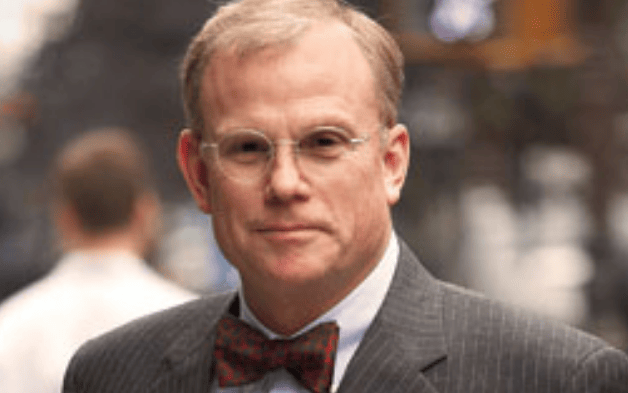
The Butterfly Defect: How Globalization Creates Systemic Risks, and What to Do about It[vc_quotes layout=”accordion” quotes=”%5B%7B%22name%22%3A%22Ian%20Goldin%22%2C%22job_role%22%3A%22Professor%20of%20Globalisation%20and%20Development%2C%20Oxford%20University%20(United%20Kingdom)%22%2C%22content%22%3A%22Professor%20Ian%20Goldin%20was%20the%20founding%20director%20of%20the%20Oxford%20Martin%20School%20from%202006%20to%202016.%20He%20is%20currently%20director%20of%20the%20Oxford%20Martin%20Programme%20on%20Technological%20and%20Economic%20Change.%5CnBefore%20coming%20to%20Oxford%2C%20Professor%20Goldin%20was%20vice%20president%20of%20the%20World%20Bank%20(2003-2006)%20and%20prior%20to%20that%20the%20bank’s%20director%20of%20development%20policy%20(2001-2003).%20He%20served%20on%20the%20bank’s%20senior%20management%20team%20and%20led%20the%20bank’s%20collaboration%20with%20the%20United%20Nations%20and%20other%20partners%20as%20well%20as%20with%20key%20countries.%20As%20director%20of%20development%20policy%2C%20he%20played%20a%20pivotal%20role%20in%20the%20research%20and%20strategy%20agenda%20of%20the%20bank.%5CnFrom%201996%20to%202001%20he%20was%20chief%20executive%20and%20managing%20director%20of%20the%20Development%20Bank%20of%20Southern%20Africa%20and%20served%20as%20an%20advisor%20to%20President%20Nelson%20Mandela.%20He%20succeeded%20in%20transforming%20the%20bank%20to%20become%20the%20leading%20agent%20of%20development%20in%20the%2014%20countries%20of%20Southern%20Africa.%20During%20this%20period%2C%20he%20served%20on%20several%20government%20committees%20and%20boards%2C%20and%20was%20finance%20director%20for%20South%20Africa’s%20Olympic%20bid.%5CnHe%20has%20also%20been%20principal%20economist%20at%20the%20European%20Bank%20for%20Reconstruction%20and%20Development%20(EBRD)%20in%20London%2C%20and%20program%20director%20at%20the%20OECD%20Development%20Centre%20in%20Paris%2C%20where%20he%20directed%20the%20programs%20on%20trade%2C%20environment%20and%20sustainable%20development.%5Cn%22%2C%22image%22%3A%2231919%22%2C%22linkedin%22%3A%22https%3A%2F%2Fwww.linkedin.com%2Fin%2Fian-goldin-008934a%2F%22%7D%5D” title=”Speaker” el_class=””][vc_quotes layout=”accordion” quotes=”%5B%7B%22name%22%3A%22Amanda%20White%22%2C%22job_role%22%3A%22Director%20of%20institutional%20content%2C%20Conexus%20Financial%20(Australia)%22%2C%22content%22%3A%22Amanda%20White%20is%20responsible%20for%20the%20content%20across%20all%20Conexus%20Financial%E2%80%99s%20institutional%20media%20and%20events.%20In%20addition%20to%20being%20the%20editor%20of%20Top1000funds.com%2C%20she%20is%20responsible%20for%20directing%20the%20global%20bi-annual%20Fiduciary%20Investors%20Symposium%20which%20challenges%20global%20investors%20on%20investment%20best%20practice%20and%20aims%20to%20place%20the%20responsibilities%20of%20investors%20in%20wider%20societal%2C%20and%20political%20contexts.%20She%20holds%20a%20Bachelor%20of%20Economics%20and%20a%20Masters%20of%20Art%20in%20Journalism%20and%20has%20been%20an%20investment%20journalist%20for%20more%20than%2025%20years.%20She%20is%20currently%20a%20fellow%20in%20the%20Finance%20Leaders%20Fellowship%20at%20the%20Aspen%20Institute.%20The%20two-year%20program%20seeks%20to%20develop%20the%20next%20generation%20of%20responsible%2C%20community-spirited%20leaders%20in%20the%20global%20finance%20industry.%22%2C%22image%22%3A%2231872%22%2C%22linkedin%22%3A%22https%3A%2F%2Fwww.linkedin.com%2Fin%2Famanda-white-101a7515%2F%22%7D%5D” title=”Moderator” el_class=””][vc_empty_space height=”10px”]
Key takeaways
It is simply not true that the pandemic has killed globalisation. For example, COVID-19 has sharply accelerated digital globalisation. The US is, however, de-globalising itself through its policies.
COVID-19 has driven sharp acceleration across four key trends – automation/robotics, customisation, immediacy and nationalism/protectionism. What was thought impossible in January is now mainstream in June.
The pandemic will lead to a repricing of all asset classes which will require a rethinking of investment decision-making. There will also be a new wave of M&A.
There is no return for fossil fuels. ESG is pushing in the right direction because it is building resilience. But it is not enough.
Government is back. Big time. To manage global threats we need stronger global institutions and stronger collaboration.
Young people are making huge sacrifices to keep old people alive and there will be payback for this.
We are at a crossroads, but will the outcome parallel WWI or WWII? The answer makes a huge difference to the future of mankind.
There is reason to be bullish on China:
The quality of growth is improving.
They have 4 million less workers this year than last due to demographics therefore AI, robotics and automation is a blessing, not a curse.
A Cold War 2.0 with USA and China at the centre would be disastrous for global growth. If there is a tech race between US and China, China will win, by some distance. 30 per cent of AI recruits in Silicon Valley come from China. The idea that we are not interdependent on AI is a nonsense.
A Democratic US election win may be as disastrous for the US-China relationship as a Trump win, although the Democrats may manage the relationship with greater sophistication.
I worry about 10 million workers each year coming onto the African labour market. Where are the labour-intensive jobs of the future for low skilled workers? Previously what was done by thousands of people in Bangalore is now done by a single server in a basement.
A world with unequal trade relations is a dangerous world to inhabit. The small players need to be protected from the giants.
The absence of global authority may create a second wave of corona via airlines. Other future risks include:
Natural disasters
Cyber attacks
Disruption to communication lines between East & West
Finance risk not captured by legislation such as Basel II
Overly concentrated geographic risk
[vc_empty_space height=”10px”]
Poll results
What form will globalisation take in the new world order?[vc_line_chart x_values=”” values=”%5B%7B%22title%22%3A%22Large%20scale%20de-globalisation%20(or%20nationalisation)%20(7%25)%22%2C%22y_values%22%3A%227%22%2C%22color%22%3A%22blue%22%7D%2C%7B%22title%22%3A%22More%20regionalisation%20-%20trading%20between%20regions%20(57%25)%22%2C%22y_values%22%3A%2257%22%2C%22color%22%3A%22pink%22%7D%2C%7B%22title%22%3A%22Trading%20with%20allies%20only%20(3%25)%22%2C%22y_values%22%3A%223%22%2C%22color%22%3A%22sandy-brown%22%2C%22custom_color%22%3A%22%2358b9da%22%7D%2C%7B%22title%22%3A%22Globalisation%20will%20continue%20as%20normal%20(2%25)%22%2C%22y_values%22%3A%222%22%2C%22color%22%3A%22violet%22%2C%22custom_color%22%3A%22%2358b9da%22%7D%2C%7B%22title%22%3A%22Globalisation%20will%20eventually%20reset%20and%20accelerate%20(32%25)%22%2C%22y_values%22%3A%2232%22%2C%22color%22%3A%22vista-blue%22%2C%22custom_color%22%3A%22%23f79468%22%7D%5D”]
The Florida State Board of Administration has made some strategic moves to take advantage of opportunities in the dislocation, including in private equity, distressed debt and active listed equities.. But CIO, Ash Williams, is concerned about the underlying real economy.
How can investors work together to combat inequality? In this podcast episode Amanda White speaks to the president of CalPERS, Henry Jones, about his own experience and the fund's journey in tackling diversity and inclusion, in particular issues of racism.
This episode explores the key pillars of a sustainable recovery including the three important long term trends that need to be addressed climate change, loss of biodiversity and inequality.
It explores the key role for the finance industry which includes building new models that are not only about maximising monetary profits but also transition theory, and the value of ecological and social capital.
COVID-19 has delivered an enormous global shock, leading to steep recessions in many countries. The baseline forecast by the World Bank envisions a 5.2 per cent contraction in global GDP in 2020—the deepest global recession in decades.
Nigel Topping who was appointed by the UK Government as the High Level Climate Action Champion for United Nations climate talks, COP26 joins Fiona Reynolds, chief executive of the PRI, in conversation with Amanda White, editor of Top1000funds.com This episode focuses on climate change and how, amongst and despite, the short-term focus of this COVID-19 crisis, we can mobilise government, business and investors into action around this important issue of climate change.
The global COVID-19 pandemic has highlighted the need for better risk management tools to handle longevity and ageing. This paper by Wharton's Olivia Mitchell, offers an assessment of the status quo prior the coronavirus; evaluates how retirement systems are faring in the wake of the shock; examines insurance and financial market products that may render retirement systems more resilient for the world’s ageing population; and looks at the potential role for policymakers.
For the economic recovery from the COVID-19 crisis to be durable and resilient, a return to ‘business as usual’ and environmentally destructive investment patterns and activities must be avoided. To avoid this, economic recovery packages should be designed to “build back better”.
Leave a Comment
You must be logged in to post a comment.
Login