[vc_empty_space height=”10px”]
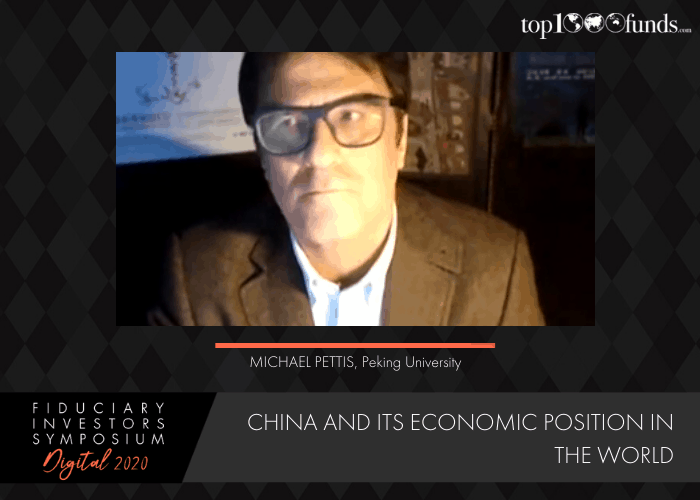
This session will examine the impact of the crisis on China, the likely projection of its recovery and the role for the private sector.[vc_quotes layout=”accordion” quotes=”%5B%7B%22name%22%3A%22Michael%20Pettis%22%2C%22job_role%22%3A%22Professor%20of%20Finance%2C%20Guanghua%20School%20of%20Management%2C%20Peking%20University%3B%20Senior%20Fellow%2C%20Carnegie-Tsinghua%20Center%20for%20Global%20Policy%20(China)%22%2C%22content%22%3A%22Michael%20Pettis%20is%20a%20nonresident%20senior%20fellow%20in%20the%20Carnegie%E2%80%93Tsinghua%20Center%20for%20Global%20Policy.%20An%20expert%20on%20China%E2%80%99s%20economy%2C%20Pettis%20is%20professor%20of%20finance%20at%20Peking%20University%E2%80%99s%20Guanghua%20School%20of%20Management%2C%20where%20he%20specializes%20in%20Chinese%20financial%20markets.%20%5CnFrom%202002%20to%202004%2C%20he%20also%20taught%20at%20Tsinghua%20University%E2%80%99s%20School%20of%20Economics%20and%20Management%20and%2C%20from%201992%20to%202001%2C%20at%20Columbia%20University%E2%80%99s%20Graduate%20School%20of%20Business.%20He%20is%20a%20member%20of%20the%20Institute%20of%20Latin%20American%20Studies%20Advisory%20Board%20at%20Columbia%20University%20as%20well%20as%20the%20Dean%E2%80%99s%20Advisory%20Board%20at%20the%20School%20of%20Public%20and%20International%20Affairs.%5CnPettis%20worked%20on%20Wall%20Street%20in%20trading%2C%20capital%20markets%2C%20and%20corporate%20finance%20since%201987%2C%20when%20he%20joined%20the%20sovereign%20debt%20trading%20team%20at%20Manufacturers%20Hanover%20(now%20JPMorgan).%20Most%20recently%2C%20from%201996%20to%202001%2C%20Pettis%20worked%20at%20Bear%20Stearns%2C%20where%20he%20was%20managing%20director%20principal%20heading%20the%20Latin%20American%20capital%20markets%20and%20the%20liability%20management%20groups.%20He%20has%20also%20worked%20as%20a%20partner%20in%20a%20merchant-banking%20boutique%20that%20specialized%20in%20securitizing%20Latin%20American%20assets%20and%20at%20Credit%20Suisse%20First%20Boston%2C%20where%20he%20headed%20the%20emerging%20markets%20trading%20team.%5CnIn%20addition%20to%20trading%20and%20capital%20markets%2C%20Pettis%20has%20been%20involved%20in%20sovereign%20advisory%20work%2C%20including%20for%20the%20Mexican%20government%20on%20the%20privatization%20of%20its%20banking%20system%2C%20the%20Republic%20of%20Macedonia%20on%20the%20restructuring%20of%20its%20international%20bank%20debt%2C%20and%20the%20South%20Korean%20Ministry%20of%20Finance%20on%20the%20restructuring%20of%20the%20country%E2%80%99s%20commercial%20bank%20debt.%5CnHe%20formerly%20served%20as%20a%20member%20of%20the%20Board%20of%20Directors%20of%20ABC-CA%20Fund%20Management%20Company%2C%20a%20Sino%E2%80%93French%20joint%20venture%20based%20in%20Shanghai.%20He%20is%20the%20author%20of%20several%20books%2C%20including%20The%20Great%20Rebalancing%3A%20Trade%2C%20Conflict%2C%20and%20the%20Perilous%20Road%20Ahead%20for%20the%20World%20Economy%20(Princeton%20University%20Press%2C%202013).%22%2C%22image%22%3A%2231909%22%2C%22linkedin%22%3A%22%22%7D%5D” title=”Speaker” el_class=””][vc_quotes layout=”accordion” quotes=”%5B%7B%22name%22%3A%22Colin%20Tate%22%2C%22job_role%22%3A%22Chief%20executive%2C%20Conexus%20Financial%20(Australia)%22%2C%22content%22%3A%22Colin%20Tate%20has%20been%20an%20investment%20industry%20media%20publisher%20and%20conference%20producer%20since%201996.%20In%20his%20media%20career%2C%20Tate%20has%20launched%20and%20overseen%20dozens%20of%20print%20and%20electronic%20publications.%20He%20is%20the%20chief%20executive%20and%20major%20shareholder%20of%20Conexus%20Financial%2C%20which%20was%20formed%20in%202005%2C%20and%20is%20headquartered%20in%20Sydney%2C%20Australia.%20The%20company%20stages%20more%20than%2020%20conferences%20and%20events%20each%20year%20%E2%80%93%20in%20London%2C%20New%20York%2C%20San%20Francisco%2C%20Los%20Angeles%2C%20Amsterdam%2C%20Beijing%2C%20Sydney%20and%20Melbourne%20%E2%80%93%20and%20publishes%20five%20media%20brands%2C%20including%20the%20global%20website%20and%20strategy%20newsletter%20for%20global%20institutional%20investors%20conexust1f.flywheelstaging.com.%20One%20of%20the%20company%E2%80%99s%20signature%20events%20is%20the%20bi-annual%20Fiduciary%20Investors%20Symposium.%20Conexus%20Financial%E2%80%99s%20events%20aim%20to%20place%20the%20responsibilities%20of%20investors%20in%20wider%20societal%2C%20and%20political%20contexts%2C%20as%20well%20as%20promote%20the%20long-term%20stability%20of%20markets%20and%20sustainable%20retirement%20incomes.%20Tate%20served%20for%20seven%20years%20on%20the%20board%20of%20Australia%E2%80%99s%20most%20high%20profile%20homeless%20charity%2C%20The%20Wayside%20Chapel%3B%20and%20he%20has%20underwritten%20the%20welfare%20of%2060%2C000%20people%20in%2028%20villages%20throughout%20Uganda%20via%20The%20Hunger%20Project.%22%2C%22image%22%3A%2231893%22%2C%22linkedin%22%3A%22https%3A%2F%2Fwww.linkedin.com%2Fin%2Fcolin-tate-839a5a181%2F%22%7D%5D” title=”Moderator” el_class=””][vc_empty_space height=”10px”]
Key takeaways
COVID-19 has accelerated issues that already existed in China.
Some fear China’s significantly rising debt levels. Other worry more about the political implications of a rapid slowdown in growth. The latter group won the debate and settled on 6 per cent GDP growth for 2020. However, COVID-19 has derailed this.
Western economists don’t understand what GDP means in the Chinese context because China has a different accounting treatment of GDP. China’s publicly released numbers don’t include a GDP write down for bad investments.
Chinese growth is challenged because of high unemployment (around 20 per cent), a shift from consumption to saving and a lack of business investment.
If monetary policy can’t accommodate a significant increase in debt, enormous disruptions will impact the Chinese economy.
[vc_empty_space height=”10px”]
Poll results
In 10 years time will your geographic investment allocation to China be:[vc_line_chart x_values=”” values=”%5B%7B%22title%22%3A%220-5%25%20(21%25)%22%2C%22y_values%22%3A%2221%22%2C%22color%22%3A%22blue%22%7D%2C%7B%22title%22%3A%225-10%25%20(26%25)%22%2C%22y_values%22%3A%2226%22%2C%22color%22%3A%22pink%22%7D%2C%7B%22title%22%3A%2210-15%25%20(33%25)%22%2C%22y_values%22%3A%2233%22%2C%22color%22%3A%22orange%22%2C%22custom_color%22%3A%22%235aa1e3%22%7D%2C%7B%22title%22%3A%2215-20%25%20(16%25)%22%2C%22y_values%22%3A%2216%22%2C%22color%22%3A%22turquoise%22%2C%22custom_color%22%3A%22%23ff675b%22%7D%2C%7B%22title%22%3A%2220%2B%25%20(5%25)%22%2C%22y_values%22%3A%225%22%2C%22color%22%3A%22mulled-wine%22%2C%22custom_color%22%3A%22%2350485b%22%7D%5D”]
The Florida State Board of Administration has made some strategic moves to take advantage of opportunities in the dislocation, including in private equity, distressed debt and active listed equities.. But CIO, Ash Williams, is concerned about the underlying real economy.
As trade wars between the US and China dominate financial markets, Princeton historian Stephen Kotkin has assured pension funds that the world order that has been in place since World War II remains intact.
Understanding the fractious relationship between US and China is more important– and simultaneously more confronting – than it has been in the past, according to Stephen Kotkin, professor of history and international affairs at Princeton University. While the China investment challenge has always been to capture the aspirational middleclass, the high-profile historian says “the big money that’s going to be made in China is going to be made from the dislocation”.
Institutional investors' investment strategy should be serving the China middle class and the dislocation from within Asia, according to Stephen Kotkin,Professor of History and International Affairs at Princeton University speaking at the Fiduciary Investors Symposium at Cambridge University. He explored what the geopolitical conflicts of the past can teach us about the future. He looked at some of the key points in history, how China, the European Union and the US have survived, and what it means for the future.
Whither United States-China? Stephen Kotkin, Professor in History and International Affairs at Princeton University and adviser to conexust1f.flywheelstaging.com, discusses the changing nature of the complex relationship between the US and China and the struggle underway as these two large economies find their positions in the economic and technological hierarchy. So what should investors watch for?
The China-US trade war is the latest development in a tense relationship that threatens to bubble over into war over Taiwan, “incinerating” portfolios, Stephen Kotkin said.
Global tensions are an important consideration in decision-making. At a recent roundtable, geopolitical expert professor Stephen Kotkin discussed the risks related to China and the US.









Leave a Comment
You must be logged in to post a comment.
Login