
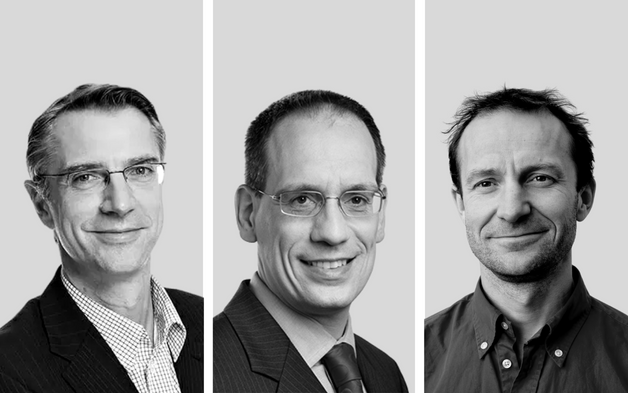

Key elements of ESG integration at Pensioenfonds Metaal & Techniek (PMT), the $112 billion Dutch fund for metal and technical workers, centre around an ongoing engagement program with the oil and gas industry, data gathering, divestment, and working with other investors to coalesce around climate action.
The pension fund has created bespoke equity and bond indexes across all its developed and emerging market liquid allocations, most recently introducing additional screens barring ESG laggards from the indexes and raising the threshold to entry.
All investments are assessed to see if they can be part of the climate solution and PMT is targeting allocating €10 billion to impact investment by 2030. All the while diligently reporting progress back to members, said Hartwig Liersch, PMT’s chief investment officer, speaking at FIS Maastricht.
Data quality
One of the biggest challenges in PMT’s ambitious strategy is data access and quality. Movement and progress on corporate transition plans requires data to assess if corporates are on a sustainable path and will reach their objectives, explains Liersch.
It’s important to see if companies are transitioning on a path of 2 or 1.5 degrees, and extracting data on corporates’ Scope emissions is challenging. Liersch noted how the war in Ukraine has influenced companies net zero pathways.
“Plans are different to what they thought,” he said.
At NOK 786 billion ($78 billion) Kommunal Landspensjonskasse (KLP), Norway’s fund for local government employees and healthcare workers, strategy is shaped around engagement and working with other investors. The passive investor is systematically shifting from high to low emitting companies and sectors and monitors and cajoles 7000 companies across 50 countries tracking MSCI and Barclays’ equity and bond indices, of which it currently excludes over 200.
In a second approach, fellow panellist Arild Skedsmo, senior analyst, responsible investments, KLP, explained how KLP is also expecting its emissions to fall in line with the real economy.
It’s a strategy KLP supports by trying to influence companies to make ambitious climate commitments and put credible plans into action. Success depends on KLP working with other investors, said Skedsmo.
“We have limited leverage. We need society to work together.”
Alongside influencing corporate behaviour alongside other investors KLP works with regulators and governments to wield influence. Challenges include mobilising this collective force to convince company boards to act; persuading corporates that climate change is also an opportunity, and that investors expect them to make long term transition plans is difficult, he said.
Skedsmo echoed previous comments about the importance of data. However, he noted that it isn’t always necessary to ask for complete data sets. KLP is invested in thousands of companies and tapping top-down portfolio analysis is not always necessary. Focusing on how a company is doing within its sector, using monitoring tools and working with other investors, stakeholders and civil society is sometimes more beneficial – supported by KLP’s own bottom-up analysis of emissions within sectors.
Sovereign engagement
For sovereign bond investors looking to integrate ESG, engagement includes working with governments. Climate change is a threat to sovereigns, said Jens Waechter, senior global macro and research analyst, Franklin Templeton Investments.
“Mitigation is financially beneficial.”
Franklin Templeton invests in global sovereign bonds and corporate bonds in developed and emerging markets. Engaging on ESG issues includes talking “behind closed doors” with governments and addressing challenges within the wider context of ESG analysis.
“As a private investment group, it’s tricky to walk up to an elected government and tell them what they should do,” he said.
ESG analysis comprises three steps, he continued. The investor gathers forecasts on the transition progress of investee countries over the next three to four years. He noted that countries don’t need to be rich to transition.
Although wealthy countries have the resources to transition, progress in emerging markets particularly catches his eye.
“When you see countries with limited means take small steps they deserve as much capital as those countries that are capital rich.” He noted that it is financially more rewarding to invest in countries moving in the right direction.
He noted that investments aren’t possible via tactical allocations, but require an investment case, analysing to what extent sovereigns and companies are improving or backtracking.
Franklin Templeton aims to use robust data sources that draw on a methodology that doesn’t change all the time. Waechter noted how in many cases, plans corporates make around net zero are aligned with sovereign progress.
Assessing Singapore’s commitment to net zero by 2060 involves understanding what the policies are and the State’s capex plans in a way that will offer insight on corporate net zero progress too.
“This is macro data, and it is very important to get it – we can’t create it ourselves,” he said.
He also noted the importance of finding a general trend rather than seeking to unearth every detail, focusing on which key indicators to follow.








Leave a Comment
You must be logged in to post a comment.
Login