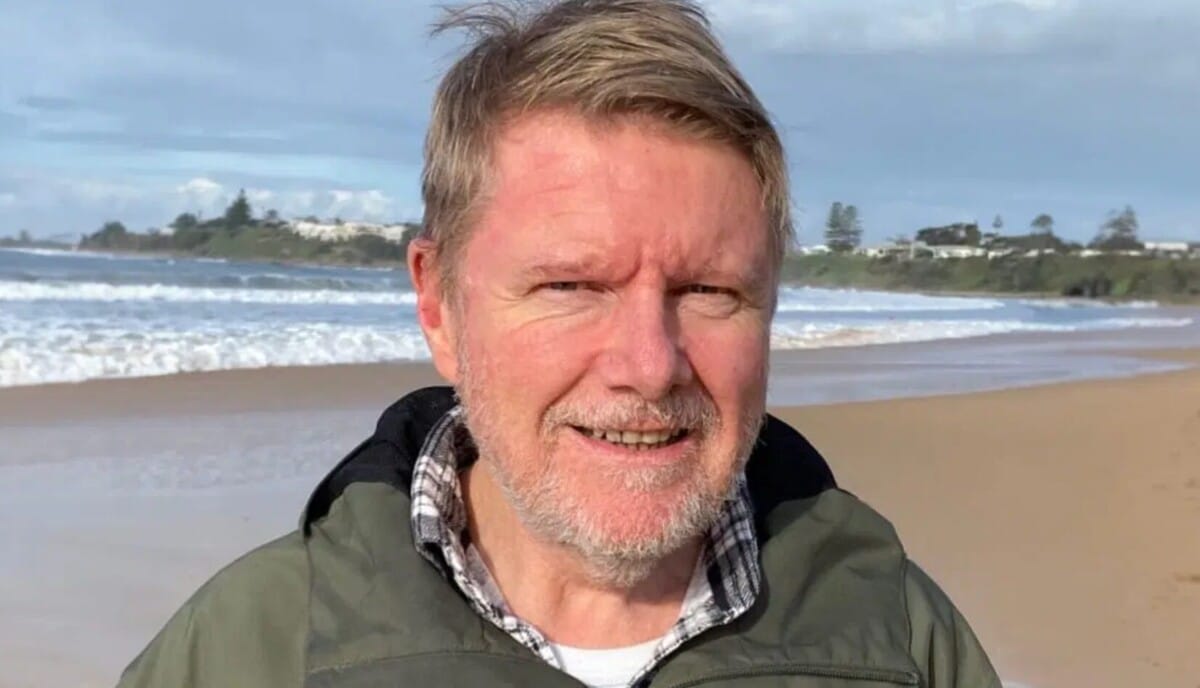

Vale Greg Bright, father of Australia’s financial trade press

Veteran journalist, publisher and entrepreneur Greg Bright has died aged 70.

Bright was a founder of Conexus Financial, publisher of Investment Magazine, Professional Planner and Top1000funds.com. He also created and managed a range of other titles in a career spanning more than four decades.

Bright set the standard for how the specialist media in Australia covers financial services. Starting his career as an economics writer for the Sydney Morning Herald and then as an assistant editor at the national business daily The Australian Financial Review, Bright founded Trade News Corporation in 1983.

It marked the start of an extraordinary period of creativity that saw more than a dozen publications launched, all built on the belief that the financial services industry had important stories that needed to be told, and that it deserved high-quality journalism to tell them.

Even as an old-school journo, Bright had one characteristic that few of his peers truly possessed: a strong streak of entrepreneurialism, and an ability to happily inhabit the worlds of both commerce and editorial.

His editorial instincts told him where the stories were, how industries were likely to develop, and how they should be covered. His commercial savvy created publications and business structures which allowed journalism and journalists to flourish.

Sponsored Content

Bright was prepared to back talent. He could spot it a mile away and nurture it to its full potential. He was a boss, friend and mentor to countless reporters, not only on the titles he launched, managed or edited, but on others as well.

He was demanding, in his own way, could be frank in his feedback and was often hilarious giving it. As a tragic lifelong Parramatta Eels supporter he’d often quote Jack Gibson to make a point.

He made more than one reporter better at what they do by making them more like him.

As the internet emerged as a disruptive force and the media became more volatile and reactive, the traits of accuracy, fairness, honesty, and genuine intellectual curiosity began to lose their currency. Because Bright embodied those traits and encouraged them in others, he was increasingly an anachronism to be cherished.

There is scarcely a corner of the modern financial services industry in this country that Bright did not explore through the publications he founded, which included Blue Book, Ethical Investor, I&T News, IFA, Investment Magazine, Investor Daily, Investor Strategy News, Investor Supermarket, Investor Weekly, IO&C News, Master Funds Quarterly, New Investor, Professional Planner, SMSF Magazine and Super Review. And through Top1000funds.com, his vision went global.

Bright’s influence was broader than just in the world of journalism. He was committed to shining a light on the less glamourous but no less important sectors of the financial services industry, such as custody and administration, and the publications he founded and led changed the industries they covered, always for the better.

Bright’s interests transcended financial services. Trade News published Encore magazine, a publication devoted to the film industry. And he had interests outside of publishing: Bright was a non-executive director of La Trobe Financial, and an executive director of Shed Connect.

For the past year Bright based himself at Culburra on the NSW south coast as a freelance writer, from where he continued to launch well-reasoned missives via social media – in particular, in staunch defence of the compulsory superannuation system.

He was deeply respected and will be missed by all who knew him for his energy and passion, his humour and humanity, his wit and intelligence, and for invariably being great company.

Bright is survived by his wife Christine, and by his children Sophie, Phoebe and Eddie; by his stepson Christian and daughter-in-law Tia; and by his grandchildren Tayla and Toby.

Leave a Comment

What I took away from the world’s ‘festival of private capital’

What I took away from the world’s ‘festival of private capital’

The on- and off-stage antics at the extravagant Milken Global Conference in Los Angeles tell us a lot about where institutional capital is right on the money – and where it is putting its head in the sand.

Sort content by

Back to the future: investors concerns in 2008 resonate today

This issue marks the 400th edition of conexust1f.flywheelstaging.com,  which looks at the strategies and views of the world’s largest asset owners. So what were the concerns and opportunities of investors six years ago, and what are they now?   Since its launch in 2008, the journalists at conexust1f.flywheelstaging.com have written more than 2,000 stories on

Equity risk expectations – a response to short-termism

Solving short-termism is being held up by the institutional investment industry as some sort of performance saviour. There have been many attempts at uncovering the problems of, and offering solutions to, short-termism with numerous reviews, conferences and papers discussing the need for long-term investing. These include the incentives and behaviour of asset owners, asset managers

Smart beta: where is the value?

I’ve been contemplating the “smart beta” wave the industry seems to be riding at the moment. Cynically, part of that contemplation asks whether there is any innovation at play or whether it’s simply the industry playing with nomenclature once again. The answer is confusing, for while I’d like to be able to write it off

Hedging your bets? Back innovation for wealth creation

In 2012 there were 31 hedge fund managers on the Forbes 400 list, representing about 8 per cent of the wealthiest people in the US, up from 6 per cent the year before. Wealthy people on the whole don’t interest me, but innovation does. And the creation of wealth, and the creation of jobs and

What it is to lead

In reading the superb editorial that backgrounds the naming of Barrack Obama as Time magazine’s Person of the Year for 2012, it is clear one of the reasons he was chosen was his ability to embrace change. In particular he shows leadership of the new America, namely people under 30, Hispanics and African Americans. Adapting



