


Asian investors, including university endowments and family offices, are leaning into private credit hunting for returns in lower-middle market and asset-backed lending, according to Cambridge Associates which manages a $92 billion discretionary outsourced CIO business.
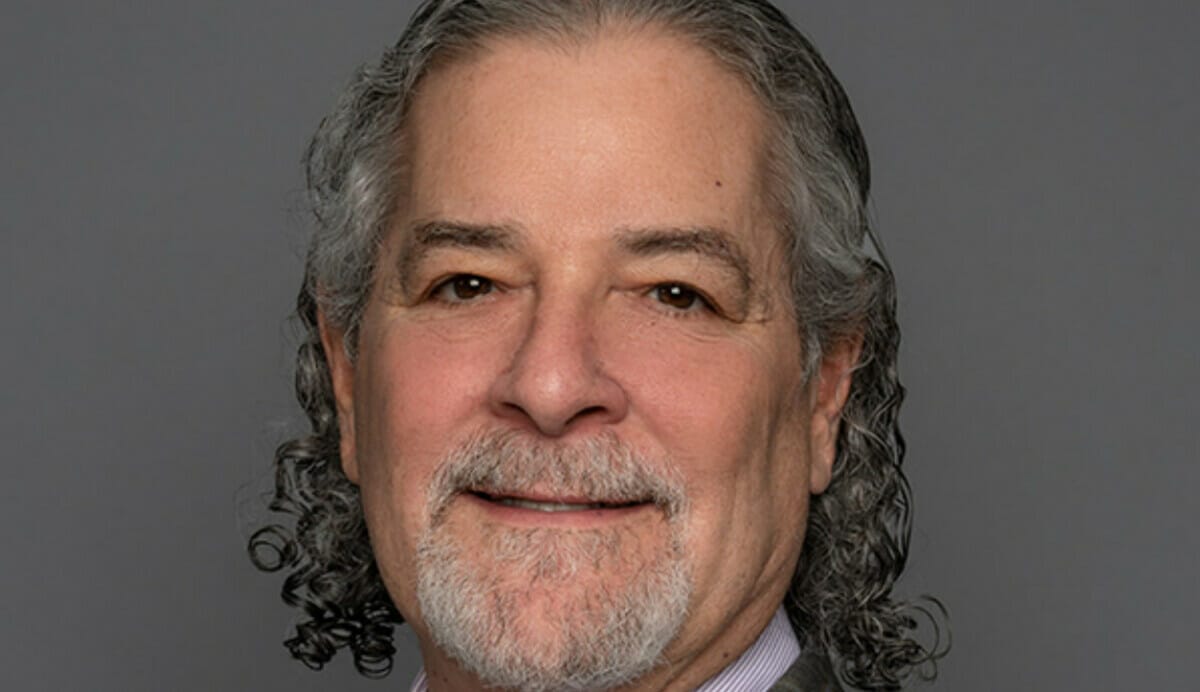
Appetite for the asset class is strong as these investors grow their alternatives allocations which historically have been lower compared to US and European peers, says Prabhat Ojha, OCIO and head of Asia client business at Cambridge Associates.
Direct lending and so-called speciality finance (or asset-backed lending) are two major recipients of client capital.
In terms of portfolio construction, the firm usually recommends client portfolios be underpinned by a few large, core managers who have been through credit cycles and have larger teams, as they can provide access and flexibility to multiple credit sub-strategies. But it is cautious around large funds raised by newer players who have not weathered the credit cycles.
“[There is] a lot of competition there in the large-caps space, and therefore the deal terms that we are seeing are deteriorating,” Ojha, who used to head up the firm’s Asian credit manager research, tells Top1000funds.com in an interview from Cambridge Associates’ Singapore office.
“At the same time, this is where you compete with the public markets – high yield and bank syndicated loan markets – the borrower has the optionality, not you as the lender.
“We want to lean into the lower-middle market where the competition is lower, where the deals are smaller, where the manager can take the whole piece or be really responsible for structuring the deal and the covenants.”
Smaller deals with fewer lenders also mean faster recovery in the event of restructuring, as Ojha says a one-year delay could make a significant dent on the IRR. The firm defines lower middle market as companies with $10 million to $50 million of EBITDA, and core middle market as $35 million to $100 million EBITDA.
Cambridge Associates serves a variety of client sizes, and many are willing to allocate to smaller fund managers that may not move the needle for larger asset owners.
Should tariffs or other uncertainties translate to real trouble for corporate earnings and hit direct lending, speciality finance backed by hard assets such as aircraft and ship leases and commercial real estate also provides another layer of security.
Best managers ‘just say no a lot’
Ojha advises and invests on behalf of several Asian family offices, university endowments, foundations, and corporate or pension pools. He acknowledges that there are certain anxieties among clients about private credit due to persistent media coverage of bad players and risks in the opaque asset class. This makes manager selection a critical mission particularly given the wide dispersion of performance in alternatives.
Apart from looking for managers who are lead lenders in deals, Cambridge Associates also assesses market reputation and credibility by doing off-the-list reference calls.
If the fund is leveraged, its reputation and strong relationships with leverage providers could become a source of advantage when markets get choppy, says Ojha.
“[We want] somebody who understands that even my leverage line… needs to be structured appropriately. That this leverage provider, because of the structure and my relationship, is not going to mark-to-market [when asset values fall] because there is more confidence in me and the basket of assets backing the LOC (line of credit),” he says.
“Others might get that margin call – you won’t. Therefore you’re much better protected, and you can deploy more capital in a choppy environment.”
But ultimately, the most successful players in private credit “just say no a lot” and Ojha says it’s crucial that a portfolio manager or a team have tight control over their book instead of, for example, the portfolio manager delegating to regional leads.
“I don’t like to see that. I want the PM to make decisions and control the portfolio because otherwise it becomes about asset growth [in a fund].”
Secondaries a ‘godsend’
Cambridge Associates opened its Singapore office 24 years ago and has witnessed the rise of Asian university endowments – a trend that began in the early 2000s. These funds have looked to their US counterparts, who are some of the most prolific private markets investors, and many are at an “early stage” of building out their own alternatives programs.
According to Cambridge Associates data, the average alternatives allocation among Asian endowment clients is from 25 to 35 per cent. These endowments are very much in their growth stage and universities do not rely on them heavily for cash flows.
“I wouldn’t say the risk profile of Asian endowments is as high as the more sophisticated US endowments, which can run at a risk profile of 85 equities/15 bonds, or sometimes 90/10. Only a select group in Asia aspires for that or has gotten that, and others are much more below in the risk spectrum with maybe 60/40 or 70/30,” he says.
There has been strong interest and deployment in secondaries especially for new allocators who seek vintage diversification and some immediate IRR, beating the J-curve.
Again, the smaller end of the secondaries spectrum is more attractive. “That’s where the better discounts are,” Ojha says.
“Not all of our clients are looking to write $200 million cheques per secondary fund or per GP. We can write $5 million, $1 million, $10 million sort of tickets, so we can invest in these more niche strategies which just have a better return profile from our perspective.”
“It’s different from five, seven years ago, secondaries are a big component of any privates program [now]… particularly in this environment where distributions have been slow, experiencing that liquidity come in from secondaries or private credit is a godsend.”







Leave a Comment
You must be logged in to post a comment.
Login