
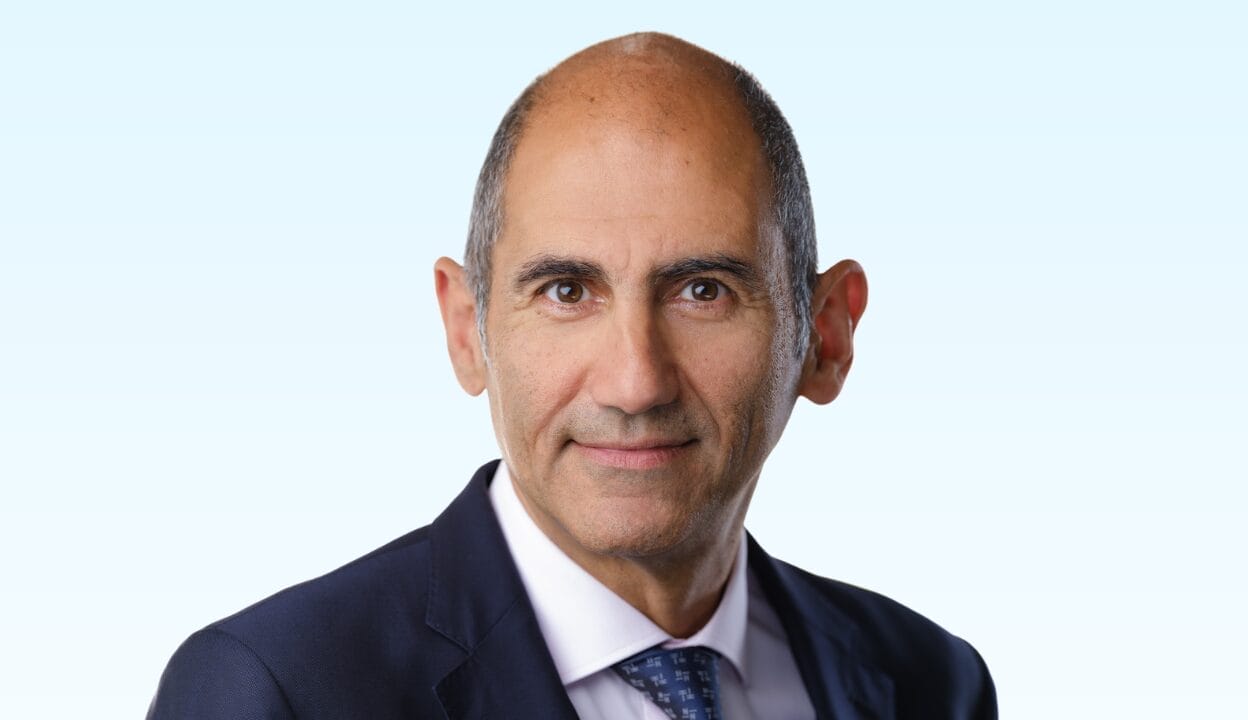

three months ago, I would have had a number of answers,” Kaveh tells Top1000funds.com on the sideline of Mercer’s investment conference in Singapore.
“Today, everybody’s talking about tariffs – that’s all they want to talk about. What are the implications of tariffs on the global economy? Is there going to be a recession? And what do I do with our portfolio?”
A re-evaluation of the role of US assets in portfolios among global capital allocators is already underway, with Canadian pension funds including CPPIB reportedly halting some private markets allocation to the US due to geopolitical and tax worries.
For decades, US government bonds have been accepted as the safe haven asset and the US dollar as the reserve currency, but as these assumptions become challenged by the tariffs Kaveh says there is a “crisis of confidence” in the world’s largest capital market.
“One of the first questions [we get at client meetings now] is should we reduce our exposure to US assets or diversify more? And in general, we would say yes,” Kaveh says.
This could be diversifying the currency base of the portfolio by considering allocations to euro or yen assets and gold, but the approach has some regional caveats. For example, a Hong Kong investor may not want to significantly reduce its US dollar exposure, as it is already its lowest risk currency position because the Hong Kong dollar is pegged to the US dollar, Kaveh says.
But more importantly, he says now is the time to pivot back to active management in equities. Mercer is recommending its clients with large exposure to passive strategies, and consequently a large footprint in the US market, to consider active strategies in other developed markets like Europe or Japan or emerging markets due to attractive valuations.
“The expectations from them are much lower in terms of earnings growth,” Kaveh says. “But with the help of an active manager, they can identify which companies in Japan, Europe or in emerging markets are less vulnerable to tariffs and global trade and are more focused on delivering local services and goods, particularly in the mid cap or smaller companies.”
How private markets changed the game
Kaveh joined Mercer in 2006 as Euoprean CIO advising on asset allocation and manager structure for primarily UK and Irish pension funds. During his close to two-decade career at the company, Kaveh went from overseeing a dozen investment professionals and $20 billion assets under managements to leading a 100-person team and one of the biggest OCIO service providers in the world.
As asset owners become more mature in the way they invest, Kaveh says the biggest change he saw is allocators’ view towards alternatives, namely hedge funds and private assets. Up until 2010, most of Mercer’s institutional clients still had a typical 60/40 portfolio but now there is much more diversification both in asset classes and manager selection.
Private debt was the standout asset class in recent memory as its nominal return shifted upwards with interest rate increases, and the lack of deep recession in the last 15 years means no mass-scale defaults in the economy, he says.
A survey conducted by Top1000funds.com and Casey Quirk in February found that asset owners are enthusiastic about private assets alternatives, and 37 per cent of CIOs polled said they are planning to increase allocation in the next 12 months. Most of Mercer’s clients, particularly mid-sized assets owners, are still under allocated in private markets, Kaveh says.
In some less established alternatives asset class, he sees some potential challenge in the asset management industry’s ability to meet the increasing allocation demand.
“In the very short term, you could argue that with private credit, for example… because it’s a new asset class, there may not be as many funds and managers available as something more established like private equity or real estate,” he says.
“There may well be more money trying to get invested as soon as possible, with not as much capacity in the industry.
“[But] the capacity is coming all the time, so I’m not particularly concerned.”
Manager selection is critical to success in private markets. Whereas the spread of performance between best and worst performing managers could be 2 to 3 per cent in public markets, Kaveh estimates the difference between best and worst performing fund in private markets can be as much as 20 to 30 per cent. The dispersion is especially evident in private equity and venture capital.
Mercer has a dedicated manager research team and has a four-factor scoring system. This consists of evaluations of a manager’s abilities around ideas generation (having genuinely unique, value-add investment ideas); portfolio construction (translating the investment ideas into appropriate portfolios without adding unintended risks); implementation (making sure the ideas are properly executed); and business management (having sound management of the investment process).
But in times of extreme volatility, Kaveh says asset owners will increasingly demand one thing from their managers – transparency.
“People want to know exactly how the portfolios are positioned, so we do a lot of scenario analysis with the manager’s portfolio so that we can show the asset owners [of possible results following macro events],” he says.
DAA capability shines
Aside from strategic asset allocation, Mercer also make decisions on behalf of its clients to capitalise on short-term opportunities via its macroeconomic and dynamic asset allocation team. Kaveh says the unit works on a 12-to-18-month horizon and aims to benefit from “turning points” in the market.
One recent example of such turning points occurred just after the US election. Expectations that the Trump administration will introduce pro-business policies, cut taxes and reduce regulations fuelled a stock market rally in the fourth quarter of 2024 and into early 2025.
However, Kaveh says the DAA team was conscious of comments Trump made on the campaign trail about introducing tariffs to ensure US’ economic partners trade with it fairly and was critical of whether the perceived business benefits will come through immediately.
In the fourth quarter of 2024, the team had an underweight position in equities and overweight in bonds – especially in what Mercer calls “growth fixed income”, which are assets that are typically below investment grade, less liquid in nature and more complex than traditional fixed income.
“The markets went up a little bit more in January, February, but then they fell back down again, and that [underweighting in equities] has been value adding,” Kaveh says. “The flip side of that was to invest the money instead in Asian high yield bonds, and also in frontier markets.”
Frontier markets such as African countries may be basic commodity producers and less developed than emerging markets, but they are also not as ingrained in the global supply chain, he says.
“Those frontier markets are offering higher yield, often double-digit yield, on the investments with sort of a focus on their own positioning. So if they’re a strong economy that is not overspending in their budgets, then they can be a good investment opportunity.
“We typically tell clients that our DAA service can add about 25 basis points per annum over the over a five-year time horizon. In actual fact, it’s added about 50 basis points per annum over the last 5 to 10 years.”
Asset owners may want to review their decision-making and governance structure to ensure that they are able to seize the opportunities when they come, Kaveh adds.
“It’s very difficult to make decisions in the heat of the moment, so be ready to make your decisions in advance.”








Leave a Comment
You must be logged in to post a comment.
Login