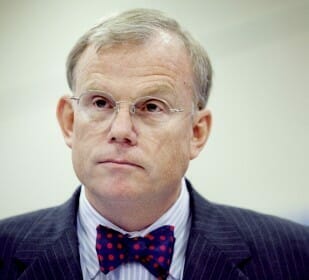
FSBA pounces on high valuations

The $204 billion Florida State Board of Administration is selling private equity and real-estate assets it believes are overpriced, chief investment officer Ash Williams says.

FSBA is steadily weeding out the mature allocations in its $10.9 billion private equity portfolio that still have to complete final realisations, and selling them in the secondary market.

In a process that in aggregate has accounted for about $3 billion to $4 billion over the last two years, Williams has bundled together weaker funds, sold them off and redeployed capital to higher-yielding areas, in a “disciplined pruning of the portfolio”.

He’s applied the same principles to FSBA’s $14 billion real-estate portfolio, which accounts for just under 9 per cent of assets under management. Here, he’s sold off highly sought after but dated apartment blocks and office space, freeing up capital to buy real estate that should have a higher value and return for the next 20 years.

“If an asset is a better fit for another investor’s portfolio, that will be reflected in its value to them and allow us to redeploy those dollars on assets better suited for our portfolio,”Williams says.

In private equity, higher-yielding assets are coming via new opportunities in Asia, where FSBA works with Asia Alternatives – an Asia-dedicated private equity fund of funds. It has led Williams to one fund investment that includes a portfolio company targeting India’s burgeoning second-hand car market.

Sponsored Content

The company’s founder has developed a sophisticated mobile app that combines car valuations, access to finance and insurance, and matching of buyers and sellers, in a strategy that Williams describes with his characteristic colour and detail.

“It’s the kind of thing that could be a unicorn,” he says. “It shows what an entrepreneur in an emerging economy can achieve with technology and a first-rate education.”

Williams’ team manages about 40 per cent of assets in-house. About half of the real-estate portfolio is run in-house.


For more on this story, see Florida SBA trusts long-term plan”.

Leave a Comment

Ohio STRS warns of higher US recession risk; prioritises liquidity

Ohio STRS warns of higher US recession risk; prioritises liquidity

The State Teachers Retirement System of Ohio has warned of a “material” increase in US recession risk compared to last year as the fund braces for a wider, “negatively skewed” distribution of outcomes in the next 12 months. It came as the mature plan, which is 81 per cent funded, is tilting to fixed income and new asset classes like liquid alternatives over equities.

Sort content by

Real assets a haven in likely stagflationary environment

An overweight position in real assets and private equity, and an underweight to equities and bonds positioned the Ohio School Employees Retirement System for success in the last year but CIO Farouki Majeed is now even more convinced a stagflationary environment is likely and is positioning the fund accordingly.

GPIF feels equity’s wrath; active equity reboot

Japan's GPIF feels the heat of see-sawing global equity markets in its latest quarterly results while the latest annual review reveals a shakeup in global active equity allocations in search of more manager diversification.

San Bernardino tilts to US equity; informed rebalancing reaps rewards

San Bernardino County Employees’ Retirement Association, SBCERA, plans to increase its exposure to US equity in preparation for de-globalization trends. Sarah Rundell talks to CIO, Donald Pierce about asset allocation and the fund’s ‘informed rebalancing’ program.

Beyond traditional asset allocation

Today’s challenging climate has led diversified investors like GIC, Singapore's sovereign wealth fund, to explore different approaches to portfolio construction to build resilience. Grace Qiu and Ding Li, both senior vice presidents in total portfolio policy and allocation at GIC discuss their new research.

The ingredients for success in private credit

Investing in private credit brings income and supports capital preservation, but as more investors enter the asset class, competition for assets is set to heat up. Investors from South Carolina Retirement Systems Investment Commission, Investment Management Corporation of Ontario and Ohio School Employees Retirement System explain their approaches.

Investors prioritise governance, tilts and liquidity

In a wide-ranging session at the Fiduciary Investors Symposium at Chicago Booth School of Business investment executives from HOOPP, CalSTRS, USS and Cbus reflect on the need for strong governance in the current climate, diversification and liquidity.

Previous




