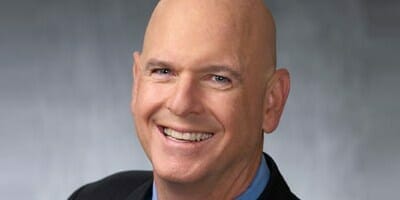

The year that was, a CIO’s perspective

The downgrade of the US took the entire industry by surprise, in a year that confirmed the complexity and unpredictability of markets, CalSTRS chief investment officer, Christopher Ailman, says.

“The entire financial services industry was underweight US Treasuries. We were short duration and underweight sovereign debt. But it turned out it would have been the best decision to be long US debt,” he says.

“It has been a humbling year, we thought we were in a slow recovery, but that completely stalled and for much of the second half of the year we faced the prospect of a double dip.”

Ailman says his team started the year with conviction that inflation would be a key issue for 2011 and had an underweight position in fixed income and a commitment to invest in inflation-sensitive assets.

He says one of the best investment decisions he made this year was to build up the TIPS portfolio, but not because of inflation, because yields were lower.

The decision to be a bit more tactical on asset allocation also paid off for the fund, he says, with a neutral position in global equities from the middle of the year, an example.

Sponsored Content

CalSTRS’ investment team had a creative year working on a number of new initiatives and long-term projects such as the risk overlay, which it will continue to integrate into its investment process next year.

“Diversification is still the centre piece, still our main risk tool, but we need additional tools,” he says.

The fund also created an innovation group and Ailman says the expansion of the investment universe to include opportunities such as micro finance, commodities and global macro hedge funds, has been very interesting.

Ailman says “austerity” will be the key word for 2012, with countries unable to grow their way out of the crisis.

“Austerity is not good for GDP growth, we will have low GDP this year and next,” he says.

With this in mind the fund is debating its equity position, with Ailman’s preference for a neutral position, and will also look at weighting public markets differently.

Ailman says there will be pockets of opportunity in 2012 and that “next year will lend itself more to active management”.

“We have flexibility around our active/passive ranges but will be tilting our portfolio more towards active.”

The best decision for next year will be trying to buy stable cash flows, in whatever form that appears, he says.


Leave a Comment

Sort content by

Conservative overweighting hinders world’s largest investor

An overweight allocation to domestic bonds has not helped the world’s largest investor in the June quarter, with a massive $42 billion shaved off the assets of the ¥116,802 billion ($1.37 trillion), Government Pension Investment Fund of Japan (GPIF).mrec4inarticleinline Sponsored Content scnative1 scnative2 scnative3

Deflation: the taboo which needs to be examined

The funds management industry is famous for its navel-gazing. After a crisis, you can just imagine how much of it goes on. But, perhaps, that self-examination may provide more rewards if it starts to actually look at industry taboos rather than accepted practices.mrec4inarticleinline Sponsored Content scnative1 scnative2 scnative3

European pension funds have blinkered view of risk

The liability-hedging portfolio of European pension funds is imprecisely modelled at nearly half of the pension funds as measured in a EDHEC-Risk Institute survey.mrec4inarticleinline Sponsored Content scnative1 scnative2 scnative3

Financial health reports essential says Mercer

After the damage of the global financial crisis, funds should be submitting themselves for voluntary financial health checks to diagnose vulnerabilities and pinpoint risks, asset consulting firm Mercer says.  mrec4inarticleinline Sponsored Content scnative1 scnative2 scnative3

Liquidity as an investment style

This paper by Yale School of Management Professors, Roger Ibbotson and Zhiwu Chen, shows that liquidity, as measured by stock turnover or trading volume, is an economically significant and distinct investment style, and introduces and examines the performance of several portfolio strategies.mrec4inarticleinline Sponsored Content scnative1 scnative2 scnative3

Dodd-Frank Act will stand or fall on right people

At a Yale-hosted roundtable on the Dodd-Frank Wall Street Reform Act, professor of economics, Robert Shiller, said the success of the Act, and the agencies created to study aspects of the market, will depend on appointing the right people, who should be willing to take advice from his fellow economists. Click here to read more.mrec4inarticleinline

Previous




