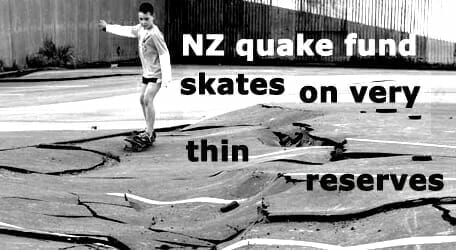

NZ quake fund skates on very thin reserves

New Zealand’s earthquake disaster relief fund could be completely drained following the fatal 6.3 quake that flattened large swathes of central Christchurch on February 22.

The Earthquake Commission (EQC) was already releasing about NZ$1.5 billion ($1.1 billion) of the $4.4 billion disaster fund to pay for claims generated by the 7.1 quake that caused widespread destruction in Christchurch last September.

The latest New Zealand government accounts to the end of January this year show the EQC had budgeted for insurance claims amounting to just over $1.78 billion from the September event.

While the fund itself must meet the first $1.1 billion in claims it had reinsurance in place up to a further $1.85 billion.

The EQC covers residential homeowners up to a value of $74,000 per claim. Owners who had been paid out after the September quake would be able to claim again if their homes sustained fresh damage following the latest catastrophe.

According to latest government estimates, about 10,000 Christchurch homes would have to be demolished while a further 100,000 required some level of repair as a result of the February earthquake.

Sponsored Content

If the latest round of claims exceeded $2.95 billion ($1.1 billion from the fund plus $1.85 billion from reinsurers), the EQC would have to dip into its remaining capital, which would amount to about $2.22 billion of New Zealand fixed-interest investments.

Last year Phil Jacques, EQC chief financial officer, told Top1000Funds’ sister publication, I&T News, the fund would first sell-down its $1.26 billion global equities portfolio to meet claims.

While EQC would not comment, it is understood the global equities sell-down had almost been completed. AXA’s annual accounts to the end of December last year, for example, reveal the EQC redeemed its $237.3 million global equities mandate with AllianceBernstein to cover costs incurred by the September earthquake.

The EQC also had global equity mandates with State Street Global Advisors, Tweedy Browne, T. Rowe Price and Capital International.

The remaining 70 per cent of the EQC portfolio was chiefly invested in a range of New Zealand government securities, including about 20 per cent in inflation-linked bonds.

Russell acts as investment adviser to the EQC fund.

EQC collects about $66.6 million in levies each year but New Zealand Prime Minister, John Key, said that figure could triple next year to replenish the disaster fund.

One response to “NZ quake fund skates on very thin reserves”

  1. Investor need to understand the risk of investing in infrastructure fund.

Leave a Comment

Sort content by

Future Fund could manage others’ money

Managing money for default super is a possibility for Australia’s sovereign wealth fund. Its leadership also said becoming more ‘nimble’ and adding activity in venture and growth were priorities.

Carlyle MD says cycle isn’t done

Carlyle’s Jason Thomas says private-equity investors miss out when they try to call the top of the cycle. He thinks Trump’s impact has been overblown and that the current cycle isn’t done yet.

CalPERS says consultants could do better

CalPERS is happy with its consultants, except for their performance in recommending ways to control fees and costs and their presentation of new investment ideas, a board rating reveals.

Dutch pension funds embrace UN goals

PGGM and APG are well advanced in developing a process to identify potential sustainable development investment opportunities that could transform the UN’s targets into tangible returns.

5-yearly power transfer looms in China

As China readies for its five-yearly leadership reshuffle, global investors are watching to see how they’re poised to manage the world’s second-largest economy as it faces up to its debt dilemma.

Satyajit Das: access real income

Author Satyajit Das, who warned about derivatives before the GFC, says debt levels have turned the whole world into a carry trade and managers need to get close to real income streams.

Previous




