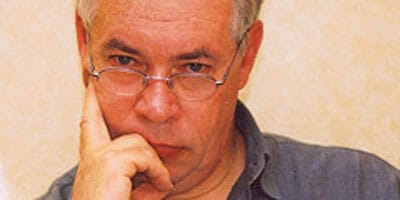

Kay calls for philosophical shift

In an interview with conexust1f.flywheelstaging.co
Continue Reading

Access the full content on Top1000funds.com

Join the global institutional investment platform read by the world's largest asset owners, fund managers and consultants.

New here

Create an account

Complimentary to register. We'll verify your details and grant access to the archive, our newsletters and the Asset Owner Directory (enhanced features coming soon).
Create your Top1000funds.com subscription account
Already a member

Sign in

Already activated your account? Sign in to continue reading and access your saved articles, preferences and member-only content.
Or request login link

One response to “Kay calls for philosophical shift”

  1. Tim MacDonald

    Mr. Kay is right that Institutional trustees cannot be expected to manage relationships with the enterprises their Institutions are invested in. These Institutions are trusts chartered to provide for the present and future financial security of their beneficiaries in the prescribed ways. The trustees need to be focused on their charters of trust.

    So, we do need a large class of skilled investment professionals who can present choices and make selections on behalf of chartered trusts, just as we need lawyers, accountants, auditors and other knowledgable experts to apply their specialized skills for the benefit of these Institutions within their respective domains.

    Mr Kay’s idea that we impose the duties of a trustee on those professionals seems to me problematic. Like all professionals, we must hold these actors to high standards of competency and integrity when applying the knowledge and skills of their profession for the benefit of their clients. But they are professional service providers, not chartered trustees.

    There is more promise in the move to reduce trading activity using money obtained from institutions of chartered trust.

    All trading is speculative, and speculation has from the very beginning been seen as inappropriate for institutions of chartered trust. We have been experimenting for some decades now with Modern Portfolio Theory as a pattern for making speculation on share prices — and the prices of other financial assets — appropriate for Institutions. The results of this experiment are less-than-expected.

    We need to discover and develop new investment choices that can give Institutions the equity-like returns they need to realize their charters of trust, with debt-like protections of principal in perpetuity, evolving their portfolios as the economy evolves, through change and adaptation to change that is the real story of human history, and the true engine of our prosperity.

    And we need investment professionals skilled and experienced in using those architectures. Some professionals will need to specialize in applying these architectures to construct new investment choices that are purpose-built to meet the multiple needs of a chartered trust, including: principal protection; programmed performance; threshold returns; constancy; transparency; alignment of interest; sustainability; and social responsibility. Others will need to specialize in selecting from among the available choices.

    You cannot be both judge and advocate. These roles have to be kept separate.

    This is problematic when the blind pool construct popular for selecting institutional investments in Public Equities gets ported over to what are called today “alternative asset classes”. Too often, these pool operators become both judge and advocate of the investment opportunities they themselves originate. That is not be good. Witness, the debacle with the Spanish toll roads.

    There are other complications associated with the construct of the blind pool that need to be addressed, but Mr. Kay is right. None of the new architectures we choose to will eliminate, or even reduce, the need for investment professionals.

    The world that we live in has changed. We need to adapt.

    These are exciting times!

Leave a Comment

Photo gallery: FIS 2026 at Raffles Singapore

Photo gallery: FIS 2026 at Raffles Singapore

Good ESG data requires a framework

Initiatives such as the Sustainability Accounting Standards Board are vital for providing the consistent, regular, high-quality disclosure on the SDGs that investors need, a panel told delegates.

Irish pensions headed for major reforms

Auto-enrolment will put more people into Ireland's public retirement system, while regulatory requirements will include tougher standards for trustees and more disclosure on ESG.

Funds team up on G7 priorities

A group of institutional investors are collaborating to address the G7 priorities of climate change, gender inequality and the infrastructure gap, agreeing to commit resources and expertise.

Trustees answer the tenure question

The Australian Prudential Regulation Authority has given guidance for how long trustees should sit on boards. How well does the theory suit the practice? Stakeholders weigh in.

Whineray takes the reins at NZ Super

New Zealand Super acting chief executive Matt Whineray was named to the position permanently on Tuesday. He replaces long-time fund CEO Adrian Orr and vacates his chief investment officer role.

MSCI leaves out suspended A-shares

A handful of companies halted trading this week, prompting MSCI to drop plans to add them to its emerging markets index as it made the long-awaited inclusion of 229 China-listed stocks.

Previous




