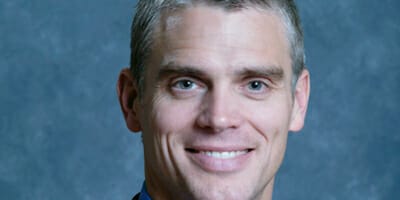

Institutional investors fall behind USA Inc

Institutional investors are clearly behind in risk management compared to the innovative techniques implemented in treasury departments of corporate America, chief investment officer of Wurts and Associates, Jeff Scott says.

Scott, who spent his career managing the balance sheet at Microsoft, Dow Chemical, the Alaska Permanent Fund and now investment consultant Wurts, says institutional investors want to manage returns, which is impossible.

“Returns are a function of animal spirits. They swing between fear and greed. Do companies really change in long-term valuation over the weekend?” he asks.

And while he points to investors such as Warren Buffet who “thinks about risk constantly with his capital”, Scott says many institutions are not thinking about risk.

“There is poor governance, and poor risk management. A lot of losses experienced by funds throughout the financial crisis were a function of missing simple risk-management concepts like custody of collateral and liquidity. You didn’t need fancy mathematical risk models instead of common sense you can get in Omaha.”

Scott says that institutional investors are behind in their risk-management practices.

Sponsored Content

“Many asset-management firms and hedge funds have far superior approaches to risk management than institutional investors. There are steps to take and it has to start with governance, and then understanding the risks you are taking.

Change of hats
As chief investment officer of Alaska, Scott managed a number of strategic partnerships with service providers, and now has flipped to the other side of the table to be providing those strategic partnerships.

“It is the same hat and we have switched it around,” he says.

Scott says he works with funds at an organisational level discussing a new approach to asset allocation, that is really risk allocation, but before that there needs to be a discussion around knowing the funds’ risk tolerance, which is a lot more than standard deviation.

“Two different funds could have the same investment objective but the exposure for each is different because of what it “means” to them in the overall context.”

“We take the objective and liability of a total enterprise and manage a diversified portfolio relative to that,” he says. “We show them how we manage that, take an active risk budget around that and how we manage that risk budget and how investments change.”

While a few managers may have similar propositions, what Wurts does is have a service agreement alongside the investment-management agreement, whereby that knowledge will be applied at the portfolio level.

In other words, Wurts is transparent about the risk of the discretionary portfolio it manages, but it also communicates that thinking at the organisational level, feeding back advice on organisational and governance change management.

“We have an investment-management agreement and a service-level agreement, which defines in writing what the strategic partnership program is designed to accomplish and how it will operate.”

The key to good governance, Scott says, is a clear delineation between who has authority, responsibility and accountability.

Scott says some concepts applied during his tenure at Alaska were concepts and methods developed in treasury management learnt at Microsoft and Dow Chemical.

Resourcing was an obstacle to applying more than about 60 per cent of the concepts.

The current chair of the Microsoft investment-advisory committee chair is Mohamed El Erian, co-chief investment officer of Pimco, demonstrating the complexity in the portfolio.


Leave a Comment

Sort content by

Alecta doubles down on governance, risk management and culture

Sweden’s largest pension fund, the $126 billion Alecta, has spent much of the last year continuing to work on improving governance, risk management, competence and culture in the wake of a $2 billion loss in 2023 attributable to investments in US regional banks, including Silicon Valley Bank, turning sour.

Japan’s trifecta of challenges

After 18 years working with Japan’s leading pension funds and asset managers Chris Battaglia, president of the Global Fiduciary Symposium in Japan, is well placed to observe the pressures on the country’s retirement system and observes its evolution. mrec4inarticleinline Sponsored Content scnative1 scnative2 scnative3

日本が直面する3つの課題

グローバル・フィデューシャリー・シンポジウム代表を務めるクリス・バッタリア氏は、日本の大手年金基金や資産運用会社と18年間仕事をする中で、日本の退職金制度の課題、その進化を観察してきた。 mrec4inarticleinline Sponsored Content scnative1 scnative2 scnative3

A lot of regulation incoming for crypto, predicts former Fed governor

Former Federal Reserve governor Randall Kroszner argues crypto assets are mislabelled as “currencies”, and said digital currencies like China’s digital Renminbi could one day challenge the primacy of the US dollar, in a wide-ranging conversation.

Portfolios of the future

This session drew on themes of the conference and discuss with asset owners what the portfolios of the future will look like, particularly examining how investors plan to build robust portfolios to meet changing investment regimes.

Fiona Reynolds joins Conexus as CEO

Conexus Financial, publisher of Top1000funds.com, further cements its position as a global influencer with the appointment of Fiona Reynolds as chief executive.




