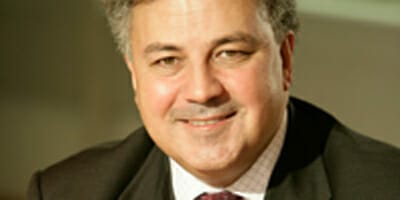

ESG rethink can add 40 basis points per month: Hermes

Rigorous Environmental, Social and Governance (ESG) management can deliver an extra 40 basis points per month according to Saker Nusseibeh, CEO and head of investment at Hermes Fund Managers.

“Where it [ESG] really matters for performance is in consistently avoiding bad governance. You can add 40 basis points per month… Per month!” Nusseibeh told a crowd of Australia’s top 50 superannuation funds and asset consultants at the Conexus Financial Australian Fiduciary Investors Symposium last week.

Nusseibeh talked about the importance of weighing up a company’s sustainability when considering whether to hold it in portfolios. Governance issues, he said, should be a mandatory part of the process, while environmental and social issues also weigh heavily despite being harder to measure.

“Think in terms of its ability to consistently offer stable returns for over 20 years, because that’s the investment time frames of your members. That’s how long they can be invested for, not one, two, or three years,” he said.

“Look at Lloyds of London. It successfully insured against world events for over 200 years… Then it went belly up, not because they couldn’t calculate risk. They were pretty good at that, but they didn’t successfully calculate the environmental risk of asbestos.”

Nusseibeh also urged trustees and managers to think more broadly about the future implications for fund members in a world devoid of ESG; one of lower standards of living punctuated by greater wealth inequality; high inflation; and transport and fuel restrictions.

Sponsored Content

“ESG is a tool for enhancing returns… But one should also do what is right for the sake of doing what is right.”

David Rae, head of asset allocation for New Zealand Superfund (NZ Super), also told the crowd about how the fund had recently brought ESG management “out of the back office to the front office.”

It’s a move he says, that had some of their investment professionals “kicking and screaming” about drafting their own policies but effectively “switched on their brains” about ESG and the costs and implications of getting it wrong.

It’s an approach that’s resulted in direct changes in major listed and unlisted companies NZ Super invests in, including changing supply chain issues in 16 technology companies, a complete change of board at another, and broke up “empire building” governance in a large listed infrastructure company.

Rae says their ‘active engagement’ on ESG won’t stop there, but is looking to build power in numbers through working together with other New Zealand funds on governance issues in particular.

“We recently got people in a room and said, ‘let’s raise corporate governance issues, and lets act as a group on these… we realise that tough talk in a locker room can quickly disintegrate on the field, so it’s important to have one company that’s leading that charge,” said Rae.


Leave a Comment

Sort content by

Investment risks rank highest for CalPERS

Investment controls and systems remain the highest risk at CalPERS according to its year-end enterprise risk dashboard.

Macro risks remain dominant: Cambridge

Macro-economic risks remain the biggest investment concern this year, while certain distressed assets will present the best opportunities, according to managing director of Cambridge Associates, Sandra Urie. “The dislocation in European markets has already created investment opportunities across different credit markets, and we believe these may expand as the pace of European bank deleveraging accelerates,”

2011 global and industry highlights

Republican congress woman Gabrielle Giffords was among 17 shot in an assassination attempt, six killed. The Dow Jones Industrial Average broke through 12,000, the first time the index was above this mark since 2008. The index had its best January performance since 1997. Investors’ appetite for corporate bonds continued unabated with banks and companies borrowing

The year that was, a CIO’s perspective

The downgrade of the US took the entire industry by surprise, in a year that confirmed the complexity and unpredictability of markets, CalSTRS chief investment officer, Christopher Ailman, says.mrec4inarticleinline Sponsored Content scnative1 scnative2 scnative3

Hermes downbeat on 2012 outlook

There isn’t a lot of Christmas cheer when it comes to economic forecasts at Hermes, with the fund manager’s chief economist Neil Williams predicting the current gloom besetting the world economy will not lift in 2012, and may even get worse.mrec4inarticleinline Sponsored Content scnative1 scnative2 scnative3

Corporate DB plans overhaul investment and design

Corporate defined benefit pension funds are overhauling their investment strategies and overall plan designs as concerns about market volatility accelerates the push towards better controls on liabilities and risk, a Mercer survey of chief financial officers reveals.mrec4inarticleinline Sponsored Content scnative1 scnative2 scnative3

Previous




