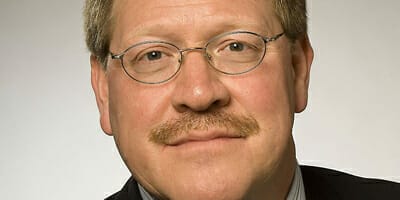

Eijffinger’s decade of financial repression

Financial repression will define the economic landscape for at least another decade, according to professor of financial economics at Tilburg University, Sylvester Eijffinger, which has serious implications for institutional investors.

Eijffinger, who also is also a visiting professor at Harvard, sits on the monetary experts panel of the European Union and is an adviser to the International Monetary Fund, says negative interest rates are the major issue of our time.

Negative real interest rates are here to stay, a realisation that has huge implications for investors.

“Governments have to de-leverage risk in times of low growth and they are not prepared to increase taxes; they have to do it with financial repression,” he says. “As an investor, be prepared. You have to realise that low interest rates are here to stay at the short-end and possibly at the long-end of the yield curve. This has huge implications for investments.”

By way of example, he says the European Central Bank’s policy rate stands at 0.5 per cent, while the eurozone’s annual inflation rate is 2.5 per cent. The Bank of England keeps its policy rate at only 0.5 per cent, despite an inflation rate that hovers above 2 per cent. And, in the United States, where inflation exceeds 2 per cent, the Federal Reserve’s benchmark federal funds rate remains at an historic low of 0 to 0.25 per cent.

This will be the financial and economic environment of the immediate future.

Sponsored Content

He says negative interest rates, which he describes as a kind of wealth tax, are necessary for governments to de-risk, but they come at the expense of savers.

“People who save should be aware that governments need to do this for at least a decade,” he says.

Eijffinger will give a keynote address at the Fiduciary Investors Symposium, an event that brings together institutional investors to examine the power and responsibility of fiduciary investment.

The event, which is convened by Conexus Financial, the publisher of conexust1f.flywheelstaging.com, will be held in Amsterdam from October 20 to 22, 2013. www.fiduciaryinvestor.com

Read an article by Eijffinger on the subject here.


Leave a Comment

Sort content by

NEST’s flexible default pension

The workplace pension asked its members what they wanted during the decumulation phase. The answers led to a default product that aims for assurances in older age, while still offering options.

Markets main fear for CIOs: survey

Asset owners are lowering return targets, shrinking active long-only allocations and getting tough on fees as harsh outlooks persist, the annual Top1000funds.com/Casey Quirk survey reveals.

Future Fund adds risk for short term

The CIO of Australia's sovereign wealth fund has added risk to the portfolio showing optimism about the short-term outlook but remains cautious about the medium and long term.

The lasting impact of pension nudges

Choices people make when they enter defined-contribution schemes tend not to change, even after fraud allegations, a paper from behavioural economist Richard Thaler and other academics states.

Pensions add $4.8 trillion in 2017

Pension assets grew by nearly $5 trillion last year and the hottest markets were Australia, Chile and Hong Kong. Go inside the numbers of The Thinking Ahead Institute’s annual pension report.

Ambachtsheer calls for CFA update

Pension fund adviser Keith Ambachtsheer says the industry-leading CFA credential program needs to be more focused on the future – starting with an update to outdated reference materials.

Previous




