
CalSTRS considers
asset risk factors

The $152.5-billion Californian State Teachers Retirement System (CalSTRS) is undertaking an asset-allocation review that will consider the underlying risk factors of assets for the first time.

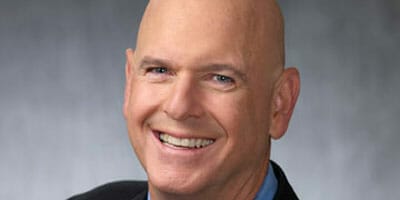
Chris Ailman, chief investment officer of CalSTRS, says the fund is in the middle of an asset-allocation study, which would likely take six months, and would take a different tack.

In the past the fund has only considered capital-market mean optimisation in making asset-allocation decisions, but now it will look at allocations according to risk factors as well.

“We will look at the drivers of risk – including inflation, interest rates and GDP – and what the fund is willing to include and exclude. We will optimise our allocations from a capital and risk perspective,” he says.

“If it reaffirms that we’re taking the right level of risk and return, then that is enriching the decision-making,” he says.

 Watching its weight

Sponsored Content

Ailman says the fund is adding points of view to the asset-allocation study and, at a recent board meeting, had an “interesting debate” on whether the goal of the portfolio was to make money or not to lose money.

“Capital-market theory and mean optimisation calculates risk by only one-term standard deviation, but it is much more complex than that. We apply so much math to investments because we want it to be a science, but it’s an art, and requires judgement.”

CalSTRS also makes tactical asset-allocation decisions and this week was due to hold a TAA meeting with one decision on the table: whether to go overweight the US.

At the moment the fund is neutral US, underweight Europe and underweight fixed income.

It has an automatic rebalancing process when allocations exceed the ranges, and Ailman says the question becomes when to rebalance and by how much.

“We are trying to build out an overlay portfolio with focus on left-tail risk,” he says.

Acknowledging inflation as a risk

Ailman’s view is that the biggest bubble in investments is fixed income, and acknowledging inflation as a risk is missing in most portfolios.

CalSTRS will look to expand its inflation-hedging portfolio among a basket of investments, including treasury inflation-protected securities and infrastructure.

The fund currently has a lot of growth assets, with 50.7 per cent in global equities and 14.5 per cent in private equity.

It also allocates 18.4 per cent to fixed income, 14.2 per cent to real estate, 1.6 per cent to cash, 0.2 per cent to inflation and 0.4 per cent to an overlay.


Leave a Comment

Sort content by

Plumbing the depths of water risks

Norges Bank Investment Management, which manages the 3.1 trillion kroner ($580 billion) Norwegian Pension Fund Global, has reported on the water management risk disclosure of the companies it invests in for the first time.mrec4inarticleinline Sponsored Content scnative1 scnative2 scnative3

Is the end nigh for the euro?

The outlook for the euro is dire, according to the Frankfurt-based Georg Schuh, head of fixed income, Europe, for Deutsche Asset Management, and investors should react accordingly.mrec4inarticleinline Sponsored Content scnative1 scnative2 scnative3

Bernanke fails to provide a ray of light in the gloom

While cautiously optimistic about the chances of a global recovery, State Street Global Advisors chief economist Dr Christopher Probyn says last week’s speech by US Federal Reserve Governor Ben Bernanke was disappointing.mrec4inarticleinline Sponsored Content scnative1 scnative2 scnative3

Colorado gears up for local stoush

A potentially bitter legal battle shaping up between a municipal hospital and Colorado’s public pension fund demonstrates the likely pressures that underfunded funds face as they are caught up in local and state government efforts to slash their budgets.mrec4inarticleinline Sponsored Content scnative1 scnative2 scnative3

ESG culture crucial to integration says innovating funds

Some of responsible investing’s most sophisticated adherents have moved from token aspirations to attempting to imbed environmental, social, governance integration into all their investment decisions. Top1000funds.com talked to Dutch asset manager PGGM and Danish fund ATP, which are both widely regarded as ESG leaders, about how they have integrated ESG into their investment processes.mrec4inarticleinline Sponsored

There’s no escaping the fiduciary duty of creating a better world

ESG, and more recently climate change, are now largely accepted in the investment process, and more importantly have passed the fiduciary duty test.

Previous




