
CalSTRS considers
asset risk factors

The $152.5-billion Californian State Teachers Retirement System (CalSTRS) is undertaking an asset-allocation review that will consider the underlying risk factors of assets for the first time.

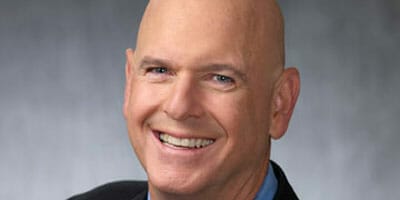
Chris Ailman, chief investment officer of CalSTRS, says the fund is in the middle of an asset-allocation study, which would likely take six months, and would take a different tack.

In the past the fund has only considered capital-market mean optimisation in making asset-allocation decisions, but now it will look at allocations according to risk factors as well.

“We will look at the drivers of risk – including inflation, interest rates and GDP – and what the fund is willing to include and exclude. We will optimise our allocations from a capital and risk perspective,” he says.

“If it reaffirms that we’re taking the right level of risk and return, then that is enriching the decision-making,” he says.

 Watching its weight

Sponsored Content

Ailman says the fund is adding points of view to the asset-allocation study and, at a recent board meeting, had an “interesting debate” on whether the goal of the portfolio was to make money or not to lose money.

“Capital-market theory and mean optimisation calculates risk by only one-term standard deviation, but it is much more complex than that. We apply so much math to investments because we want it to be a science, but it’s an art, and requires judgement.”

CalSTRS also makes tactical asset-allocation decisions and this week was due to hold a TAA meeting with one decision on the table: whether to go overweight the US.

At the moment the fund is neutral US, underweight Europe and underweight fixed income.

It has an automatic rebalancing process when allocations exceed the ranges, and Ailman says the question becomes when to rebalance and by how much.

“We are trying to build out an overlay portfolio with focus on left-tail risk,” he says.

Acknowledging inflation as a risk

Ailman’s view is that the biggest bubble in investments is fixed income, and acknowledging inflation as a risk is missing in most portfolios.

CalSTRS will look to expand its inflation-hedging portfolio among a basket of investments, including treasury inflation-protected securities and infrastructure.

The fund currently has a lot of growth assets, with 50.7 per cent in global equities and 14.5 per cent in private equity.

It also allocates 18.4 per cent to fixed income, 14.2 per cent to real estate, 1.6 per cent to cash, 0.2 per cent to inflation and 0.4 per cent to an overlay.


Leave a Comment

Sort content by

ADIA positive on equities outlook

The world’s largest SWF, the Abu Dhabi Investment Authority (ADIA), added a number of new portfolios to equities and fixed income and reorganised its internal passive equities team in 2010, according to its second ever annual report, in which it also predicted a positive outlook for equities.mrec4inarticleinline Sponsored Content scnative1 scnative2 scnative3

PRI signatories report improved ESG integration

Signatories to the UN-backed Principles for Responsible Investment (PRI) have improved the transparency of their reporting, ESG integration and active management, an annual survey reveals.mrec4inarticleinline Sponsored Content scnative1 scnative2 scnative3

Investment decision-makers at world’s largest funds to gather in Beijing

Dr Fan Gang, a member of the Chinese Government’s monetary policy committee, Professor Lasse Pedersen, member of the liquidity working group at the Reserve Bank, and Harvey Toor, chief risk officer of the Abu Dhabi Investment Council, are among the keynote presenters at conexust1f.flywheelstaging.com's inaugural symposium exclusively for investors. To access the program click here

Passive management doesn’t add up for mathematical investor

Investors in a low returns environment may be looking to lower their risk and costs through passive investing, but self-described mathematical investor, INTECH Investment Management, has steadfastly argued that the case for passive management doesn’t add up.mrec4inarticleinline Sponsored Content scnative1 scnative2 scnative3

Corporate governance conference focuses on financial sector regulation

World leaders need to set out priorities for corporate governance reform in order to bolster faltering efforts to restore market stability and economic growth, according to the institutional investors gathering in Paris for an annual corporate governance conference.mrec4inarticleinline Sponsored Content scnative1 scnative2 scnative3

Towers Watson and Oxford Uni team up to uncover sustainability impediments

Towers Watson and Oxford University have launched a collaborative research effort to examine the impediments to progress in sustainability integration, with changes to mandate design one of the expected practical solutions. The project is spearheaded by thought-leaders Roger Urwin and Professor Gordon Clark. mrec4inarticleinline Sponsored Content scnative1 scnative2 scnative3

Previous




