
CalSTRS considers
asset risk factors

The $152.5-billion Californian State Teachers Retirement System (CalSTRS) is undertaking an asset-allocation review that will consider the underlying risk factors of assets for the first time.

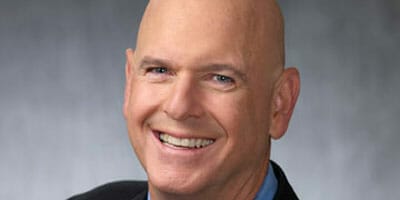
Chris Ailman, chief investment officer of CalSTRS, says the fund is in the middle of an asset-allocation study, which would likely take six months, and would take a different tack.

In the past the fund has only considered capital-market mean optimisation in making asset-allocation decisions, but now it will look at allocations according to risk factors as well.

“We will look at the drivers of risk – including inflation, interest rates and GDP – and what the fund is willing to include and exclude. We will optimise our allocations from a capital and risk perspective,” he says.

“If it reaffirms that we’re taking the right level of risk and return, then that is enriching the decision-making,” he says.

 Watching its weight

Sponsored Content

Ailman says the fund is adding points of view to the asset-allocation study and, at a recent board meeting, had an “interesting debate” on whether the goal of the portfolio was to make money or not to lose money.

“Capital-market theory and mean optimisation calculates risk by only one-term standard deviation, but it is much more complex than that. We apply so much math to investments because we want it to be a science, but it’s an art, and requires judgement.”

CalSTRS also makes tactical asset-allocation decisions and this week was due to hold a TAA meeting with one decision on the table: whether to go overweight the US.

At the moment the fund is neutral US, underweight Europe and underweight fixed income.

It has an automatic rebalancing process when allocations exceed the ranges, and Ailman says the question becomes when to rebalance and by how much.

“We are trying to build out an overlay portfolio with focus on left-tail risk,” he says.

Acknowledging inflation as a risk

Ailman’s view is that the biggest bubble in investments is fixed income, and acknowledging inflation as a risk is missing in most portfolios.

CalSTRS will look to expand its inflation-hedging portfolio among a basket of investments, including treasury inflation-protected securities and infrastructure.

The fund currently has a lot of growth assets, with 50.7 per cent in global equities and 14.5 per cent in private equity.

It also allocates 18.4 per cent to fixed income, 14.2 per cent to real estate, 1.6 per cent to cash, 0.2 per cent to inflation and 0.4 per cent to an overlay.


Leave a Comment

Sort content by

Reading and loved ones the perfect holiday recipe

As much as reading and writing about pension and investment management is exhilarating, I’m super excited about a holiday reading list I’ve cultivated, and the new-found perspective it will give me to fulfil my role and responsibility as an industry observer.mrec4inarticleinline Sponsored Content scnative1 scnative2 scnative3

Australian regulator will force funds to improve standards

Australia’s prudential regulator has flagged a range of changes that will bring regulatory oversight for the country’s $1.3 trillion industry up to a level similar to that in the insurance and banking industries.mrec4inarticleinline Sponsored Content scnative1 scnative2 scnative3

Alaska focuses on infrastructure

Infrastructure co-investments will be a new area of focus for the $36.6 billion Alaska Permanent Fund, as reflected in changes to its strategic asset allocation last week.mrec4inarticleinline Sponsored Content scnative1 scnative2 scnative3

Ontario Teachers’ fund joins PRI and outlines ESG views via video

The Ontario Teachers’ Pension Plan (OTPP) has become a signatory to the United Nations-backed Principles for Responsible Investment Initiative (PRI).

Danish pension fund ATP expands to UK

Danish pension fund ATP will expand its operations into the United Kingdom, and the new head of its UK operations, Morten Nilsson, says they can offer a more diverse range of investments and better risk controls than what is currently available to many British pension fund members.mrec4inarticleinline Sponsored Content scnative1 scnative2 scnative3

Did S&P downgrade democracy?

Rogerscasey chief executive, Tim Barron (pictured), provides a different perspective on the S&P downgrade of US Treasuries, asking whether the act was actually a downgrade of democracy in that country.mrec4inarticleinline Sponsored Content scnative1 scnative2 scnative3

Previous




