
Mandates need innovating to encompass sustainable investing

The credibility of transition plans is under scrutiny because while sustainable investing is booming real world impact is going in the wrong direction. In response investors need to innovate on the nature of investment mandates says Colin le Duc, a founding partner of Generation Investment Management.

Innovating on the nature of investment mandates is the next stage of sustainable investing, said a founding partner of London-based sustainable investment pioneer Generation Investment Management, as rising carbon emissions – despite booming sustainable investing – lead to growing criticism of the ESG universe and its real-world outcomes.

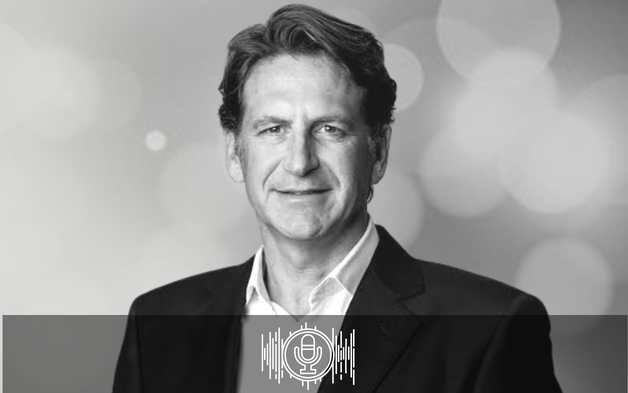
Climate-led or impact investing is the next stage where investors take climate objectives as their north star” and optimise risk, return and impact, said Generation founding partner Colin le Duc, speaking on the Top1000funds.com podcast.

This is distinct from the old view of sustainable investing which aims to deliver long-term financial returns in a sustainable way, le Duc said. Impact investing enables investors to tackle difficult issues more directly, rather than merely picking the low-hanging fruit with…investment mandates [that] work today.”

So, you know, not just investing in de-risked renewables in North America, for example, or not just buying the Tesla stock or whatever it might be,” le Duc said. “You actually need to focus on the hard-to-abate sectors.”

Sponsored Content

Carbon emissions continue to rise, he said, noting emissions will increase 2-3 per cent this year and are projected to rise up to 10 per cent by the end of this decade, at a time when they need to go down by 50 per cent.

Podcast host Amanda White, director of institutional content at Conexus Financial, pointed out only 10 per cent of capital flowing into climate is going to the solutions for the highest emitting, hard-to-abate sectors that create more than half of global emissions. 

Le Duc welcomed criticism of ESG as part of the “maturation of the sustainable investing and the ESG investing idea and space” and a pushback against greenwashing.

And he praised theradical transparency” brought by Al Gore-backed initiative Climate TRACE, which moves away from voluntary reporting and tracks the biggest sources of greenhouse emissions for a more accurate– albeit uglier–view of progress on carbon reduction.

Climate TRACE had delivered news that is “very, very bad on actual levels of emissions, which are much, much higher than has historically been reported,” le Duc said.

Real world impact is going the wrong way, even though sustainable investing is booming,” le Duc said. “So there’s a mismatch there, which I think is starting to play out in all of this greenwashing, and the pushback, and the confusion around what ESG and sustainable investing is.”

But while more reliable data is critical to understand the systemic risk the financial system is running with its carbon dumping, he warned that “perfection can be the enemy of the good,” and that if we wait for perfection on reporting, every day were missing the 1.5-degree window.”

Systems need to be put in place concurrently with fixing the problem, he said, and being directionally correct is actually better than waiting for perfection on data clarity.”

Unlike harder-to-define measurements such as human health or poverty, climate at least has a well-understood and broadly accepted metric to measure it, which is a ton of CO2, le Duc said.

The United Nations Climate Change Conference, known as the Conference of the Parties or COP, probably needs a bit of a reboot…but it is the best we’ve got in terms of a global forum to talk about a global issue,” le Duc said, and it would be extremely dangerous to dismantle it because…theres no other forum like it.”

Collaboration is critical when facing a systemic challenge like climate change, le Duc said, and initiatives like the Glasgow Financial Alliance for Net Zero (GFANZ) encourage corporates to put their neck on the line and say: ‘This is what we believe in, in terms of the climate transition.’”

Questions remain about whether these entities will stick to their commitments, he said, particularly in light of the wide-ranging challenges 2022 has brought to global markets, and there are signs some parties are “backtracking” or “push things a little bit to the right.”

With extremely high short-term energy prices, investors are weighing up whether they should “leave money on the table to stick to climate commitments,” he said.

“I think there’s a real focus on credibility of transition plans right now,” le Duc said.


  1. Mike Clark

    Colin is right about mandates. But “mandate” does not just need to mean the old IMA where lawyers arm-wrestle. The Investment Manager Accord (crafted by the EAPF years ago, and used by Brunel – UK LGPS) is a fine non-legal agreement between an asset owner and their investment managers. Why has it not caught on? Nobody seems to be promoting it! So I must…

    It sets the AO’s direction of travel for the IM, and is a fine “relatoinship document”. Don’t need lawyers for that!

Leave a Comment

La Caisse’s oil exit pays off as renewables portfolio pulls ahead of fossil fuels

La Caisse’s oil exit pays off as renewables portfolio pulls ahead of fossil fuels

Divesting from the oil sector has been a boon for La Caisse’s performance, as the Canadian pension giant says its energy investments have earned billions in value-add compared to the benchmark since the inception of its climate strategy. Head of sustainability Bertrand Millot unpacks the fund’s approach in an interview with Top1000funds.com.

Sort content by

More work needed on climate integration

There has been widespread adoption and more board engagement since the launch of the Task Force on Climate-related Financial Disclosures recommendations in 2017 but more work is needed to get a uniform and comparable approach to climate change disclosure across the investment community.

Investors cluster around AI SDG platform

A growing number of influential asset owners have expressed interest in a new sustainable development investment (SDI) Asset Owner Investor Platform launched by Dutch funds APG and PGGM. The AI-driven technology sifts through reams of structured and unstructured data to gauge the extent to which companies’ products and activities meet the UN’s Sustainable Development Goals.

Remaking markets one portfolio at a time

This week SASB and Bloomberg launched some new indexes -  Bloomberg SASB ESG equity index for US large cap equity, and the Bloomberg SASB ESG fixed income index for investment-grade corporate bonds - to help investors track companies and create sustainable, long-term value in a way that supports their fiduciary responsibilities. Director of capital markets policy and outreach at SASB,  Janine Guillot explains.

SWFs play important role in Arctic

Sovereign wealth funds can play an important role in investing sustainably in the Arctic region, and warding off the impact of a looming natural disaster, according to the IMF's Udaibir Das.

Responsible FI promotes good markets

Responsible investment has assumed an increasingly central role in fixed income portfolios and in the experience of Jørgen Krog Sæbø CIO, fixed income, and Lars Tronsgaard deputy managing director at Folketrygdfondet, which manages the Government Pension Fund Norway, one part of Norway’s Government Pension Fund, adopting a responsible investment focus builds more integrated understanding and deeper insight into companies.

Shareholders need to step up: Bischoff

Shareholders, including institutional investors, were at the core of the move to an obsession with short term returns by corporates, and are key to its reversal, according to Sir Winfried Bischoff chair of the UK regulator, the Financial Reporting Council.

Previous




