
Crisis and interdependence

“Interdependence is and ought to be as much the ideal of man as self-sufficiency. Man is a social being.”
Mahatma Gandhi

We are still contending with its direct effects of COVID-19: millions infected, hundreds of thousands of deaths, mass unemployment, businesses and investments damaged and people forced apart. As with all crises, there are threats and opportunities, grounds for optimism and pessimism. Some doubt whether the world’s economies can be rebuilt, whether the globalised movement of people and goods will ever fully return and whether responsibility in business and investment will survive, perhaps replaced by a focus on short-term profitability and recovery. The pandemic has certainly highlighted and exacerbated inequality, and there will be considerable social consequences to widespread job losses, even if we see a relatively quick recovery.

Others see the crisis as an opportunity for transformational change. As we awaken and gain perspective on the conditions under which we had been living and working, we can address problems that we had been unable to solve. For example, although climate change was widely recognized as our greatest existential threat (and the pre-eminent example of externalised social and environmental cost) governments, regulators, businesses and investors seemed incapable of responding effectively and collectively. However, the present crisis has spurred us to urgent action, which inadvertently has had the effect of reducing carbon emissions and demonstrating the efficiencies and productivity associated with remote working for sections of the economy. Furthermore, it seems possible that people will continue to commute less following the crisis. Perhaps in being forced into a different way of life, we will be more open to flexible working.

A better understanding of systemic risk and a preparedness collectively to address this may be a positive result of the COVID-19 crisis. Whether this be in our approach to climate change or to the risk of pandemic itself. The International Corporate Governance Network (ICGN) has proposed that its members approach the systemic risk of coronavirus as a moral and economic imperative, as part of their responsibilities as investors and companies.

What might it mean to approach the pandemic responsibly? Surely this could include prioritising short-term investment performance? With the global economy is in its worst state since the Great Depression, we could and perhaps should act quickly and decisively to limit and recoup financial losses. As the initial market reaction suggests, investors feared the spread of the coronavirus would destroy economic growth and that governments were not able or willing to stop the decline.

However, as was already the case before the pandemic, investors’ focus on short-term financial performance risks undermining their own and their beneficiaries’ interests in the longer-term. The present crisis is an opportunity to extend our understanding and pursuit of shared purpose, working together to common benefit and realising the value of our interdependence as investors, employees and citizens. And this is precisely what the current pandemic has demonstrated: when we are forced apart, disconnected and unable to work together, economies shut down.

Sponsored Content

Interdependence

This crisis shows us how deeply we depend on each other. We’ll only come through this as a society through a huge collective effort. At a time of crisis, no one is an island, no one is self-made. The wellbeing of the wealthiest corporate chief executive depends on the outsourced worker cleaning their office. At times like this we have to recognise the value of each other, and the strength of a society that cares for each other, and care for all.

In amongst the suffering and damage of this crisis we can find hope in the many examples of compassion and kindness. From the dedication of frontline medical workers and our appreciation of them, to the actions of governments and companies in maintaining incomes and balancing interests. In our temporary separation we are finding a deep understanding of our need for each other, of our interdependence.

Social isolation provoked by Covid-19 has already manifested itself in the Dutch language, with its creation of a new word: Huidhonger – skin hunger, meaning a longing for human contact while in isolation. The need for connection is fundamental to our human nature, yet we have been operating in an economic system and under an investing paradigm that assumed we were discrete, profit maximising independent entities, whether individuals, companies or investors. This paradigm was already starting to break down, with the movement towards responsible investment and sustainable business and the emphasis on purpose and impact. With a greater appreciation of our interdependence, this movement can gain momentum from the present crisis.

Shared purpose

Drawing upon our work at Arkadiko, in the past three years we have seen investment managers starting to realise their shared purpose with their clients and the companies in which they invest. In certain markets, particularly in Europe and Asia, it is no longer acceptable to maintain the illusion of independence. Indeed, many investment managers are coming to see responsible investment and stewardship as strategic imperatives and companies increasingly expect their investors to be actively engaged, with a longer-term perspective.

Asset owners and investment managers still need to improve their understanding of each other’s positions, building trust and mutually beneficial relationships and the early signs from the crisis is that we expect this work to continue and strengthen. This means moving away from a focus on transactions, interactions in which selling a product is the end goal, and short-term investment performance. Investment managers are also starting to acknowledge that there is a strong connection between their own culture and purpose and those of their clients and the companies in which they invest. We also expect the emerging discussion on the purpose and culture of the investment industry to continue and strengthen.

Which again raises the theme of interdependence. To connect investment decision-making to the external world requires fund managers to bring their whole selves to work and to consider what matters to them as people as well as investors. We have found that organisations with a clear, authentic and positive sense of purpose, have stronger more affirmative cultures in which individuals feel empowered to contribute and do their best work. We expect such businesses to be more sustainable and have a greater impact in the long-term, supported by the formation of positive relationships with clients in which both parties recognise that they depend on one another for the best outcome.

Recovery

Restoring trust within and between atomised societies and economies, will require openness and constructive dialogue, and working together towards common purpose. If investment managers operate with an understanding of their interdependence, their investment decisions and engagements will naturally take account of externalities such as climate change, social injustice, and economic poverty.

Our investment chains contain multiple interdependencies and relationships that rest on shared purpose and mutual trust. Where connections have been damaged, whether with our clients, our businesses or their stakeholders, we have an opportunity to repair these, as patient long-term investors and owners, thereby emerging stronger from the crisis.

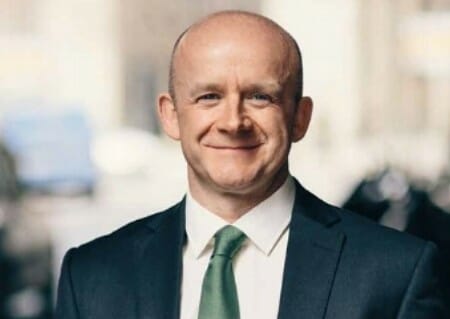
Colin Melvin is founder and chief executive of Arkadiko Partners


Leave a Comment

La Caisse’s oil exit pays off as renewables portfolio pulls ahead of fossil fuels

La Caisse’s oil exit pays off as renewables portfolio pulls ahead of fossil fuels

Divesting from the oil sector has been a boon for La Caisse’s performance, as the Canadian pension giant says its energy investments have earned billions in value-add compared to the benchmark since the inception of its climate strategy. Head of sustainability Bertrand Millot unpacks the fund’s approach in an interview with Top1000funds.com.

Sort content by

Time to change the curriculum

Finance education needs to move away from neo-classical economics towards a more holistic approach including sustainability, philosophy and ethics. Robeco is actively engaging with leading universities in The Netherlands to change the curriculum.

Verification essential for more impact

A new impact investing verification, which uses the same level of rigor that institutional investors approach the due diligence of fund managers, promises to unlock capital flows into impact and build the necessary scale with integrity needed to address the urgent social, environmental, and economic challenges.

Finance needs to lift its climate game

A recent survey of CFA Institute members showed finance firms are lagging in how they incorporate climate change into the investment process. Matt Orsagh, senior director, capital markets policy at CFA Institute, details steps that can be taken to improve this.

Virtual AGMs stop robust engagement

Watered-down shareholder participation at AGMs, due to virtual meetings during the pandemic, is sounding alarm bells at APG, the largest pension fund in Europe, where collaboration with other asset owners and organisations is the beating heart of its ESG strategy and a central tenet to its stewardship response to the pandemic.

New Zealand Super adds climate alpha

New Zealand Super’s low-carbon reference portfolio has outperformed the original reference portfolio, adding NZ$800 million to the fund and providing evidence of ESG alpha. The low-carbon reference portfolio, that until now has had targets of reducing emissions intensity by 20 per cent and its exposure to potential emissions from fossil fuel reserves by 40 per cent, has added about 60 basis points per annum to performance since it was brought

The qualities of successful stewardship

The Investor Mining & Tailings Safety Initiative, chaired by the Church of England Pensions Board and the Swedish Council of Ethics of the AP Funds has won the PRI Stewardship Project of the Year Award. The initiative reveals the qualities of successful stewardship.

Previous




