
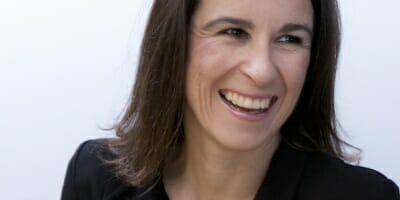

Someone once told me the reason the Dalai Lama is always smiling, even when he’s talking about war, is that his view of the world, and all its troubles, is like a knowing father watching a child work through the wonderment and challenges of life. It is with this view that institutional investors must face the climate change challenge.
Like parents, institutional investors must be patient. To quote his Holiness: “It is a fact that climate change is a slow process taking thousands of years to realise its effect.”
And like parents, institutional investors must show maturity, take the higher ground and lead by example.
If I look back over 2011, and the events that have shaped the institutional investment landscape, what defines this year is not what happened with markets in Europe, although the possibility of a bankrupt country is astounding. When viewed in the context of a long-term horizon, the year was much grander than that, if such a statement is possible.
It is one in which the nexus between climate change and investment strengthened, where investors’ education reached a pinnacle, and the discussion shifted to implementation and execution.
This supersedes the financial turmoil in markets in its simplicity as a very long-term, global and universal problem.
A recent post in The Economist Blog, Democracy in America, describes it thus:
“A hundred years from now, looking back, the only question that will appear important about the historical moment in which we now live is the question of whether or not we did anything to arrest climate change. Everything else – the financial crisis, the life or death of the euro, authoritarianism or democracy in China or Russia, the Great Stagnation or the innovation renaissance, democratisation and/or political Islam in the Arab world, Newt or Mitt or another four years of Barrack – all of this will fade into insignificance… from the perspective of our great-grandchildren, the only thing that is going to seem important… is whether we took collective action, shifted our energy sources, and held the global temperature risk to 2 degrees or less.”
The institutional investment market is an important cog in this wheel: its investment horizons are long term; it has capital to invest; and fiduciary duty is at its philosophical core.
On the sell side, climate change filters are now being applied to bonds, as well as equities, as part of the regular risk analysis of leading funds managers.
On the asset owner side there has also been much development beyond a philosophical discussion.
One of the defining moments this year include the release of the ground breaking report by Mercer, Climate Change Scenarios: Implications for Strategic Asset Allocation, in collaboration with 14 institutional investors from around the globe.
It was ground breaking because it was practical, and many large institutional investors, including CalPERS are looking at how to incorporate climate change into their investment decision making and implementation.
The Mercer report argues traditional approaches to modelling strategic asset allocation fail to take account of climate change risk because they rely on historical quantitative analysis.
The rhetoric around allocating assets according to underlying risk, not traditional asset classes, has been everlasting this year from a number of points of view.
In this context the report uses scenario analysis to model climate change risks using a framework of technology, impact and policy, and found that as much as 10 per cent of a portfolio’s risk could be attributable to climate policy. If this is true, then it should also account for one-tenth of the time.
The takeout for institutional investors is to use a factor-risk framework to combat these risks, as well as add a specific allocation to climate-sensitive assets.
In addition, engagement with policy makers is essential to ensure the development of private capital deployment, and in this area progress is slow.
Case in point is the vague and ambiguous nature of the agreement at the recent UN climate change summit, which is both frustrating and promising.
The Investor Summit on Climate Risk and Energy Solutions, a collaboration between Ceres and the United Nations, in January 2012 is a perfect way to carry this momentum into next year.








Leave a Comment
You must be logged in to post a comment.
Login