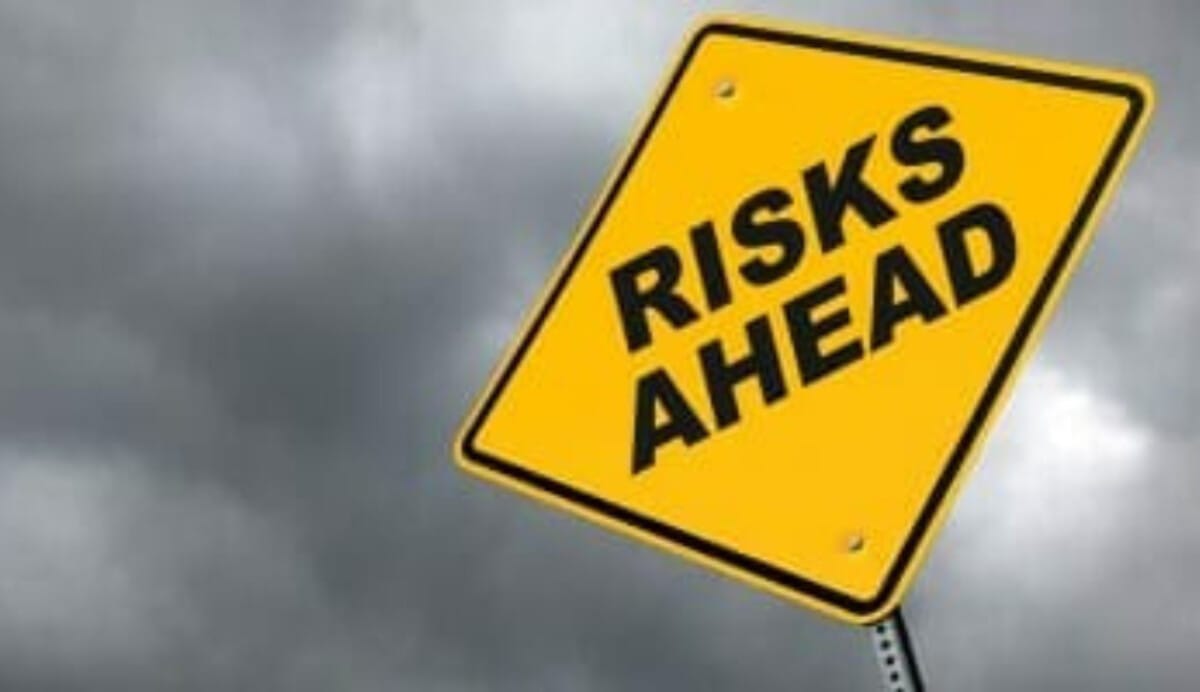
WEF lays out global risks ahead: Cost of living and climate dominate

The world faces a set of risks that feel both wholly new and eerily familiar. The Global Risks Report 2023 explores some of the most severe risks we may face over the next decade. As we stand on the edge of a low-growth and low-cooperation era, tougher trade-offs risk eroding climate action, human development and future resilience.

The war in Ukraine has disrupted the return to a ‘new normal’ following the COVID-19 pandemic, according to this year’s WEF Global Risks Report.

The 2022-2023 Global Risks Perception Survey (GRPS) identified the energy supply crisis, the cost-of-living crisis, rising inflation, the food supply crisis, and cyberattacks on critical infrastructure as among the top risks with the most significant potential global impact in 2023.

It also flagged concerns over the failure to meet net zero targets, the weaponization of economic policy, the weakening of human rights, the debt crisis, and the failure of non-food supply chains.

The report states that all the current risks are converging to shape a unique, uncertain, and turbulent decade to come.

Respondents to the GRPS (more than 1,200 experts across academia, business, government, the international community, and civil society) see the path to 2025 dominated by social and environmental risks, driven by underlying geopolitical and economic trends.

Sponsored Content

Respondents expect the cost-of-living crisis, the economic down-turn, geo-economic warfare, the climate action hiatus, and societal polarisation to play out over the next two years.

They will also have ramifications for the next ten years. Some respondents felt optimistic about the outlook for the world in the long term, predicting limited volatility with a relative – and potentially renewed – stability over the next ten years. Yet, over half expect progressive tipping points and persistent crises leading to catastrophic outcomes or consistent volatility over the next ten years.

‘Global risk’ is defined as the possibility of an event or condition occurring that would negatively impact a significant proportion of global GDP, population, or natural resources.

The report explains that some of the current global risks are close to a tipping point and understanding them is vital to shaping a more secure future.

Leave a Comment

The twin forces rewriting the rules of investing

The twin forces rewriting the rules of investing

Portfolios built for the old world will be severely tested as emerging forces rewrite the rules of investing. The Fiduciary Investors Symposium heard that geopolitical and macroeconomic upheaval, together with the disruption wrought by AI, should force asset owners to rethink the structure and composition of portfolios.

Sort content by

Europe rearms, defence returns surge, asset owners rethink exposure

Years of hard-line exclusions of the defence industry kept many asset owners out of one of the strongest-performing sectors. Now, as Europe rearms, investors are reworking defence policies – cautiously and under intense scrutiny.

Alaska’s APFC: Why any nudge lower in private equity will be slow progress

As Alaska's APFC mulls trimming its 18 per cent private equity allocation, the reality of getting legacy managers off the books is proving more challenging, according to deputy CIO, private markets Allen Waldrop. In an interview with Top1000funds.com, he also shares his view on secondaries and manager selection. 

CalPERS’ Stephen Gilmore on the total portfolio approach

Listen to the detailed interview between Top1000funds.com editor Amanda White and CalPERS' CIO Stephen Gilmore to gain insights into how a TPA mindset has the potential, through a shared focus on the total portfolio, to add value, simplify accountability and open new opportunities for investments.

How CalPERS aims to add 50-60 bps using TPA

Stephen Gilmore says he can add 50 to 60 basis points to portfolio returns by using a total portfolio approach. In a long interview, Amanda White spoke to the CIO of CalPERS about why a TPA mindset can add value, simplify accountability and open new opportunities for investments.

Why West Virginia’s CIO is worried about its China divestment directive

The $28 billion West Virginia Investment Management Board will divest from Chinese state-owned companies and CIO Craig Slaughter has reservations about the decision. He outlines in an interview with Top1000funds.com about why the directive is an extension of a big threat facing investors: a decline in liberal democracy. 

USS paper urges governments to do more to support climate policy

A new report from USS and the University of Exeter, argues that investors who focus on decarbonising their portfolios won't change real-world decarbonisation and would have more impact on climate change by buying transition investments.

Previous



