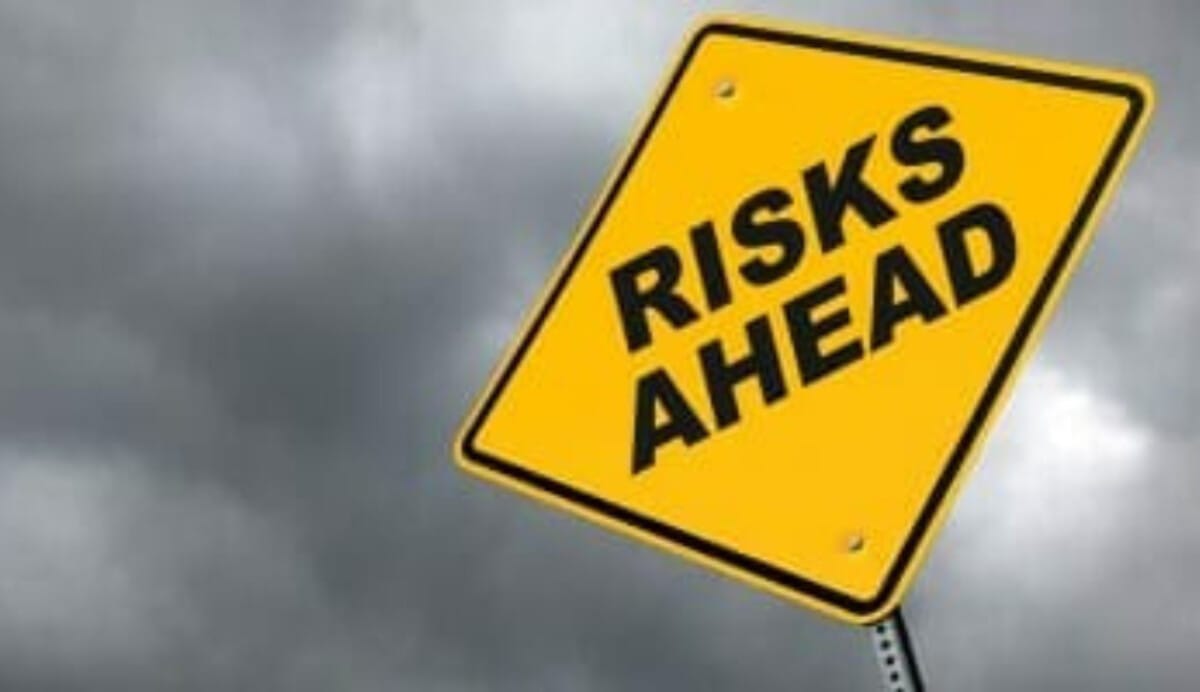
WEF lays out global risks ahead: Cost of living and climate dominate

The world faces a set of risks that feel both wholly new and eerily familiar. The Global Risks Report 2023 explores some of the most severe risks we may face over the next decade. As we stand on the edge of a low-growth and low-cooperation era, tougher trade-offs risk eroding climate action, human development and future resilience.

The war in Ukraine has disrupted the return to a ‘new normal’ following the COVID-19 pandemic, according to this year’s WEF Global Risks Report.

The 2022-2023 Global Risks Perception Survey (GRPS) identified the energy supply crisis, the cost-of-living crisis, rising inflation, the food supply crisis, and cyberattacks on critical infrastructure as among the top risks with the most significant potential global impact in 2023.

It also flagged concerns over the failure to meet net zero targets, the weaponization of economic policy, the weakening of human rights, the debt crisis, and the failure of non-food supply chains.

The report states that all the current risks are converging to shape a unique, uncertain, and turbulent decade to come.

Respondents to the GRPS (more than 1,200 experts across academia, business, government, the international community, and civil society) see the path to 2025 dominated by social and environmental risks, driven by underlying geopolitical and economic trends.

Sponsored Content

Respondents expect the cost-of-living crisis, the economic down-turn, geo-economic warfare, the climate action hiatus, and societal polarisation to play out over the next two years.

They will also have ramifications for the next ten years. Some respondents felt optimistic about the outlook for the world in the long term, predicting limited volatility with a relative – and potentially renewed – stability over the next ten years. Yet, over half expect progressive tipping points and persistent crises leading to catastrophic outcomes or consistent volatility over the next ten years.

‘Global risk’ is defined as the possibility of an event or condition occurring that would negatively impact a significant proportion of global GDP, population, or natural resources.

The report explains that some of the current global risks are close to a tipping point and understanding them is vital to shaping a more secure future.

Leave a Comment

The twin forces rewriting the rules of investing

The twin forces rewriting the rules of investing

Portfolios built for the old world will be severely tested as emerging forces rewrite the rules of investing. The Fiduciary Investors Symposium heard that geopolitical and macroeconomic upheaval, together with the disruption wrought by AI, should force asset owners to rethink the structure and composition of portfolios.

Sort content by

Cost, efficiency and less directs: AIMCo’s CIO spells out new strategy

AIMCo's new CIO Justin Lord explains why he is upbeat about investment opportunities and the fund manager's new governance after a tumultuous few years. Prioritising costs, efficiency and cutting back on direct investments in private equity, he articulates the opportunities ahead including in infrastructure and private credit.

Where foreign capital fits in China’s parallel tech system

A firsthand look by Top1000funds.com at Apollo Go’s Wuhan robotaxi hub reveals how China is building a parallel tech ecosystem. The opportunity set across AI adjacent industries is expanding exponentially, but governance and geopolitical constraints could make it hard for foreign asset owners to participate in the upside.

NBIM prioritises trading efficiency, AI and culture in three-year plan

The largest investor in the world, Norges Bank Investment Management, is investing in AI to reduce costs, increase trading efficiency, and make better active decisions. The fund has set out its three-year strategy which also includes focusing on targeting managers with more flexibility to express negative views.

Private equity: Arizona’s ASRS argues the case for secondaries

The $50 billion Arizona State Retirement System is pushing into private equity secondaries, actively looking to invest in stakes being overloaded by other LPs, in a strategy that will complement its co-investments program and SMA investments with external managers. It’s looking for opportunities across the US and Europe.

TIFF plays the long game in venture capital

The $9 billion asset manager for 500 US endowments and foundations, TIFF, is famed for its PE and venture capital allocation. Head of private markets Brendon Parry reflects on his priorities, including navigating the winners and losers of AI, and leaning into independent sponsors and relationships with the best managers.

Danish investors shun the US but complete divestment ‘unlikely’

Danish pension investors are pulling capital out of US Treasuries amid tensions around Greenland, but a complete divestment from the world’s biggest market will hurt Danish funds’ performance and ultimately their pensioners more than the US government’s balance sheet.

Previous



