
Real estate leaders must act now

To respond to the current and urgent threat of COVID-19, and to lay the groundwork to deal with what may be permanent changes for the industry after the crisis, real estate leaders must take action now.
To respond to the current and urgent threat of COVID-19, and to lay the groundwork to deal with what may be permanent changes for the industry after the crisis, real estate leaders must take action now.

Looking back at the portfolios of large institutional investors during and after the dot.com crash and the GFC, CEM Benchmarking, reveals commonality in the portfolios that thrived. For both events the top quartile returns were more than 2 per cent higher than the bottom quartile. Analysing the asset allocation and behaviour of investors showed two clear themes: top quartile performers had more defensive allocations pre-crash; and rebalancing is a tailwind for performance.
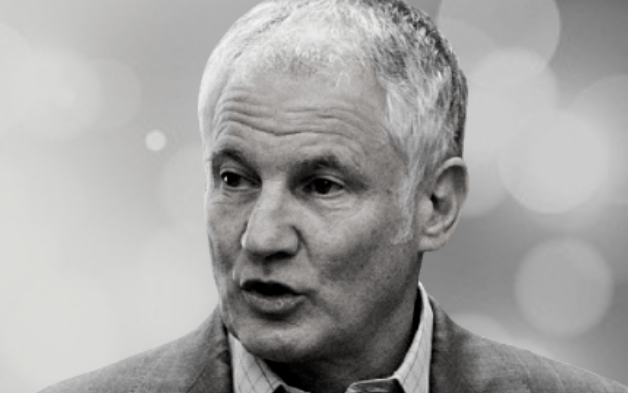
A conversation with Stephen Kotkin, Professor in History and International Affairs, Princeton University.
The battle between man and machine, that has played out in various arenas – such as Garry Kasporov versus IBM’s Big Blue, and when IBM’s supercomputer Watson out-dueled Jeopardy champions Ken Jennings and Brian Rutter – is now taking place in sustainability research. So will AI prevail again?

In this Fiduciary Investors Series podcast Amanda White talks to Professor Cameron Hepburn, Professor of Environmental Economics and the director of the economics sustainability programme at the University of Oxford.

The Harvard endowment is about half way through its transition to external investment management and will work with its service providers to implement the university’s new directive, to position the portfolio in line with net-zero greenhouse gas emissions by 2050.





Top1000funds.com is the market leading news and analysis site for the world’s largest institutional investors. It focuses on leading the global investment industry to continuous improvement through case studies of best practice in governance and decision making, portfolio construction and efficient portfolio management, fees and costs, and sustainable investing.
The publication pushes the industry to question whether status quo processes and behaviours to tackle risks and opportunities will be sufficient in the future, and actively campaigns for diversity, sustainability, transparency, innovation and better alignment of fees in the investment industry.
Top1000funds.com is read by investment professionals in more than 40 countries.
