
There is no substitute for due diligence

 “Theory envy” is the wistful feeling that economists get from watching physicists explain 99 per cent of observable phenomenon with just three basic laws.

Economists, by contrast, explain 3 per cent of observable phenomenon with 99 laws (give or take). One of those laws, “alignment theory,” suggests that firm performance will be positively affected as the level of inside ownership grows.

For as long as asset owners (pensions, endowments, sovereign wealth funds, etc.) have entrusted funds to external managers for investment, they have worried about principal-agent misalignment, or “rent-seeking” – all jargon for the suspicion that anyone who can benefit from fraud will commit fraud. Behavioral scientists have deconstructed this theory study-by-study, dataset-by-dataset.

Still, alignment theory persists, strongly enough to give rise to a number of misconceptions. Chief among those misconceptions is the idea that if monetary incentives are aligned, asset owners’ and managers’ interests must be too. Scholars would call it the fallacy of the inverse: the fact of one thing is not proof of its inverse. Professionals are blunter. They would call this presumption lazy or naïve.

“Principals”, like asset owners, commonly get what they pay for – but also commonly pay for something other than what they want. This leakage is to be expected, to some degree, because it is not practical for a diversified asset owner to develop perfect pay structures that optimize for multiple objectives at the same time.

What this means for asset owners is that there is no substitute for sound due diligence of asset managers. No fee or fee structure will make up for hiring the wrong manager. This is especially true given the recent lack of clarity in fund labeling around ESG, which has muddled the perception of sustainable investing. Long-term investors are wise to select funds consistent with their underlying objectives, but that requires a deeper understanding.

Sponsored Content

How do you know a long-term asset manager when you see one?

In addition to a typical due diligence questionnaire or RFP, there are other key considerations that can help determine whether the manager is similarly oriented on long-term goals – or not.

  • Investment strategy: Does the manager’s investment thesis reconcile with the stated investment strategy, particularly related to long-term opportunities and risk?
  • Repeatability: Is the manager’s ability to add value repeatable and sustainable over the long term and supported by a strong organizational culture of long-term investing? Does the manager have the talent and diversity to achieve their investment thesis?
  • Risk management: Does the manager utilize a multi-horizon approach to risk management and has this approach been consistent through periods of market stress?
  • Active ownership and engagement: Does the manager add value through stewardship, active ownership, and engagement, and does this relate to the manager’s investment thesis?
  • Proxy voting: Does the manager use proxy advisors? If so, what is their process and criteria for selecting and using these services?
  • Fees: How are investment management fees aligned with client outcomes?
  • Compensation: How is investment decision makers’ compensation linked to long-term investment performance? Over what time horizon are incentives calculated?
  • External affairs: Does the manager seek to promote long-termism through engagement with policymakers, associations, investors, think-tanks, or other groups? Can these activities be disclosed? Does the manager actively participate in these initiatives or comment on policy proposals?
  • Investor responsibilities: How are investment opportunities and risks related to investor responsibilities (like net-zero commitments or DEI) identified and prioritized? How are sustainability factors integrated into the investment decision-making process?
  • Manager responsibilities: What responsibilities has the manager accepted (e.g., net-zero) in the course of doing business and earning returns for clients?

Of course, contract terms do matter once an asset owner has selected the right asset manager. Both long-term owners and managers can focus more on the long term with fee structures and contract periods that reward longevity, reporting templates that sequence since-inception performance first, and commitments about when to trigger out-of-cycle evaluation.

Such solutions are important, and re-writing mandate contracts to ensure better alignment is a worthy goal. But the investment mandate will not simply refocus managers with short-term investment strategies on the long term.

You can use an investment mandate to ensure you don’t turn a long-term manager into a short-term one.  But you cannot make a fundamentally short-term manager into a long-term one with a legal document alone. There is no substitute for sound due diligence.


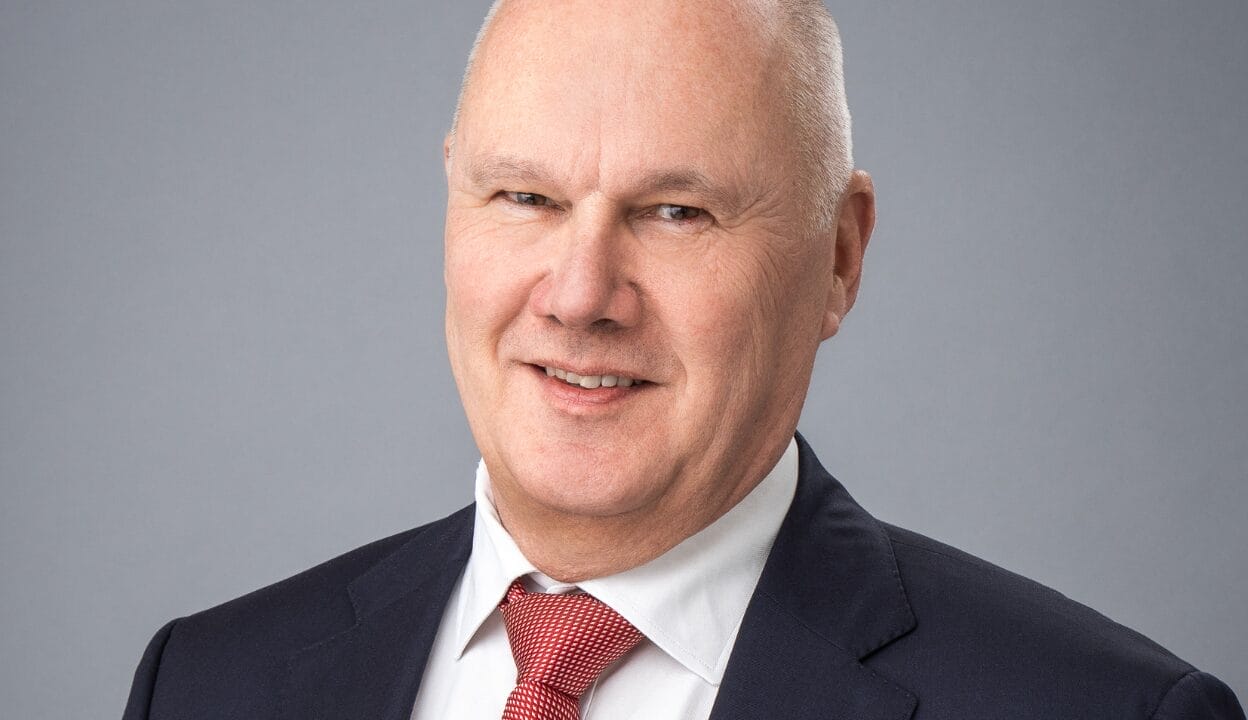
Ariel Fromer Babcock (pictured) is managing director and head of research, and Matthew Leatherman is managing director, head of programs at FCLTGlobal.

Leave a Comment

Sweden’s FTN focuses on fees and returns in latest procurement

Sweden’s FTN focuses on fees and returns in latest procurement

Lower management fees and higher returns defined the latest selection process at the Swedish Fund Selection Agency in its latest awarding of active global equity mandates to 12 managers, its largest and most ambitious €20 billion ($23 billion) procurement so far.

Sort content by

Relationship built on knowledge transfer

A knowledge exchange between the State of Wisconsin Investment Board and its manager, Parametric, has seen the fund become comfortable understanding the instruments involved to manage a chunk of its total levered allocation in-house.

UK mega fund slashes managers

In line with its strategy to reduce costs, while maintaining returns, one of the UK’s new mega funds, the £45 billion LGPS Central will reduce the number of managers it uses from 250 to 50.

Texas Teachers backs emerging managers

Texas Teachers has further evolved its emerging manager program, launching EM 3.0 which includes a further $3 billion allocation to emerging manager partners. Head of the division Kirk Sims explains.

Why small is beautiful at Illinois’ IMRF

The $42 billion Illinois Municipal Retirement Fund is dedicated to investing in emerging managers with a commitment of 22 per cent of its total portfolio. The relationship with minority and women-owned managers is mutually beneficial. Sarah Rundell talks to head of the IMRF emerging managers program and the co-chief investment officer of equities at one of its managers, Piedmont.

Emerging managers, emerging solutions

Progressive-minded asset owners could do well to unbundle their consulting dollars and fill the intellectual gap in the institutional marketplace around niche opportunities, and potential sources of alpha, by sourcing independent research ideas and due diligence.

More investors mull outsourcing CIO

Last year, America Red Cross shut its investment office and handed over the keys of its $3 billion investment portfolio to Cambridge Associates. More pensions and endowments will do the same, argues new research from Cerulli Associates.

Previous