
Quality before quantity for AP1

Every day, fund selectors work hard to find managers that will deliver excess returns to benefit their stakeholders and meet their liabilities.

It used to be easier to beat the market. Companies were less covered and the markets were more inefficient; an asset manager could have an information advantage and add value through company meetings and their proprietary research.

Today, however, it is a different story. Markets are much more efficient and the amount of company information available is huge and instantly shared with everybody. In this environment, it becomes much more challenging to find asset managers delivering excess returns after fees. What exactly is the right approach to finding the best managers, ones that add value and compound the capital allocated to them?

At AP1, we use a framework for our manager selection that is grounded in our core philosophy. We search for “talented people, cultivated in the right structure with a sound philosophy and robust processes, who consider ESG factors to deliver superior performance”.

Against this guiding backdrop, we hire managers after evaluating them on three criteria, constructed to ensure they will deliver good performance over our investment horizon. These criteria are:

  • Qualitative factors
  • Integration of non-financial factors, including ESG
  • Fair price

Qualitative factors

Sponsored Content

As stated in our philosophy, manager selection is all about management, people, philosophy and process. Therefore, when we start our search process, we do not begin, as many other pension funds do, by screening the manager universe using quantitative factors. We have not found the right factors to screen for to suit our philosophy nor are the ones available robust enough.

Our belief is that by starting with the qualitative factors, we lower the risk of hiring managers simply because they have had a good, recent run. It means we get away from the temptation to hire yesterday’s winners. On the contrary, we always select managers that screen well from a qualitative perspective first, and then do a great deal of quant analysis to either support or dismiss those results.

The investment philosophy and processes of the asset manager lie at the heart of our qualitative assessment. We need to understand how their strategy works, how it fits with our own philosophy, in what way the manager will add value, and that its process is disciplined, documented and repeatable. We do not like surprises!

We also select asset managers according to their culture and alignment with our long-term investment horizon. We examine how they look at companies and how they treat their own employees, clients and other stakeholders. We also evaluate internal management and try to uncover what kind of inherent incentives there are. In partnership structures, there is more of a natural alignment of interests between the manager and the asset owner.

ESG and integrating non-financial information

We do not believe managers can claim to have an information advantage anymore, regarding standard financial information: today, information is instantly shared and analysed, often with the help of technology; however, we do believe an asset manager can still add value by incorporating non-financial information, particularly around ESG factors.  We stress that integrating ESG is all about considering non-financial factors and making a qualitative judgement about how these will affect the company. It is not about using off-the-shelf ratings by third-party providers, which in many cases are based on rather old data.

A fair price

Our third pillar is pricing. Pricing is a very important factor to consider because excess returns are so hard to achieve. Since the start of the asset management business, asset managers have had an advantage over asset owners in negotiating prices. But with the growth of passive strategies and the resulting fee pressure, the pendulum is now swinging in asset owners’ favour.

To align interests between asset owners and asset managers, we believe compensation should be structured in a way that accomplishes the following:

  1. Incentivise the manager properly and align the interests of the managers and the owners.
  2. The evaluation period should also be long-term and the performance should focus more on long-term results than short-term performance. This is especially important given our belief about the importance of sustainability factors, which are more long-term by nature.
  3. With fees on the passive side at almost zero, we no longer pay for beta exposure, only for excess returns.


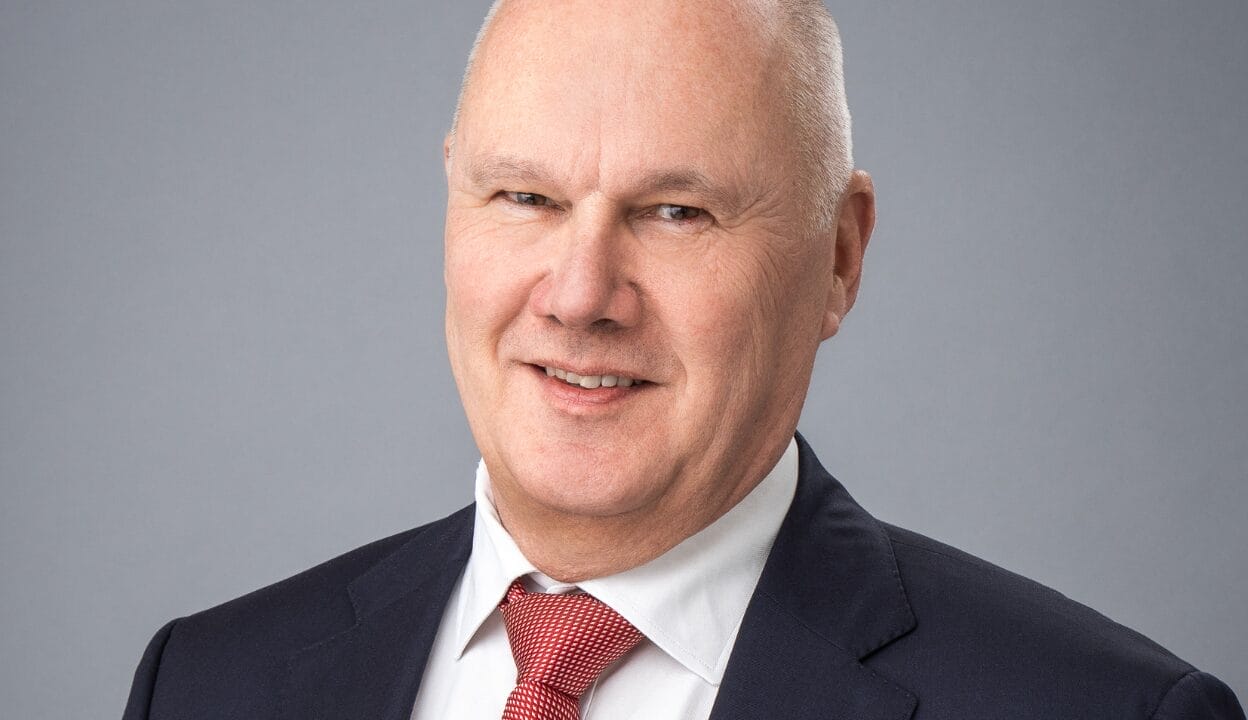
Majdi Chammas is head of external asset management at AP1.

Leave a Comment

Sweden’s FTN focuses on fees and returns in latest procurement

Sweden’s FTN focuses on fees and returns in latest procurement

Lower management fees and higher returns defined the latest selection process at the Swedish Fund Selection Agency in its latest awarding of active global equity mandates to 12 managers, its largest and most ambitious €20 billion ($23 billion) procurement so far.

Sort content by

Mandate terms are key to overcoming short-termism

Building on the commentary from Ricardo Research that calls for a mandates to be re-written to incentivise long-term behaviour, Matthew Leatherman from FCLTGlobal outlines practical steps investors have made to change behaviour.

How to find manager skill

The crisis has accelerated the industry’s adoption of technology for manager due diligence an area where it has traditionally lagged, according to founder of Inalytics Rick di Mascio who after 30 years in the job knows how to identify manager skill.

RI at core of manager relationships

When leading asset owners work with managers, they incorporate ESG issues into contracts and threaten to terminate relationships due to materialising ESG issues. To help make ESG considerations mainstream in investment management contracts the PRI has released a guide for investors on the manager selection and monitoring process.

APG, NPS collaborate on private assets

Two of the world’s largest pension funds, the $626 billion Dutch APG and the $660 billion National Pension Service of South Korea (NPS), have joined forces in a partnership to invest in private assets including infrastructure and private real estate.

Harvard endowment goes net zero by 2050

The Harvard endowment is about half way through its transition to external investment management and will work with its service providers to implement the university’s new directive, to position the portfolio in line with net-zero greenhouse gas emissions by 2050.

Oregon PE revamp shakes off GFC legacy

Oregon Investment Council has committed to investing $3 billion a year in private equity, with the smooth pacing strategy part a response to the fund’s overweight position to poor performing vintages as a result of its allocations before and after the GFC. The investor is also focusing on manager relationships with a focus on accessing new relationships and upsizing the best existing ones; and a new strategy that sees no provider in charge of more than 5 per cent of the portfolio.

Previous