
Exploring the interconnectedness of biodiversity and climate change

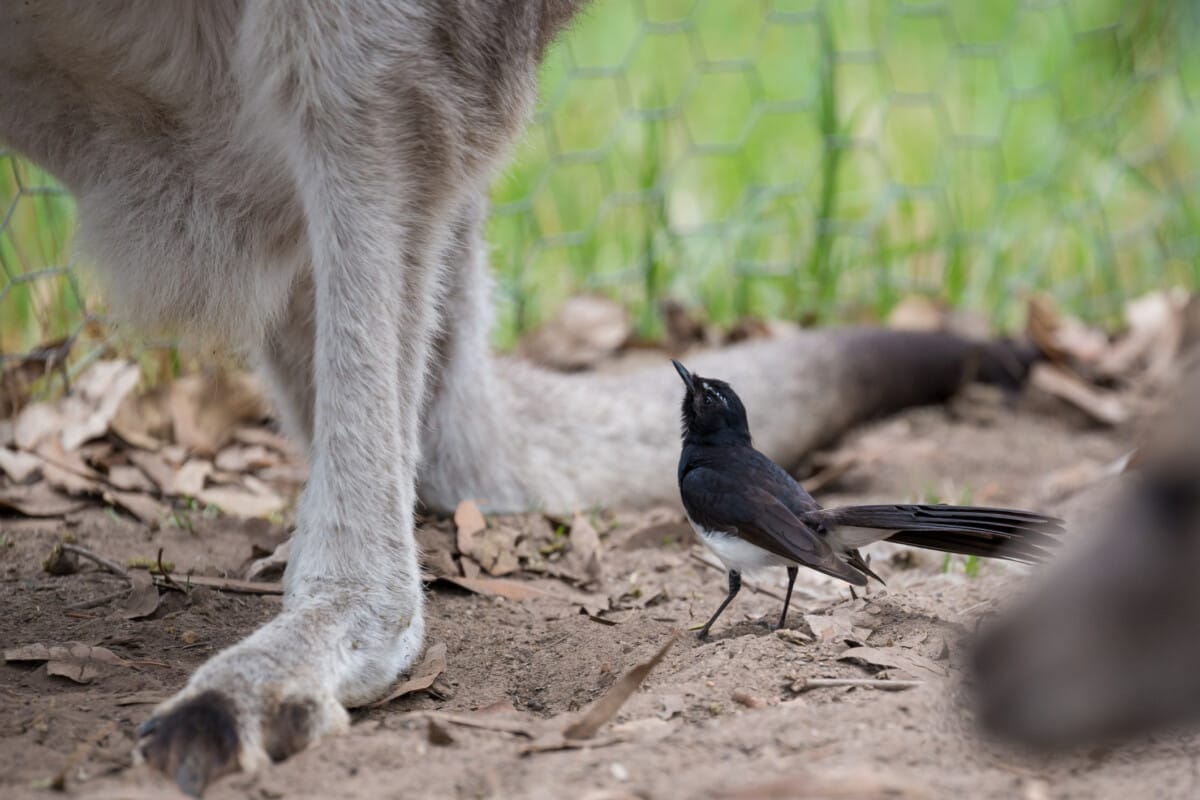
A willy wagtail with a kangaroo in the Australian bush

I believe biodiversity loss is one of the top global risks in terms of its impact and likelihood, yet it is completely overshadowed by climate change and is not well understood.

Six out of the nine planetary boundaries that define a “safe operating space for humanity” have now been exceeded and there is increasing pressure on all nine boundaries, or processes, that regulate the stability and resilience of the Earth system. There is now undeniable evidence that economic growth at the expense of the environment and the biosphere is unsustainable in the long term.

Climate transition encompasses and affects several different areas, which are all interdependent and together form a complex network or system. Targeting and thinking about one area in isolation, therefore, may produce negative impacts on other parts, potentially resulting in more harm than good.

Achieving net zero emissions is a critical goal for combatting climate change, however reversing the decline of biodiversity is equally vital for human survival and flourishing. Without a wide range of animals, plants and microorganisms, ecosystems will not survive. We rely on ecosystems to provide us with food and air, materials we wear and use to build our homes with. Hence biodiversity is essential for all life on Earth, including humans.

Among the main threats to biodiversity are climate change, pollution, habitat loss, overexploitation of species, and invasive species.

The relationship between biodiversity and climate change is complex. Biodiversity plays a key role in regulating the climate through carbon sequestration, maintaining healthy ecosystems, and supporting resilience to climate change impacts.

Sponsored Content

Effective climate action can enhance biodiversity by promoting the preservation of habitats and ecosystems. However, there is a potential scenario where the race to achieve net-zero emissions could inadvertently harm biodiversity.

For instance, the rapid expansion of renewable energy infrastructure or large-scale monoculture for bioenergy could disrupt natural habitats and threaten native species. Aggressive reforestation efforts without considering local ecological needs may lead to the introduction of non-native species that can harm existing biodiversity. The energy transition relies heavily on critical minerals, and extraction tends to have serious environmental and social consequences.

It is essential therefore that while pursuing the goal of carbon neutrality, we consider its effects on other dimensions and make sure we don’t compromise biodiversity in the process. Considering climate change in isolation is potentially dangerous because it overlooks the intricate relationship between climate and biodiversity, both of which are crucial for sustaining life on Earth.

The ‘do no harm’ principle plays a vital role in ensuring that climate action does not inadvertently damage natural habitats or the species that depend on them. We need sustainable approaches that simultaneously address both issues to ensure a holistic and effective response to environmental challenges. Our efforts to address climate change and biodiversity must ultimately be net positive to ensure their long-term sustainability.

Achieving positive, viable outcomes will depend on our ability to embrace the fact that we are part of a system where all components are interconnected, and their interaction creates the life as we know it. In practice, this also means that climate change efforts require collaboration among all stakeholders, where every perspective is significant and additive.

As the climate and natural environments continue to change, the interactions between them evolve, presenting challenges and opportunities that are difficult to anticipate. This is a dynamic relationship with potential tipping points, further shifts in climate and irreversible damage to the planet. Our lack of understanding or ability to predict these events with any degree of accuracy underscores the need and urgency for action and careful consideration of our approaches.

The biosphere is the foundation of economies and societies and the basis for all of the United Nations’ Sustainable Development Goals (SDGs). Nature loss threatens financial stability and poses a systemic risk which is likely to impact increase volatility and financial returns in the future.

Addressing biodiversity is a challenge for the investment industry. Investment organisations already have limited governance budgets, there is a lack of reliable data and it’s difficult to measure the impact of investments on biodiversity. The Taskforce on Nature-related Financial Disclosures (TNFD) incoming biodiversity regulation aims to enable financial institutions to integrate nature into decision-making, but still a lot needs to be done to ensure investor actions have a positive real-world impact.

In practice, investment organisations have different levels of ambition when it comes to biodiversity. At one end, there is compliance with regulatory requirements and TNFD reporting.

Moving beyond compliance, there is risk management and mitigating potential threats to portfolios. At the other end of the spectrum, some organisations take on a more proactive role by financing transformative projects aimed at restoring biodiversity and rehabilitating ecosystems. A systems-based approach is at the heart of these projects, with stakeholders collaborating to solve the challenge to generate positive outcomes in the long term.

Climate change and biodiversity loss are both critical global risks, in terms of impact and likelihood of occurrence. The interplay between them forms a complex and interdependent system that cannot be effectively addressed in isolation.

Recognising this interconnectedness is crucial, as failing to consider the mutual influences between climate and biodiversity could lead to incomplete and potentially harmful strategies. Addressing biodiversity loss requires integrated efforts across all sectors, acknowledging the profound and multifaceted relationships that sustain our natural environment. Only through such a holistic perspective can we hope to mitigate the risks and secure a sustainable future for our planet.

Anastassia Johnson is a researcher at the Thinking Ahead Institute at WTW, an innovation network of asset owners and asset managers committed to mobilising capital for a sustainable future.

Leave a Comment

The future belongs to investors who can adapt

The future belongs to investors who can adapt

Canada's HOOPP has officially adopted the total portfolio approach since the start of 2026. Unpacking the move, the fund's managing director and head of total portfolio group Jacky Lee writes that while the approach doesn't magically make the return better, the fact that it frees the investment team from outdated processes and gives investment leaders the flexibility to act is what gives it an edge.

Sort content by

Reflections on Fiduciary Investors Symposium, Toronto

The Fiduciary Investors Symposium was held in May in Toronto. Conexus Institute executive director David Bell shares his reflections through the lens of a researcher focused on Australia’s superannuation system and a former pension fund CIO, and someone with a strong academic background in all things investment and pension related.

Navigating 2024: Expect the unexpected, and shape it

Through 2024 the power of inter-connection will increasingly shape our investment world. To thrive in this intricate web, embracing systems thinking, recognizing tipping points, and confronting post-truth realities are essential says Roger Urwin.

HOOPP: A boardroom view of how to approach governance around climate change

Boards face a vital role supporting governance around climate change. The board journey of Canadian fund HOOPP serves as a starting point for other boards feeling equally challenged by the complexity of the issue writes co-chair Gerry Rocchi.

Thames Water: A lesson in infrastructure valuations

Careful consideration of trends in Thames Water's cost of capital and volatility, calculated using an appropriate risk model, would have anticipated the operator's financial difficulties. The failure to recognise the loss in value at the right time raises the question of how to value this type of asset.

Fearless girl: Is finance making progress?

Visible positioning on the inclusion of women in financial services is now the norm. But the number of women who are CFA Institute members globally – often seen as a proxy for the industry – is just 19 per cent. So, what else can be done to further improve diversity?

SVB collapse reminds us long-term investors, too, can panic – but don’t

"A long-term investor sells when it wants to, not because it has to." This is an especially clear and succinct definition of long-term investing. Long-term investing is about how the institution behaves, not a fixed time period.

Previous



