
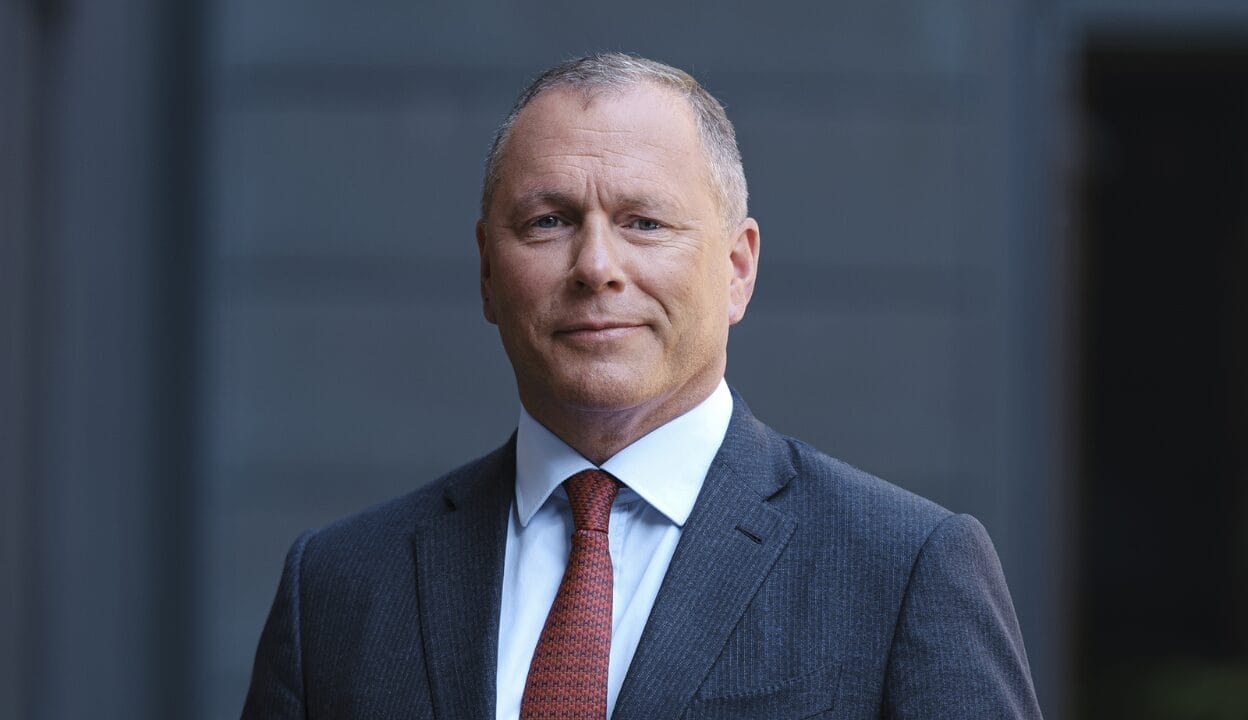

Norges Bank Investment Management chief executive Nicolai Tangen conceded the $2.1 trillion fund is “not satisfied” with the performance of its real estate portfolio, as weakness in the asset class was a main contributor to three consecutive years of negative relative returns for the fund.
During a hearing in the Norwegian parliament this week, Tangen, who has led the world’s largest allocator since 2020, conceded NBIM’s real estate investments have not delivered the return it seeks and measures are being taken to rectify the problem.
“Whereas we previously concentrated our investments in a small number of selected cities, we will in future allocate based on sectors – such as offices, logistics and data centres,” Tangen said, according to a transcript published on the NBIM website.
“This will make the portfolio better positioned to navigate structural shifts in the real estate market, such as those we experienced during the Covid-19 pandemic and the growth of e-commerce. I am confident that through these measures we will reverse the negative trend we have seen in recent years.”
All eyes will be on whether NBIM’s revamped real estate investment strategy, announced last December in its 2028 strategy, will bring around change to the depressed asset class return.
One of the most significant changes is that the fund will invest to a greater degree through “indirect structures”, namely real estate platforms and funds. While direct investments will remain its primary approach, funds and platforms will offer more “resource-efficient access” to specialised strategies and potential co-investment opportunities.
The majority of NBIM’s portfolio is invested in equities and fixed income which represent 71.3 per cent and 26.5 per cent of the total fund respectively. Due to the fund’s size, it has a predominantly passive exposure and owns almost 1.5 per cent of all shares in the world’s listed companies.
As real estate investments are funded by equities and fixed income, their performance is measured relative to what the fund would have earned if it had remained invested in those asset classes, Tagen said.
But significant headwinds in real estate in the past three years, driven by interest rate pressure and declining valuations, mean it hasn’t been an easy asset class to invest in. NBIM’s real estate investments subtracted 0.46 per cent in relative return in the 2025 calendar year, according to its annual report, with the US office sector a particularly poor performer.
The sector composition will be split into four pillars going forward with office, retail, logistics and living each having an allocation range of 15-35 per cent, while other emerging sectors may have a 10-25 per cent allocation. North America and Europe will still take the lion’s share of geographical composition.
The way real estate investments are funded will also change going forward. Currently, when NBIM buys real estate, it sells a mix of equities and bonds in the benchmark index. For the past decade, the same equity/bond split has been applied regardless of the real estate assets’ underlying risk and characteristics. But the fund said it will seek to reflect various real estate assets’ risks more accurately in the funding cost in the future.
“The change in the framework for funding real estate will have a limited impact on the fund’s overall risk and return characteristics in normal market conditions. However, a somewhat lower average equity share in the funding may increase the market risk in the fund marginally,” the fund said in the 2028 strategy.
Norway’s Ministry of Finance dictates which asset classes the fund can invest in, and NBIM received the ability to invest up to 7 per cent in unlisted real estate in 2010, and up to 2 per cent in unlisted renewable energy infrastructure in 2019.
But neither allocation is close to reaching its upper limit: real estate represents 1.7 per cent or NOK 372 billion ($39 billion) of the fund value at the end of 2025, and infrastructure is at 0.4 per cent or NOK 60 billion ($6 billion). Tangen said the infrastructure portfolio is on track to reach 1 per cent by 2030.
“I am confident that through these measures we will reverse the negative trend we have seen in recent years,” Tagen said.








Leave a Comment
You must be logged in to post a comment.
Login