
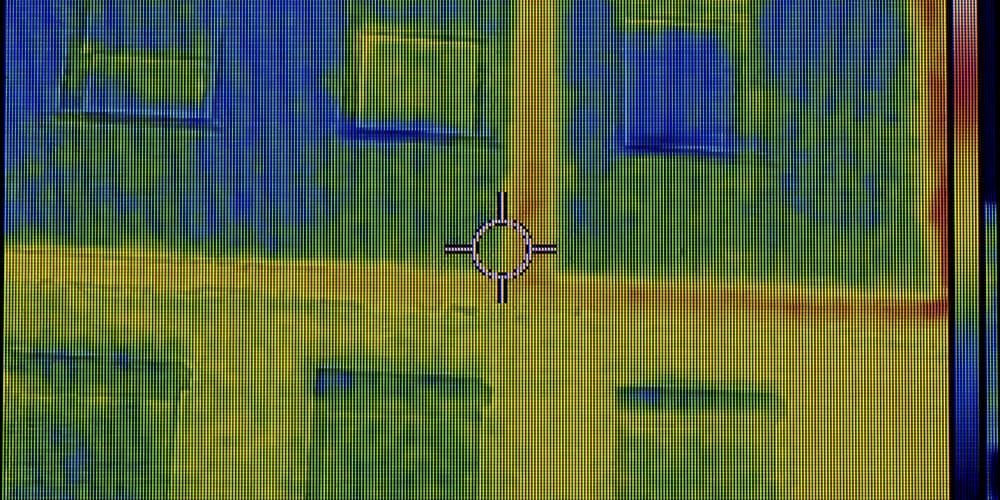

PGGM has committed to reducing its carbon footprint by 50 per cent, but for many asset classes it doesn’t know what the current carbon footprint is. To fill this gap it has been creating some innovative partnerships, including the data and analysis provider, GeoPhy, which has the carbon footprints of a staggering 60 million properties globally. Amanda White reports on what can be achieved when “real estate meets big data”.
The €182 billion ($280 billion) PGGM has made a commitment to reduce by 50 per cent the carbon footprint of its portfolio by 2020. But to do this it needs to know what its current carbon footprint is.
For some asset classes that is easier than others, and for real estate it means collaborating with new providers to fill the data gap, improve transparency and ultimately develop a model to map real estate.
PGGM was a founder of GRESB, alongside APG and USS, which assesses the sustainability performance of real assets around the globe.
Mathieu Elshout, private real estate investment manager at PGGM, says the fund has been using GRESB to measure the “green” performance of its €10 billion ($15 billion) real estate portfolio for some time. And according to the GRESB ratings, 50 per cent of PGGM’s private and listed real estate portfolio has a green star.
“We are very happy with that because we have seen an increase in our green star-rated buildings. That is not a goal in itself to invest in green star real estate but we think there is a link between better financial and sustainable performance.”
But the fund also has a new ambition to decrease the carbon footprint of its portfolio by 50 per cent by 2020.
In order to achieve this, PGGM needs more data, so it could not only look at the performance of its existing portfolio, but use carbon footprints as an input for decision making for new investments as well.
“There are other new instruments and standards needed to compare between portfolios and we are talking to other institutional investors to develop common standards and compare data,” Elshout says.
PGGM has teamed up with GeoPhy which maps the quality of the real estate portfolio and, specifically, maps the carbon footprint of buildings.
GeoPhy has data on a staggering 60 million buildings in 49 countries.
Chief executive of GeoPhy, Teun Van Den Dries, was trained as a sustainability engineer and architect and did a lot of traditional carbon footprinting, producing one-by-one reports. This in-field experience was a driving force for the business to seek a more robust method for carbon footprinting. Its business is all about data, and it partners with data suppliers and employs data scientists for analysis.
GeoPhy has data on each building’s year of construction, sustainability labels, refurbishments, size, function and energy usage.
It uses an automated structure, with no manual review, via local data sources: for example, in the UK, the land registry is a data partner in exchange for analysis.
PGGM engaged GeoPhy for portfolio mapping to build an approximation of the portfolio carbon footprint, and handed over its portfolio holdings.
“PGGM has a carbon reduction mandate but it had no baseline to measure that against,” Van den Dries says.
With a baseline in place, PGGM can engage with companies, use it as a tool for reporting and demonstrate progress in its mission to reducing its carbon footprint by 2020.
GeoPhy has now done the analysis for PGGM on every building in its real estate portfolio – about 7.5 million individual buildings – to reveal what their baseline is. PGGM is now reviewing, and decisions can be made on how to reduce it.
Because the analysis is done at such a detailed level, Van Den Dries says it reveals some interesting anomalies that might not be immediately apparent.
“The differences in relative carbon intensity were a surprise,” Van Den Dries says.
“The range of carbon footprints is enormous. For example, look at the two classic peers of the UK-based REITs, British Land and Land Securities. They both have 25 to 30 per cent in London office buildings, then residential in the rest of the country. If you look at carbon footprint, then Land Securities is the front runner, but British Land performs better because Land Securities has about 8 per cent of its portfolio in small, old hotel properties. It is a small exposure but the impact on the portfolio is enormous. It would be more effective to refurbish those hotels,” he says.
For PGGM, the aim of the portfolio mapping is to create a market standard, and it has already asked all its funds managers to use it and report on it.
“This will give them a better sense of how to direct their managers and challenge them,” Van Den Dries says.
PGGM’s Elshout says the baseline gives the manager a tool for engaging with managers and companies to reduce the carbon footprint.
“Via engagement we expect there will be more focus on improving the carbon footprint. If we divest, the building and carbon footprint will still be there,” he says. “We believe financial and sustainability performance are connected, and we are positioning the portfolio such that our belief in that sustainability pays off.”








Leave a Comment
You must be logged in to post a comment.
Login